
Allergy Medications: Antihistamines and Decongestants Risks You Can't Ignore
 Dec, 5 2025
Every year, millions of people reach for antihistamines and decongestants to chase away sneezing, stuffy noses, and itchy eyes. You grab a bottle off the shelf like it’s a candy bar-no prescription, no doctor, no second thought. But here’s the truth: these common allergy meds carry real, sometimes dangerous, risks that most users never see coming.
Why Your Go-To Allergy Pill Might Be Hurting You
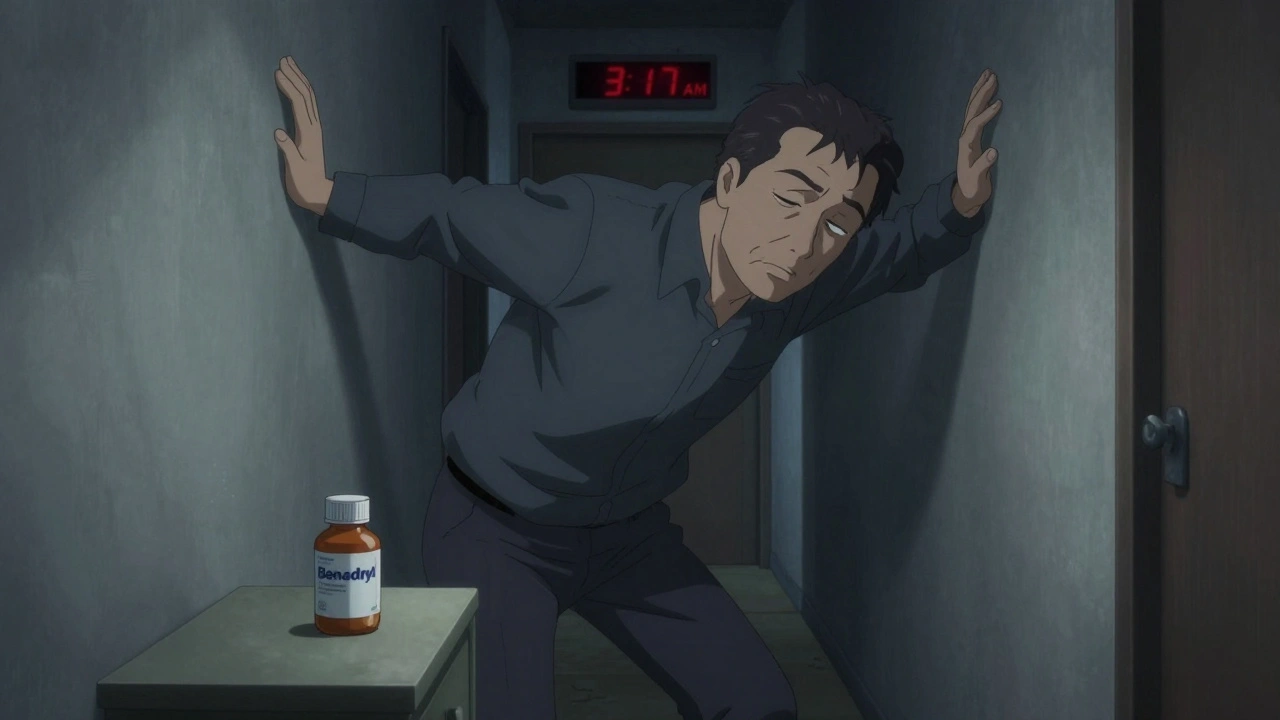
Antihistamines block histamine, the chemical your body releases during an allergic reaction. That’s why they stop sneezing and itching. But they don’t just stop at the nose. First-generation ones like diphenhydramine (Benadryl) and doxylamine cross into your brain. That’s why you get drowsy-50 to 60% of users do. It’s not just a side effect. It’s a safety hazard.Think about driving after taking Benadryl. Or getting up in the middle of the night to use the bathroom and stumbling. For adults over 65, the risk of falling triples. The American Geriatrics Society calls first-gen antihistamines “potentially inappropriate” for seniors. Why? Because they don’t just make you sleepy-they cause confusion, blurry vision, dry mouth, and trouble peeing. For men with enlarged prostates, that last one can turn into a medical emergency.
Second-generation antihistamines like loratadine (Claritin) and cetirizine (Zyrtec) are better. They’re less likely to cross the blood-brain barrier. Only 10 to 15% of users feel drowsy. But even these aren’t risk-free. People with liver disease, glaucoma, or thyroid problems can still have bad reactions. And if you’re pregnant? The American College of Obstetricians and Gynecologists says stick to loratadine only under a doctor’s watch.
Decongestants: The Quick Fix That Can Backfire Hard
Decongestants like pseudoephedrine (Sudafed) and phenylephrine shrink swollen blood vessels in your nose. That’s why your nose clears up fast. But they don’t just shrink the vessels in your nose-they shrink them everywhere. Your heart beats faster. Your blood pressure spikes. That’s why people with high blood pressure are told to avoid them.Mayo Clinic reports decongestants can raise systolic blood pressure by 5 to 10 mmHg. For someone with untreated hypertension-that’s dangerous. The CDC says over 116 million American adults have high blood pressure. Many don’t even know it. Taking Sudafed could push their pressure into stroke or heart attack territory.
Nasal sprays like oxymetazoline (Afrin) seem safer because they’re local. But use them longer than three days? You’re not helping your nose-you’re wrecking it. Half of users develop rebound congestion. Your nose gets more swollen than before. Now you’re stuck in a cycle: spray to clear it, then spray again because it’s worse. It’s not addiction-it’s pharmacology. Your body adapts, and now you need the spray just to breathe normally.
The Hidden Danger: Combination Products
You see “All-in-One Cold & Allergy” on the shelf. It promises to fix everything: runny nose, cough, fever, congestion. Sounds perfect. But here’s the catch: you’re taking three or four drugs at once. And you don’t even know it.Many of these combos include acetaminophen (Tylenol). The FDA says the max safe daily dose is 4,000 mg. But if you’re already taking a painkiller for a headache, or a sleep aid with acetaminophen, you could easily hit 5,000 or 6,000 mg. That’s liver damage. That’s emergency room visits. In 2022, the CDC linked over 10,000 ER visits to OTC allergy meds-many from accidental overdose.
And then there’s the caffeine problem. Energy drinks. Coffee. Pre-workout powders. If you’re taking a decongestant and then chugging a Red Bull? Your heart could race out of control. The Rutgers Poison Control Center saw a 25% jump in calls from young adults mixing OTC meds with energy drinks in 2022. That’s not a coincidence. That’s a pattern.

When These Meds Are Absolutely Not Safe
Some people should never take these meds-not even once. The NHS and WebMD list clear red flags:- High blood pressure or heart disease
- Diabetes
- Enlarged prostate
- Glaucoma
- Thyroid problems
- Liver or kidney disease
- Taking antidepressants like SSRIs or MAOIs
MAOIs are especially dangerous with decongestants. The combo can trigger a hypertensive crisis-blood pressure so high it can rupture blood vessels. It’s rare, but it’s deadly. And if you’re on an MAOI, you need to wait two full weeks after stopping it before using a decongestant. Most people don’t know this.
And don’t forget kids. The FDA says no cough or cold medicine with antihistamines or decongestants for children under 2. Between 1969 and 2006, there were 123 reported deaths in young kids from these products-convulsions, heart attacks, sudden stops in breathing. Even today, 42% of OTC allergy-related ER visits involve kids under 12.
What You Should Do Instead
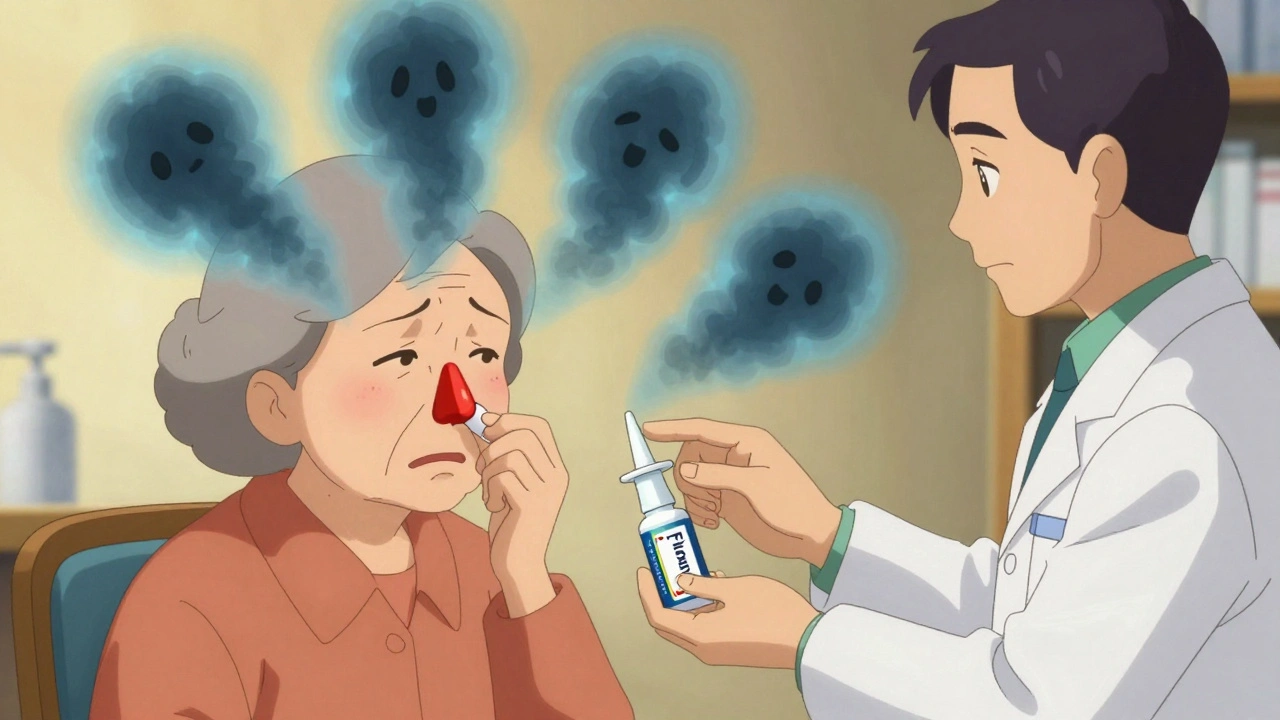
If you’ve been using antihistamines or decongestants for more than a week or two, you’re not treating your allergies-you’re masking them. Allergies don’t go away with pills. They need management.For chronic congestion, nasal corticosteroid sprays like fluticasone (Flonase) are far safer than decongestants. They work slower but don’t raise blood pressure or cause rebound congestion. They’re FDA-approved for long-term use.
For mild symptoms, saline rinses or a humidifier can help. Air filters reduce allergens. Allergy shots? They’re the only treatment that actually changes your body’s response over time.
And if you’re unsure? Talk to your pharmacist. The American Pharmacists Association says 78% of OTC medication problems could be avoided with a quick chat. They know what’s in your bottle. They know what else you’re taking. They know your history. They’re not just the person who hands you the box-they’re your safety net.
When to Call a Doctor
Don’t wait for a crisis. Call your doctor if:- Your symptoms last more than 10 to 14 days
- You feel chest tightness, rapid heartbeat, or dizziness after taking a med
- You’re having trouble sleeping or feel unusually anxious
- You’re over 65 and taking any antihistamine
- You’re pregnant, breastfeeding, or managing a chronic condition
Dr. James Li from Mayo Clinic says it plainly: “It is always best to speak to your primary health care provider before starting new medications.” That’s not a suggestion. It’s the only smart way to use these drugs.
Over-the-counter doesn’t mean risk-free. It means you’re responsible. And if you’re not paying attention to the fine print, you’re playing Russian roulette with your health.
Can I take antihistamines every day?
Second-generation antihistamines like loratadine or cetirizine are generally safe for daily use if your allergies are persistent. But first-generation ones like diphenhydramine should never be used daily-they cause too many side effects, especially in older adults. Always check with your doctor if you need to take them long-term.
Why do decongestants raise blood pressure?
Decongestants like pseudoephedrine work by narrowing blood vessels to reduce nasal swelling. But they don’t know the difference between your nose and your heart. They tighten vessels everywhere, forcing your heart to pump harder. That increases blood pressure. For someone with hypertension, this can be dangerous enough to trigger a heart attack or stroke.
Is it safe to take decongestants with antidepressants?
No. Combining decongestants with SSRIs or MAOIs can cause a dangerous spike in blood pressure. MAOIs, in particular, can lead to a hypertensive crisis-where blood pressure rises to life-threatening levels. Even if you’re on a common antidepressant like sertraline, talk to your doctor before using any decongestant.
Can I give my child Benadryl for allergies?
The FDA warns against giving any antihistamine or decongestant to children under 2. For older children, dosing is tricky and side effects like drowsiness, agitation, or rapid heartbeat are common. Always consult a pediatrician before giving OTC allergy meds to a child-even if it’s just “one dose.”
What’s the safest antihistamine for seniors?
Second-generation antihistamines like loratadine (Claritin) or fexofenadine (Allegra) are safest for older adults. They cause less drowsiness and don’t interfere with brain function like diphenhydramine. But even these should be used with caution if the person has kidney problems, glaucoma, or an enlarged prostate. Always check with a doctor or pharmacist first.
How long is too long to use a nasal decongestant spray?
Three days. That’s it. Using nasal sprays like Afrin for longer than 72 hours causes rebound congestion-your nose becomes dependent on the spray to stay clear. You’ll end up needing more and more just to breathe. It’s a cycle that’s hard to break. If congestion lasts longer than a week, see a doctor instead.
Are natural remedies safer than OTC allergy meds?
Some are. Saline nasal rinses, air purifiers, and avoiding allergens are completely safe and often effective. Honey and herbal supplements? Evidence is weak. But they’re not dangerous like decongestants. Still, don’t assume “natural” means harmless. Some herbs interact with medications. Always tell your doctor what you’re taking-even if it’s tea or a supplement.
Final Thought: Just Because It’s OTC Doesn’t Mean It’s Safe
You wouldn’t take a prescription drug without reading the label. Why treat OTC meds any differently? They’re not candy. They’re powerful chemicals with real consequences. Whether you’re 22 or 72, whether you’re just fighting pollen or managing chronic asthma, your health is too important to guess with.Read the ingredients. Know your conditions. Talk to a pharmacist. If your symptoms don’t improve in 10 days, see a doctor. There’s a better way to breathe-without risking your heart, your liver, or your life.
olive ashley
December 5, 2025 AT 15:40They don't want you to know this but Big Pharma pays off the FDA to keep these drugs on the shelf. Benadryl? Designed to make you sleepy so you don't notice the brain damage. Look up the 1987 Congressional hearing they buried. You think your nose is the only thing they're targeting? It's your dopamine receptors. They want you addicted to the next pill. Wake up.
And don't even get me started on nasal sprays. That's not rebound congestion - that's your body screaming for help. They know. They just don't care.
They're selling you a slow death and calling it relief.
Ibrahim Yakubu
December 6, 2025 AT 04:55Bro, this is why Africa is left behind. In Nigeria, we don't have access to these fancy meds, so we use ginger, garlic, and prayer. You Americans think you're so advanced but you're poisoning yourselves with chemicals you don't even understand. Your body is not a machine to be fixed with pills. It's a sacred vessel. Read the Quran, read the Vedas - medicine was never meant to be bought at Walmart.
Stop trusting the system. Your ancestors survived without Claritin. So can you.
Brooke Evers
December 8, 2025 AT 01:04I just want to say how important it is that someone put this out there. I’m 68 and took Benadryl for years because ‘it’s just an allergy pill.’ Then I started forgetting where I put my keys, tripping over rugs, and my wife had to help me pee. I didn’t realize it was the meds - I thought I was just getting old.
Switched to loratadine after talking to my pharmacist. No more dizziness. No more panic when I get up at night. I wish I’d known this five years ago.
If you’re taking OTC meds daily and you’re over 60 - please, just go talk to someone. No shame. No judgment. Just safety. You’re not alone in this. There are so many of us who didn’t know until it was too late.
And if you’re younger - don’t wait. Your brain doesn’t regenerate. These drugs are not harmless. I’m so grateful this post exists. Thank you.
Also - saline rinses changed my life. Just warm water, salt, and a neti pot. No chemicals. No side effects. Just relief. Try it. Seriously.
Nigel ntini
December 9, 2025 AT 08:44Excellent breakdown. The point about combination products is criminally under-discussed. I once saw a 32-year-old in the ER with acute liver failure because he was taking NyQuil, Advil Cold & Sinus, and a sleep aid - all with acetaminophen. He thought he was just ‘treating his allergies.’
The real tragedy? He’d been doing it for six months. No one warned him. No label screamed it. Just a tiny font buried under ‘Active Ingredients.’
Pharmacists aren’t just cashiers. They’re frontline medical advisors. If you’re on more than three OTC meds, you owe it to yourself to ask them - not Google - what’s in your bottle.
Also, nasal corticosteroids are underutilized. Flonase isn’t sexy, but it’s the only thing that actually fixes the root cause of chronic congestion without the rebound. Shame it’s not on every shelf next to Sudafed.
Priya Ranjan
December 10, 2025 AT 20:57People like you are why America is falling apart. You take a pill for a sneeze? That’s weakness. In India, we don’t have time for this. We wake up with allergies, drink warm water with lemon, and go to work. No meds. No drama. Just discipline.
You think your body needs chemical crutches? That’s not health. That’s laziness. Your immune system is weak because you live in air-conditioned boxes and eat processed food. Fix your life. Not your nose.
And don’t even mention ‘natural remedies.’ Honey? Please. That’s just sugar water. If you want real healing, stop being a victim and start being strong.
Gwyneth Agnes
December 12, 2025 AT 04:41Don't take decongestants if you have high blood pressure. Period.
That's it.
Ashish Vazirani
December 12, 2025 AT 12:38Ohhhhh, so now we’re supposed to trust Big Pharma’s ‘safe’ second-gen antihistamines? LOL. You think they didn’t design Zyrtec to look safer so you’d take it longer? They knew people would get hooked. They made it ‘non-drowsy’ so you’d take it every day. That’s not progress. That’s manipulation.
And what about the corporate ties? Who funds the ‘studies’ that say Claritin is safe? Big Pharma. Who approves it? The FDA. Who profits? Big Pharma.
This isn’t medicine. It’s a pyramid scheme with a prescription label.
And don’t tell me about ‘talking to your pharmacist.’ They’re paid by the same companies. They get bonuses for pushing certain brands. You think they’re your friend? They’re a sales rep with a white coat.
I don’t trust any of it. I use a humidifier. I wash my face after being outside. I breathe through my nose. I don’t need chemicals to survive pollen.
Wake up. They’re selling you dependency. Not healing.
Mansi Bansal
December 13, 2025 AT 02:09It is with profound regret that I must observe the lamentable state of pharmacological literacy among the general populace. The casual ingestion of antihistaminic and decongestant agents, devoid of medical supervision, constitutes nothing less than a public health catastrophe of epic proportions.
The pharmacokinetic profiles of first-generation antihistamines, particularly their affinity for muscarinic receptors in the central nervous system, are not merely ‘side effects’ - they are neurotoxic incursions. The American Geriatrics Society’s Beers Criteria are not suggestions; they are clinical imperatives.
Moreover, the proliferation of combination products containing acetaminophen represents a systemic failure of regulatory oversight. The FDA’s 4,000 mg daily limit is not a guideline - it is a hard ceiling, and yet, consumers routinely exceed it by 50% without consequence awareness.
Furthermore, the normalization of nasal decongestant spray use beyond seventy-two hours is not merely irresponsible - it is a violation of basic pharmacological principles. Rebound vasodilation is not a myth. It is a predictable, documented, and entirely preventable physiological phenomenon.
One must ask: why is the public so willing to surrender autonomy to corporate marketing? Why is ‘OTC’ synonymous with ‘risk-free’ in the popular imagination? The answer lies not in science, but in the erosion of critical thinking.
Let us not forget: the most dangerous drug is the one you believe is harmless.
Max Manoles
December 14, 2025 AT 17:10Man, I just want to say thank you for writing this. I’ve been taking Zyrtec every day for two years because my allergies are ‘mild.’ But I’ve been having weird heart palpitations and insomnia. Didn’t connect it until I read this.
Went to my pharmacist yesterday - she checked my meds and said, ‘You’re also taking a sleep aid with diphenhydramine?’ I didn’t even realize. She swapped me to Allegra and gave me a saline spray. Two days in and I feel like I’m breathing again.
And honestly? I feel stupid for not asking sooner. But now I know. And I’m telling everyone I know.
Pharmacists are heroes. Don’t skip the chat. Just talk to them. It’s free. It could save your life.
Rashmi Gupta
December 15, 2025 AT 16:57So… you’re saying the only safe way to deal with allergies is to stop taking anything? What about people who actually need to function? Like, I have to go to work. I can’t just sit around sneezing for a week. So what? Do I just suffer? That’s not a solution. That’s just saying ‘tough luck.’
And who says nasal sprays are the answer? I tried Flonase. Took three weeks to notice anything. I need relief NOW. Not next Tuesday.
This article feels like it was written by someone who’s never had to live with allergies. It’s not about ‘risk-free.’ It’s about balance. You can’t just ban everything because some people misuse it.
Andrew Frazier
December 16, 2025 AT 21:10Y’all act like this is news. My grandma took Benadryl every night since 1982 and lived to 94. She didn’t even know what a pharmacist was. You think your brain is that fragile? You’re weak. We didn’t have all this ‘consult your doctor’ nonsense back in the day. We took what worked and shut up.
Also, why are you all so scared of chemicals? You eat processed food, drink soda, and watch TikTok for 8 hours a day - but now you’re scared of a little pseudoephedrine? Hypocrites.
My dad’s been on Sudafed since ’99. Still runs marathons. You wanna live in fear? Go ahead. I’ll be outside breathing real air.
Kumar Shubhranshu
December 18, 2025 AT 12:55My uncle died from liver failure after taking allergy meds with Tylenol. He didn’t know. No one told him. This isn’t fearmongering. It’s fact.
Just talk to your pharmacist. Five minutes. Could save your life.
Karen Mitchell
December 18, 2025 AT 13:28Why is it that every time someone shares legitimate medical information, the internet responds with ‘Big Pharma is evil’ or ‘just use honey’? This isn’t a conspiracy. It’s pharmacology.
And yet, people still take Benadryl to sleep. They still give it to toddlers. They still mix it with energy drinks.
Knowledge isn’t enough. People need to care.
They don’t.
So they die.
Geraldine Trainer-Cooper
December 18, 2025 AT 20:13We’re all just trying to breathe.
And the system’s rigged.
But we’re still here.
That’s something.
Brooke Evers
December 19, 2025 AT 20:57Thank you for saying that. I’ve been telling people this for years. The saline rinse isn’t just ‘natural’ - it’s science. It flushes out allergens, reduces inflammation, and doesn’t mess with your blood pressure or liver. I use it twice a day. My nose hasn’t felt this clear since I was 12.
And if you think it’s inconvenient? Try living with rebound congestion. You’ll beg for a neti pot.
Also - if you’re using a nasal spray for more than three days, you’re not fixing your allergies. You’re creating a dependency. And that’s not your fault. It’s the marketing. They sell you a quick fix and never tell you the cost.
I wish I’d known this sooner. But I’m glad I know now.