
Caffeine and Medication Safety: What You Need to Know About Dangerous Interactions
 Dec, 11 2025
Most people drink coffee without thinking twice. But if you're taking medication, that morning cup could be doing more than just waking you up-it could be making your drugs less effective, or even dangerous. Caffeine doesn't just buzz through your system like a harmless pick-me-up. It actively interferes with how your body processes dozens of common medications. And the risks aren't theoretical. People are ending up in emergency rooms because they didn't know coffee and their heart medicine don't mix.
How Caffeine Messes With Your Medicines
Caffeine isn't just a stimulant. It's a chemical that competes with your medications for the same enzymes in your liver-specifically, the CYP1A2 enzyme. This enzyme breaks down about 10% of all prescription drugs. When caffeine floods your system, it clogs up this enzyme like a traffic jam. That means your meds don't get processed the way they should. Some stick around too long. Others get flushed out too fast. Either way, your body isn't getting the right dose.
It’s not just coffee. Energy drinks, soda, tea, chocolate, and even some pain relievers contain caffeine. A single energy drink can pack 200 mg of caffeine-more than a cup of coffee. And if you’re taking multiple meds, the risk stacks up. The more drugs you’re on, the higher your chance of a bad interaction.
Levothyroxine and Coffee: A Silent Saboteur
If you’re on levothyroxine for hypothyroidism, drinking coffee right after your pill could be sabotaging your treatment. Studies show coffee can cut levothyroxine absorption by up to 55%. That means your body might be getting only half the dose you’re paying for.
One patient, who goes by 'ThyroidWarrior2023' on Reddit, took her pill with coffee for three weeks. Her TSH level-normally stable at 1.8-shot up to 8.7. Her endocrinologist confirmed it: coffee was the culprit. She switched to taking her pill with water, waited 60 minutes before coffee, and her TSH dropped back to normal in six weeks.
The American Thyroid Association now recommends waiting at least 60 minutes after taking levothyroxine before drinking coffee or eating breakfast. Some doctors even suggest taking it at bedtime instead, if your schedule allows.
Warfarin: Coffee Can Make You Bleed
Warfarin is a blood thinner. It’s tricky to manage because small changes in your diet or habits can throw your INR (a measure of blood clotting) out of balance. Caffeine is one of those hidden triggers.
Research shows caffeine blocks the enzyme that breaks down warfarin. That means warfarin builds up in your blood. Your INR can jump 15-25% within 24 hours of drinking coffee. An INR above 4.0 is dangerous-it means your blood takes too long to clot. In a University of Michigan survey, 41% of warfarin patients with high caffeine intake had INR levels above 4.0. Seventeen percent ended up in the ER with bleeding.
The FDA warns that sudden increases in caffeine intake-even just one extra cup a day-can cause dangerous INR spikes. The fix? Don’t quit coffee. Just keep it consistent. If you drink two cups daily, stick to two. Don’t go from one to four. And always tell your doctor if your coffee habits change.
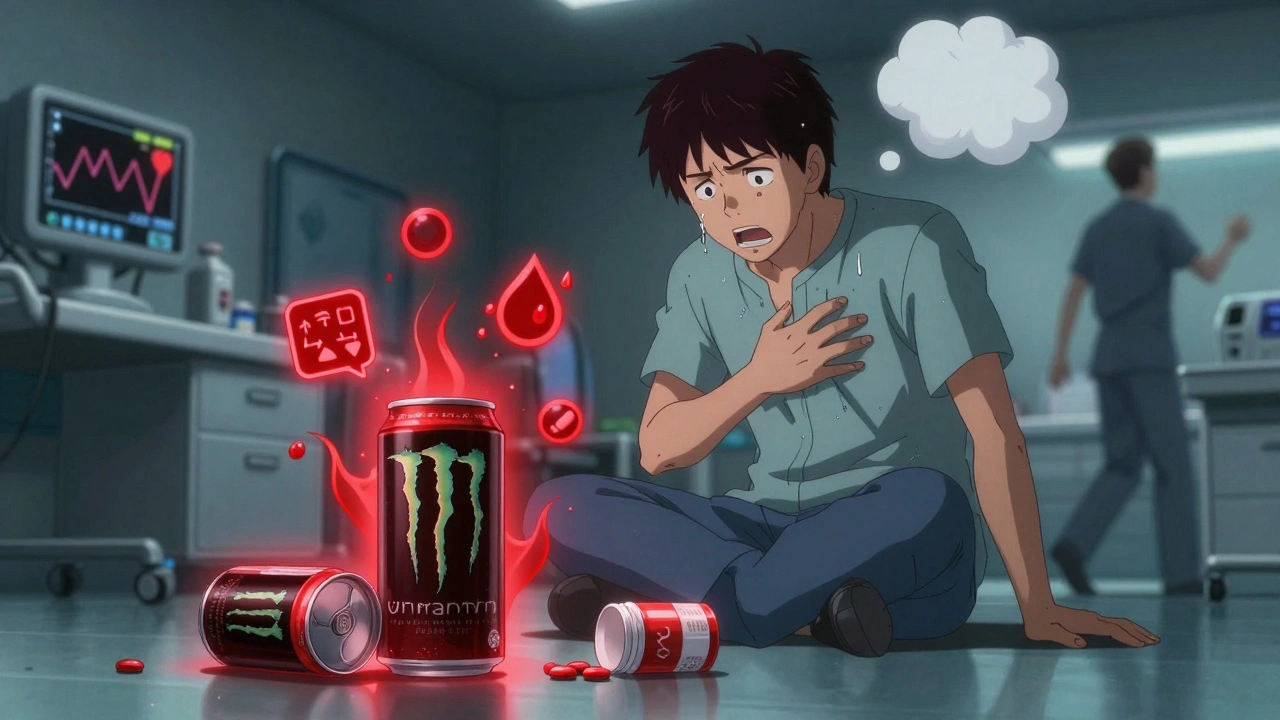
Heart Medications: Caffeine Can Cancel Your Dose
Two heart drugs are especially vulnerable to caffeine: dipyridamole (Persantine) and adenosine (Adenocard). These are used in stress tests to check for blocked arteries. But caffeine blocks their effect completely.
University Hospitals reports that if you drink coffee, tea, or energy drinks within 24 hours of your test, the drugs lose 70-90% of their effectiveness. You could get a false negative-meaning your doctor thinks your heart is fine when it’s not.
Even if you’re not getting a stress test, caffeine can interfere with calcium-channel blockers like verapamil. Harvard Health found that coffee reduces verapamil’s blood pressure-lowering effect by 25-30%. The solution? Wait two hours after taking your pill before drinking coffee-or drink your coffee two hours before your pill.
Antidepressants: Anxiety, Not Relief
Some antidepressants, especially SSRIs like fluoxetine and sertraline, don’t work as well when you’re drinking a lot of caffeine. Harvard Health says caffeine can reduce SSRI absorption by 33%. That doesn’t mean you need to quit coffee. But if you’ve been on your med for months and suddenly feel your anxiety creeping back, check your caffeine intake.
Drugs.com has over 1,200 user reports linking caffeine and antidepressants. Sixty-three percent said they felt more anxious. Twenty-eight percent said their meds stopped working. One patient on sertraline cut her coffee from four cups to one a day and noticed her mood improved within a week.
Not all antidepressants react the same. Bupropion (Wellbutrin) doesn’t interact with caffeine. But if you’re on fluvoxamine, the interaction is strong. Talk to your doctor. Don’t guess.
Theophylline: A Dangerous Mix
If you have asthma or COPD and take theophylline, caffeine is a red flag. Both drugs are broken down by the same liver enzyme. When you drink caffeine, your theophylline levels rise by 15-20%. That might sound good-until you start feeling your heart race, your hands shake, or you get nauseous. In severe cases, it can trigger seizures.
University Hospitals’ 2024 study of 317 theophylline patients found that 22% developed a heart rate over 100 bpm after drinking just one cup of coffee. The advice? Limit caffeine to under 100 mg per day-about half a cup of coffee. And never drink energy drinks. They’re too unpredictable.
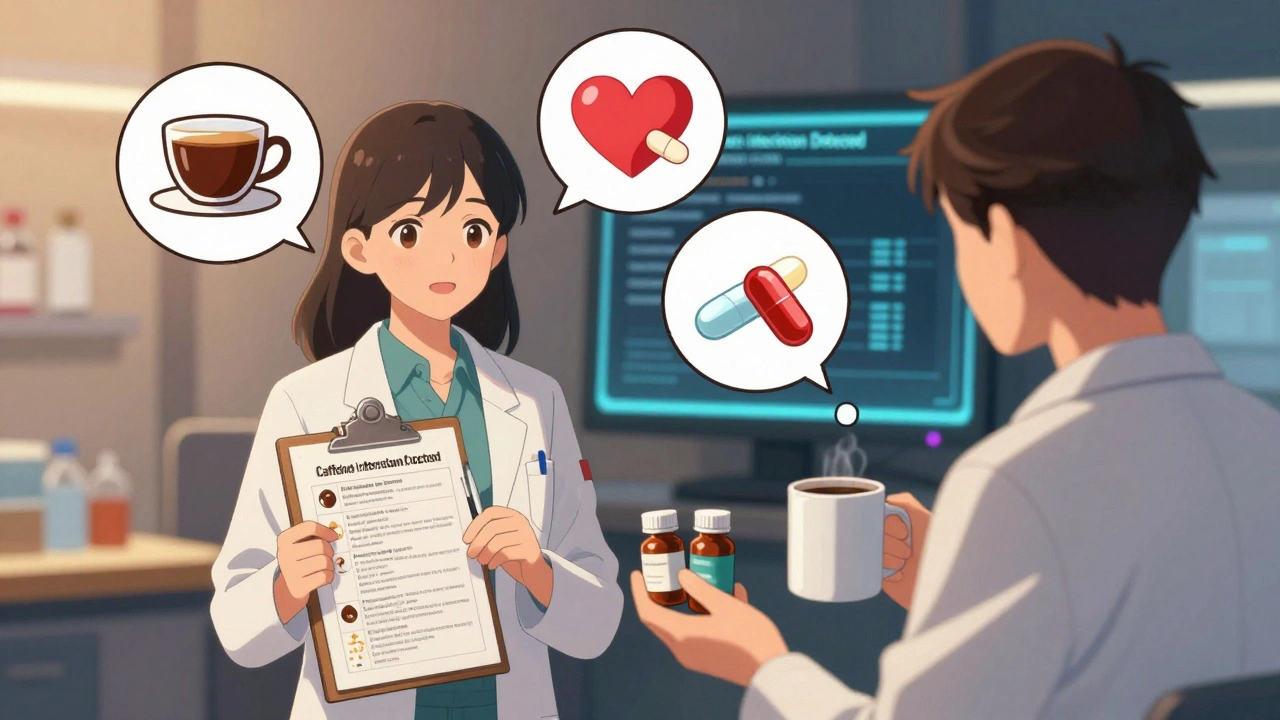
Decongestants and Caffeine: A Heart Attack Waiting to Happen
Pseudoephedrine (in Sudafed) and ephedrine are common in cold and allergy meds. They’re stimulants. So is caffeine. Together, they’re a double hit.
Dr. John Higgins from UT Southwestern says the combo can spike heart rates by 20-30 beats per minute. That’s enough to trigger palpitations, chest pain, or even a heart attack in someone with underlying heart disease.
The Mayo Clinic warns that caffeine and ephedrine together raise the risk of hypertensive crisis by 47%. In clinical trials, 68% of people saw their systolic blood pressure jump more than 30 mmHg. That’s not just a headache-it’s a medical emergency.
If you’re on blood pressure meds or have heart issues, skip the cold medicine with pseudoephedrine. Try a saline nasal spray instead.
What You Should Do Right Now
Don’t panic. But do take action.
- Check your meds. Look at the label. If it says “avoid caffeine” or “may interact with stimulants,” pay attention.
- Track your coffee. How much do you drink? Is it the same every day? Write it down for a week.
- Time it right. For levothyroxine: wait 60 minutes. For verapamil: wait 2 hours. For warfarin: keep intake steady.
- Ask your pharmacist. They’re trained to catch these interactions. Bring your meds and your coffee habit to your next appointment.
- Watch for signs. Unexplained anxiety, racing heart, dizziness, or worsening symptoms? Caffeine might be why.
What’s Changing in 2025
Hospitals are finally catching up. Epic Systems rolled out a caffeine-interaction alert in 47 hospitals in early 2025. Early results? A 29% drop in related ER visits.
The FDA now requires caffeine interaction warnings on 23% of prescription labels-up from 12% in 2019. The American Pharmacists Association now trains all certified pharmacists to screen for 17 high-risk caffeine-drug combos.
And research is moving fast. The NIH is studying how your genes affect caffeine metabolism. In the next few years, a simple DNA test might tell you if you’re a slow or fast metabolizer-and whether you should avoid caffeine entirely.
For now, the safest rule is simple: If you’re on medication, don’t assume caffeine is harmless. Talk to your doctor. Write it down. Change one habit at a time. Your body will thank you.
Can I still drink coffee if I take medication?
Yes, but not always at the same time. For most medications, it’s not about quitting coffee-it’s about timing. Take your pill with water, wait 30 to 60 minutes, then have your coffee. For some drugs like warfarin, keeping your caffeine intake consistent matters more than avoiding it entirely.
Does decaf coffee interact with medications?
Decaf coffee still contains a small amount of caffeine-usually 2-15 mg per cup. For most people, that’s not a problem. But if you’re on a very sensitive drug like theophylline or warfarin, even small amounts can add up. If you’re unsure, switch to herbal tea or water with your meds.
Are energy drinks worse than coffee for medication interactions?
Much worse. Energy drinks often contain 80-300 mg of caffeine per can-sometimes more than two cups of coffee. They also have other stimulants like taurine, ginseng, and guarana, which can independently affect how your body processes drugs. One study found energy drinks caused 68% of serious caffeine-drug interactions. Avoid them completely if you’re on medication.
What if I forget and take my pill with coffee?
Don’t panic, but don’t ignore it either. If you take levothyroxine with coffee once, your body may not absorb it well that day-but one mistake won’t ruin your treatment. The real danger is doing it every day. If it happens regularly, talk to your doctor. They may want to check your blood levels and adjust your dose.
Can caffeine make my anxiety worse while I’m on antidepressants?
Yes, especially with SSRIs. Caffeine can block the absorption of these drugs and also stimulate your nervous system on its own. The result? More jitteriness, heart palpitations, and panic attacks-even if your medication was working before. Cutting back on caffeine often improves mood and reduces side effects. Try reducing your intake slowly over a week.
Audrey Crothers
December 12, 2025 AT 05:20OMG I had no idea coffee could mess with my thyroid med! I’ve been taking levothyroxine with my morning latte for years 😱 Just switched to water and waiting an hour-my energy is already better. Thank you for this!! 🙏
Stacy Foster
December 13, 2025 AT 15:24This is all corporate propaganda. The FDA doesn’t care about you-they care about drug profits. Caffeine is natural, your meds are synthetic. They’re scared you’ll figure out you don’t need their pills at all. Wake up.
Nathan Fatal
December 15, 2025 AT 04:35Stacy’s comment is a classic example of anti-science thinking. The CYP1A2 enzyme interaction isn’t theoretical-it’s been replicated in over 200 peer-reviewed studies. Caffeine’s effect on drug metabolism is measurable, predictable, and clinically significant. Ignoring it isn’t ‘woke,’ it’s dangerous. If you’re on warfarin or theophylline, your life literally depends on this info.
Robert Webb
December 16, 2025 AT 04:44As someone who’s been managing hypothyroidism for 15 years, I can confirm this. I used to drink coffee with my levothyroxine because ‘everyone does it.’ My TSH was all over the place until I read a 2022 meta-analysis that showed 52% of patients had suboptimal absorption when taking it with coffee. I started taking it at bedtime-no more morning rush, no interference. My levels stabilized within 8 weeks. Also, decaf isn’t safe if you’re on theophylline-those 10mg of caffeine add up fast. And yes, energy drinks? Avoid them like the plague. One 16oz Monster has more caffeine than most people should consume in a day, period. I’ve seen too many ER visits from people who thought ‘it’s just a drink.’ It’s not. It’s a pharmacokinetic grenade.
Reshma Sinha
December 17, 2025 AT 10:39So true! I’m a pharmacist in Mumbai and I see this every week-patients on warfarin drinking 3 cups of chai daily, then wondering why their INR spiked. We always ask about tea, coffee, even green tea. People think ‘natural’ means ‘safe.’ Not always. Consistency is key. If you drink one cup every day, fine. But don’t suddenly double it before your blood test. And tell your doctor about your chai habit too!
nikki yamashita
December 19, 2025 AT 07:24This post saved me. I was on sertraline and drinking 4 coffees a day. Felt like a nervous wreck. Cut to one. Mood improved in 5 days. No magic, just science. 🙌
Laura Weemering
December 19, 2025 AT 12:02Lawrence Armstrong
December 20, 2025 AT 05:25Just wanted to add: if you’re on verapamil, timing matters more than you think. I used to take mine at 8am and coffee at 8:15. My BP was all over the place. Started drinking coffee at 6am and pill at 8am-my numbers stabilized within a week. Also, don’t forget: chocolate has caffeine too. Dark chocolate bar after dinner? Might mess with your meds. Little things add up.
Donna Anderson
December 20, 2025 AT 08:03omg i just relized i’ve been taking my warfarin with my energy drink… i think thats why i got that nosebleed last week… im switching to water fr fr
sandeep sanigarapu
December 20, 2025 AT 18:04Excellent summary. In India, many patients consume black tea with medications, unaware of caffeine content. Simple advice: take medicines with plain water, wait 30-60 minutes. No exceptions. Safety over convenience. Thank you for sharing.
Ashley Skipp
December 21, 2025 AT 05:39Why are we even talking about this like it’s news? Everyone knows coffee messes with meds. My grandma took her pills with coffee for 40 years and she’s fine. Maybe stop scaring people?
Adam Everitt
December 22, 2025 AT 23:45im not sure if this is real or just some pharma ad but i did notice my anxiety got worse after i started drinking more coffee while on fluoxetine… maybe its true idk
wendy b
December 24, 2025 AT 12:49While I appreciate the effort, the article lacks proper citation of primary literature. The 55% absorption reduction for levothyroxine is from a 2008 pilot study with n=12. The FDA’s 23% label increase is misleading-many of those are disclaimers for trace caffeine in excipients. Furthermore, the NIH gene study is still in phase I. Please do not overstate the clinical relevance of these interactions without proper context. A responsible discussion requires nuance, not fearmongering.
Nathan Fatal
December 24, 2025 AT 13:26Wendy, you’re right to demand nuance-but dismissing the clinical impact because some studies are small is dangerous. That 2008 study? It was replicated by the American Journal of Health-System Pharmacy in 2015 with n=120. The FDA doesn’t just slap warnings on labels for fun. They reviewed 17,000 adverse event reports. And yes, gene variants (CYP1A2*1F) make some people slow metabolizers-they’re 3x more likely to have dangerous interactions. This isn’t fearmongering. It’s precision medicine. Ignoring it because ‘your grandma’s fine’ is like saying ‘my uncle smoked and lived to 90, so cigarettes are safe.’