
Cholinergic Urticaria: Managing Heat-Induced Hives and Triggers
 Apr, 7 2026
The good news is that you aren't alone. About 5-7% of people who suffer from hives deal with this specific heat-induced version. While there isn't a one-time cure, understanding exactly why your skin reacts this way allows you to take control of your environment and your treatment plan.
What Exactly is Happening Under Your Skin?
To understand Cholinergic Urticaria, you have to look at how your body handles heat. In a typical person, nerve fibers in the sweat glands signal the body to cool down. However, in people with CU, these nerves trigger an immune response. This causes Mast Cells-specialized cells in your immune system-to dump histamine and other inflammatory chemicals into your skin.
This chemical flood leads to the characteristic "pinpoint" hives. These are usually tiny red bumps, only 1-3 millimeters wide, often surrounded by a larger red flare. Most people describe the sensation as a combination of itching, tingling, and a localized feeling of warmth. These hives typically show up on the chest, face, and upper back, while strangely avoiding the palms of the hands and the soles of the feet.
How to Spot the Difference: CU vs. Other Hives
Not all hives are created equal. Because many skin conditions look similar, it is easy to misdiagnose CU as something else. For instance, it is often confused with exercise-induced anaphylaxis, which is a far more dangerous systemic reaction. The key difference is the trigger: CU is about temperature, not necessarily the activity itself.
| Condition | Primary Trigger | Onset Time | Visual Pattern |
|---|---|---|---|
| Cholinergic Urticaria | Rise in body temp (>37°C) | 2-15 Minutes | Tiny 1-3mm pinpoint bumps |
| Cold Urticaria | Cold air or water (<4°C) | Immediate/Minutes | Large wheals on exposed skin |
| Solar Urticaria | Direct sunlight (UV) | 1-3 Minutes | Only on sun-exposed areas |
| Dermatographism | Physical rubbing/stroking | Seconds to Minutes | Linear "writing" marks |
Common Triggers: More Than Just a Workout
While exercise is the most common culprit-affecting nearly 90% of patients-heat isn't the only way to raise your core temperature. Many people find that emotional stress or anxiety can trigger a flare. Have you ever felt your face get hot during a nervous presentation? That's enough to trip the switch for someone with CU.
Diet also plays a surprising role. Spicy foods containing capsaicin can trick the body into feeling hot and initiating a sweat response, leading to hives without any actual change in room temperature. Even hot drinks or heavy blankets during sleep can cause a "midnight flare," leaving you waking up itchy and uncomfortable.

Practical Strategies for Prevention and Relief
Since you can't stop your body from regulating temperature entirely, the goal is to lower the "peak" of your heat spikes. Managing Physical Urticaria is all about smart adjustments to your daily routine.
- Clothing Choices: Swap heavy fabrics for moisture-wicking materials. Clothing that allows sweat to evaporate quickly helps keep your skin temperature lower.
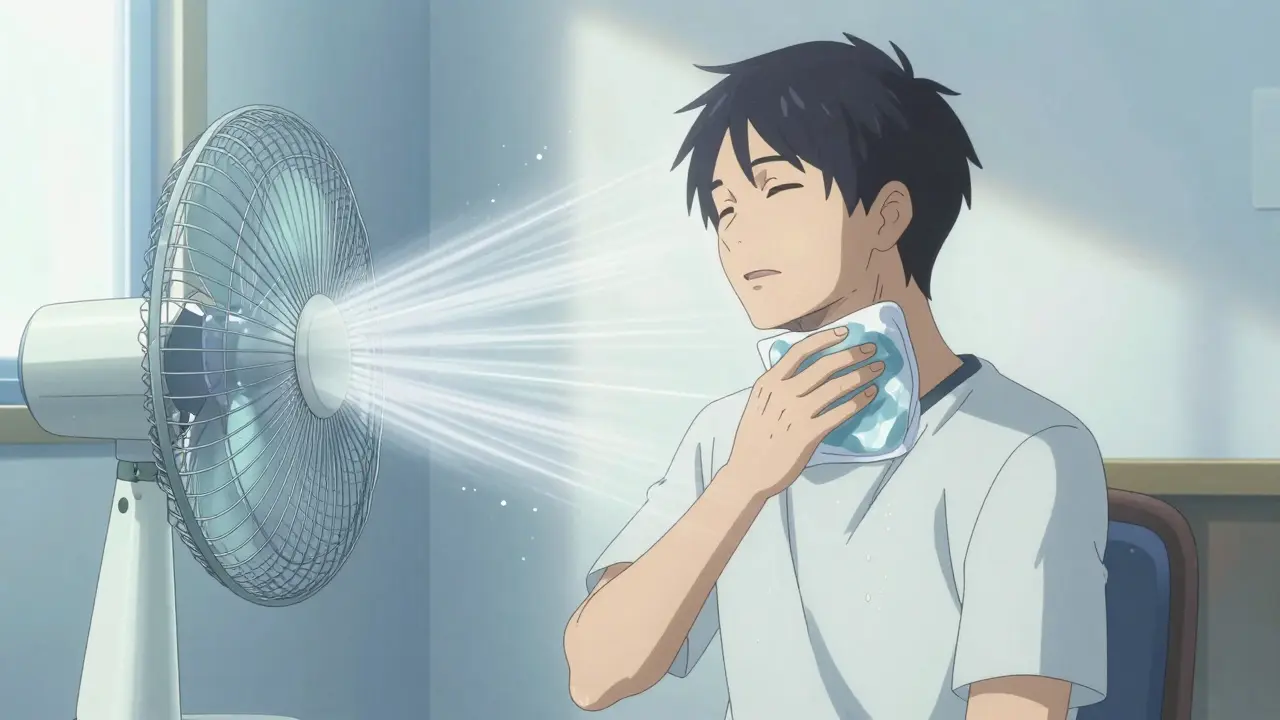
- Environmental Control: If you enjoy working out, try air-conditioned gyms or use a fan directly on your skin. Cooling the skin externally can sometimes prevent the internal temperature from hitting the trigger point.
- Gradual Warming: Some patients find that very gradual exposure to heat helps the body adapt, though this should only be done under medical supervision.
- Cool-Down Rituals: Keep a cold compress or a spray bottle of cool water handy. Most CU hives resolve within 90 minutes, but a cold rinse can cut that time in half.
Medical Treatment Options
When lifestyle changes aren't enough, medication is the next step. The first line of defense is almost always H1 Antihistamines. These drugs block the histamine receptors, preventing the bumps from forming even if your mast cells release the chemicals.
Non-sedating options like cetirizine or loratadine are preferred because they don't make you drowsy during the day. In some cases, standard doses don't work. Doctors may prescribe a higher dose-sometimes up to four times the recommended amount-to get symptoms under control. For those who are still struggling, adding an H2 blocker (like famotidine) can provide a second layer of protection, as histamine interacts with different receptors in the skin.
For severe or refractory cases, newer biological therapies are emerging. Omalizumab, for example, has shown success in patients who don't respond to traditional pills. While these are more expensive, they offer a level of symptom control that was previously impossible for many.
When Does it Become an Emergency?
For the vast majority of people, CU is just an annoying skin rash. However, a small percentage (around 12%) experience systemic symptoms. If you notice your throat tightening, difficulty breathing (bronchospasm), or a sudden drop in blood pressure (feeling faint), this is no longer just a skin issue-it's a systemic reaction.
In these rare cases, a doctor may prescribe an epinephrine auto-injector. It is vital to distinguish between a localized heat rash and a full-blown anaphylactic event. If you have a history of wheezing or fainting during heat exposure, seek a specialist's help immediately to create an emergency action plan.
Does Cholinergic Urticaria ever go away on its own?
Yes, it can. While it is often a chronic condition, about 30% of cases resolve spontaneously within 7 to 10 years after they first start. Many people find that as they get older, the severity of their flares naturally decreases.
Can spicy food actually cause these hives?
Absolutely. Spicy foods can trigger the sweat response by stimulating the same nerve fibers that respond to actual heat. This is why some people break out in hives while eating hot wings even in a cold room.
How do doctors test for this condition?
The gold standard is the passive warming test. A doctor will safely raise your core body temperature by about 0.5°C. If you have CU, the characteristic tiny wheals will typically appear within minutes.
Are there any side effects to the medications?
First-generation antihistamines often cause significant drowsiness. This is why doctors recommend second-generation options like cetirizine or loratadine, which provide relief without making you feel sleepy.
Can I still exercise if I have heat hives?
Yes, but you may need to adjust your environment. Using a fan, wearing moisture-wicking clothes, and working out in a cool room can significantly reduce the frequency and intensity of flares.
Next Steps for Management
If you suspect you have CU, the first step is to keep a trigger log for about two to three months. Note the temperature, what you were doing, and what you ate before a flare. This data is gold for your dermatologist.
Depending on your experience, your path will differ:
- Mild Cases: Focus on clothing and temperature control. Use over-the-counter non-sedating antihistamines as needed.
- Moderate Cases: Consult an allergist for a daily dosing schedule of H1 blockers and potentially H2 blockers for better coverage.
- Severe Cases: Request a referral for biologic therapy and ensure you have an emergency kit if systemic symptoms are present.
Rauf Ronald
April 9, 2026 AT 09:48Most of us find that keeping a detailed trigger log is a total game changer for managing this. I've seen people swear by non- prescription antihistamines taken about an hour before a known trigger like a gym session or a sauna visit. It is all about that proactive approach to dampen the histamine response before the mast cells go wild. Also, wearing breathable, moisture-wicking fabrics instead of heavy cotton can really help keep the skin temperature stable and reduce the severity of the pinpoint hives. Just keep pushing through and stay consistent with your management plan because it really does get easier once you nail down your specific patterns.
Jay Vernon
April 11, 2026 AT 06:25This is so helpful! ☀️🙌
Benjamin cusden
April 11, 2026 AT 17:50The biological explanation provided here is rudimentary at best. One should really be looking into the nuances of the cholinergic nerve fibers and the specific role of acetylcholine in triggering the mast cell degranulation process to actually understand the pathology. It is quite simplistic to just call it an overreaction of the immune system without delving into the neurogenic inflammation aspects that differentiate this from standard urticaria.
Grace Lottering
April 13, 2026 AT 08:58Big Pharma just wants us on meds. They hide the real causes. Probably related to new 5G frequencies heating up the skin. Wake up.
Nathan Kreider
April 14, 2026 AT 02:25I can totally relate to the social anxiety part. It's really hard when you feel like everyone is staring at your face turning red. Just know that you're doing great and it's okay to take breaks when things get too warm.
Vivek Hattangadi
April 14, 2026 AT 04:42That is a great point about the social anxiety. I think many of us feel that way. Maybe we could all share a list of the best cooling products that actually work without being too bulky? I've found some cooling neck wraps that are absolute lifesavers during the summer months in India where the humidity just makes everything worse. Let's help each other out with some practical gear tips!
Laurie Iten
April 15, 2026 AT 13:43it makes me think about how the body tries to protect itself but ends up creating its own prison... the irony of a cooling mechanism causing a heat flare is just a strange loop of nature
Windy Phillips
April 16, 2026 AT 16:12One would assume that individuals would have the basic discipline to manage their own temperature... but alas, some simply enjoy the drama of a medical condition!!! It is quite fascinating how some people make this their entire personality, isn't it???
Jitesh Mohun
April 17, 2026 AT 10:41stop complaining about the drama and just use the meds if they work for you stop wasting time
Kathleen Painter
April 18, 2026 AT 14:15I think it's important to remember that everyone's journey with their skin is a bit different, and while some of us might find the clinical explanations a bit dry, the emotional weight of feeling uncomfortable in your own skin is something that really needs more validation in the medical community because we often focus so much on the physical symptom that we forget the mental toll of constantly scanning a room for a breeze or a cold spot to stand in, which can honestly be exhausting over a long period of time if you're just trying to live a normal life without worrying about a sudden temperature spike from a stressful conversation or a quick walk to the car.
Stephen Luce
April 19, 2026 AT 01:35I hear you. It really is an invisible struggle that most people just don't get until they experience it themselves.
Ruth Swansburg
April 20, 2026 AT 21:24Stay strong everyone. You can manage this. Keep fighting!
Rupert McKelvie
April 22, 2026 AT 06:33It's great to see so many people sharing their experiences here. Even though it's a tough condition, the fact that there are ways to manage it means we can still enjoy the things we love. Keep staying positive and keep looking for those little wins in your daily routine. We've got this!