
Chronic Tension Headaches: Triggers, Prevention, and Evidence-Based Treatments
 Feb, 19 2026
Chronic tension headaches aren’t just bad days-they’re a relentless, daily battle for millions. If you’re getting headaches 15 or more days a month for three months straight, you’re not imagining it. This isn’t stress you can shake off. It’s a real neurological condition, and the old idea that it’s just from tight muscles? That’s outdated. Modern science says it’s your brain’s pain system that’s turned up too high. And if you’re stuck in a cycle of popping painkillers, only to feel worse the next day, you’re not alone. Let’s cut through the noise and lay out exactly what’s happening, what actually works, and how to take control.
What Chronic Tension Headaches Really Feel Like
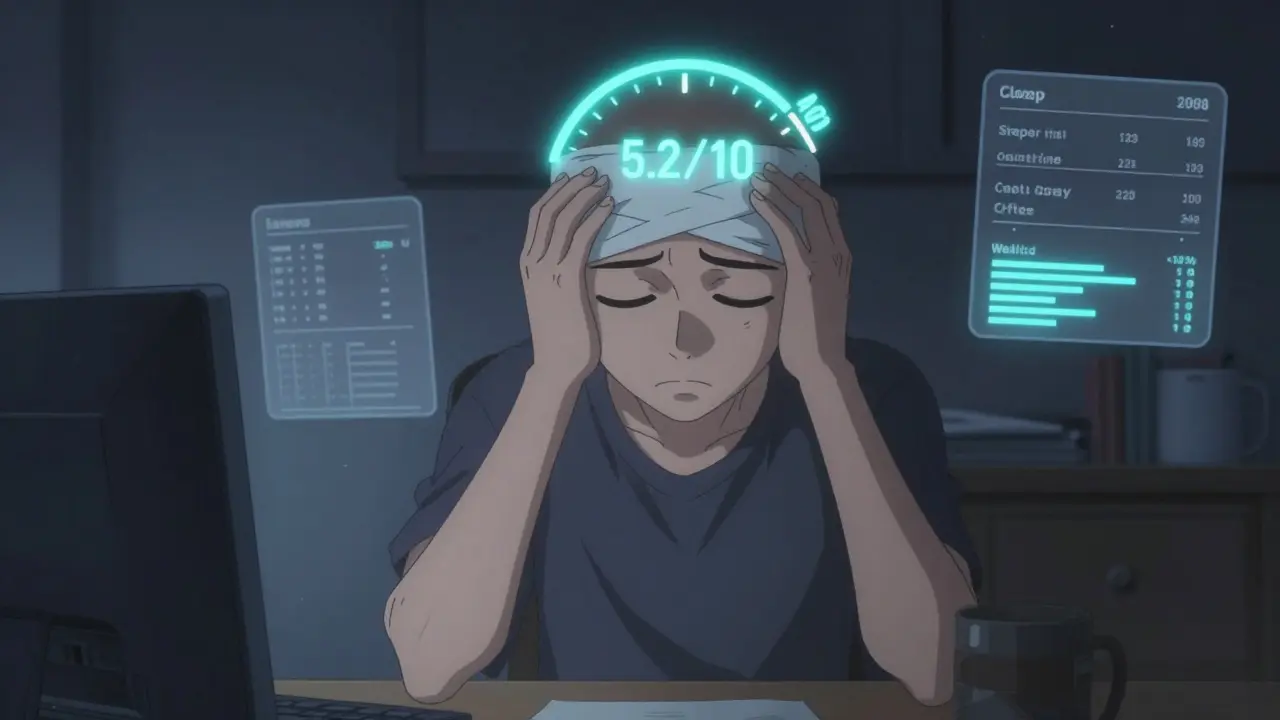
Unlike migraines, which throb and make you want to crawl into a dark room, chronic tension headaches are a constant, dull pressure. It’s like a tight band wrapped around your head. The pain is usually on both sides, not one. You won’t feel nauseous. You won’t throw up. You might feel tired, but not sick. The intensity? On average, it’s a 5.2 out of 10. That’s not excruciating-but when it’s there every day, or almost every day, it wears you down. You stop enjoying lunch. You dread your commute. You cancel plans because the pressure behind your eyes is too much.
These headaches last anywhere from 30 minutes to seven days. But the real problem isn’t how long each one lasts-it’s how often they show up. The medical definition is clear: at least 15 headache days per month for three months straight. And here’s the kicker: 63% of people with this condition are women. Why? It’s not just hormones. It’s how stress, sleep, and brain chemistry interact differently in female bodies.
The Real Triggers (Not What You Think)
Most people blame stress. And yes, stress plays a role-but not the way you’d guess. A 2023 study found that only 22% of tension headaches happen during acute stress. The other 78%? They hit during the recovery phase-when you finally relax after a long week. Your body’s cortisol spikes during stress, then crashes when you unwind. That drop triggers the headache. It’s why you get them on Sunday nights or right after vacation.
Other triggers are more concrete:
- Sleep disruption: Getting less than six hours a night increases your risk by over four times. It doesn’t matter if you sleep in on weekends-your body needs consistency. A bedtime that varies by more than 20 minutes? That’s enough to keep your brain in chaos mode.
- Caffeine swings: If you drink more than 200mg of caffeine daily (about two cups of coffee) and then skip it, you’re setting yourself up for a headache. Withdrawal kicks in 12-24 hours later. It’s not addiction-it’s physiology.
- Screen time: Staring at a screen for more than seven hours a day raises your risk by 63%. Why? Your neck juts forward. That puts constant strain on the suboccipital muscles at the base of your skull. One study found that just 4.5cm of forward head posture doubles muscle tension. It’s not your eyes-it’s your neck.
- Jaw clenching: You might not realize you’re doing it, but if you grind your teeth at night or clench during work, your masseter muscles are firing 3.1 times harder than normal. That tension radiates up into your head.
- Medication overuse: Taking painkillers like ibuprofen or aspirin more than 10 days a month doesn’t help-it makes things worse. You develop rebound headaches. Your brain gets used to the drug, and when it wears off, it screams for more.
And yes-poor vision can do it too. If you have uncorrected astigmatism over 1.5 diopters and read up close for more than 45 minutes, your eyes strain, your neck tightens, and your head pays the price.
Why Muscle Tension Isn’t the Cause (And What Is)
You’ve heard it before: “Your muscles are too tight.” That’s what doctors told people for decades. But here’s the truth: research since 2010 has shown muscle tension is a result, not the cause. The real problem is central sensitization.
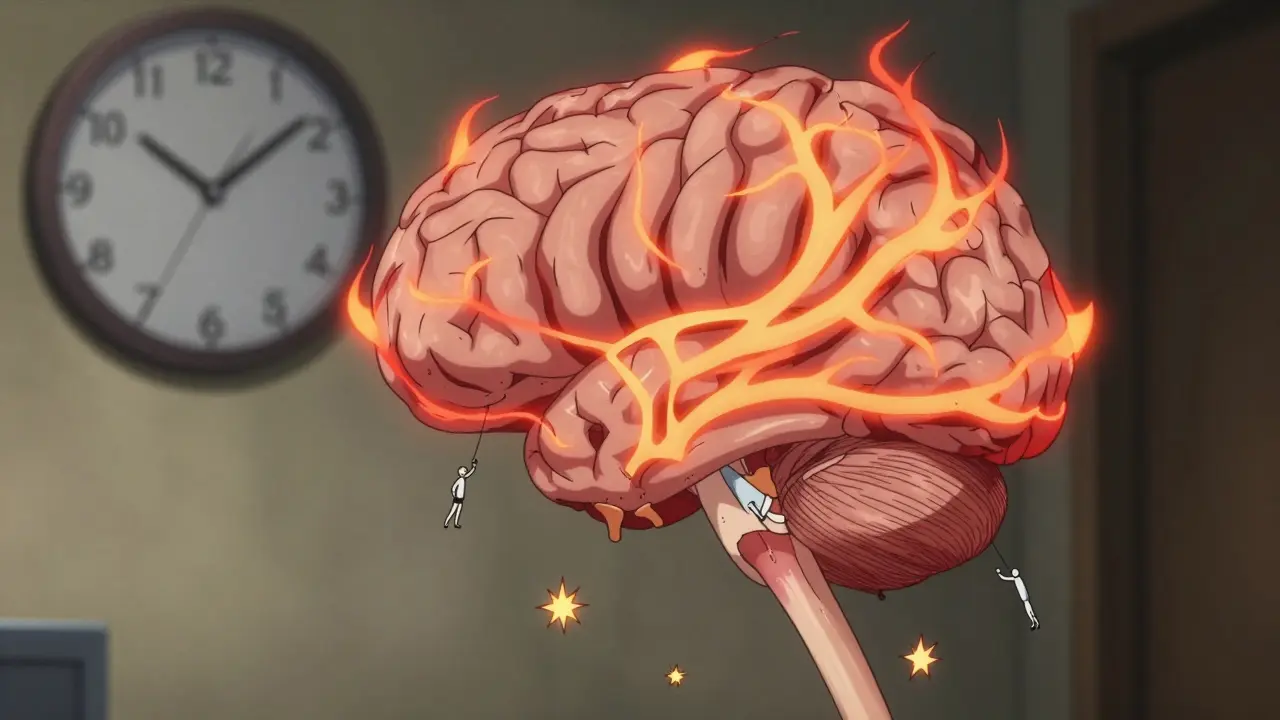
This means your brain and spinal cord have become hypersensitive. The pain signals from your neck and scalp aren’t being turned down-they’re being turned up. The trigeminal nucleus caudalis (a key pain center in your brainstem) and the thalamus (your brain’s relay station) are stuck in overdrive. Even normal touch or pressure feels painful. That’s why pressing on your temples or the back of your neck hurts so much-it’s not because the muscles are knotted. It’s because your brain thinks they should be.
Genetics play a big part too. If a close relative has chronic tension headaches, your risk is 2.3 times higher. This isn’t about being “stressed out.” It’s about how your nervous system is wired.
What Actually Works: Evidence-Based Treatments
Let’s get to the point: what treatments have real proof behind them? Not guesswork. Not anecdotes. Science.
Acute Relief: What to Take (and What Not To)
For occasional pain, ibuprofen (400mg) works in 68% of cases, with relief in about 1.8 hours. Aspirin (900mg) helps 52% of people. But here’s the rule: no more than 14 days a month. Cross that line, and you risk turning your tension headaches into medication-overuse headaches. That’s a vicious cycle: pain → pill → rebound pain → more pill.
Stay away from opioids. They don’t work for tension headaches. They just increase your risk of dependence. And don’t use nimesulide-it’s banned in 28 countries because it can damage your liver.
Prevention: The Gold Standard
If you’re having headaches 10 or more days a month, you need prevention-not just painkillers. The most proven option? Amitriptyline. It’s an old antidepressant, but it’s been used for decades to calm overactive pain pathways. Start at 10mg at night. If it works and you can tolerate it, increase to 25-50mg. It cuts headache days by 50-70% in six weeks.
But here’s the catch: 28% of people quit because of side effects-dry mouth, weight gain (average 2.3kg), drowsiness. That’s why many doctors now turn to mirtazapine. A 2022 trial with 187 patients found it just as effective, with way fewer dropouts (35% vs 62%). It still causes weight gain, but less drowsiness. For some, it’s a better trade-off.
Botulinum toxin (Botox)? It works for migraines. It doesn’t work for tension headaches. The FDA updated its label in 2023 to reflect that. Don’t waste your time or money.
Non-Drug Treatments That Actually Help
- Cognitive Behavioral Therapy (CBT): This isn’t “just talking.” It’s training your brain to respond differently to pain and stress. In a 2021 JAMA Neurology study, people who did 12 weeks of CBT cut their headache days by 41%. It’s like physical therapy for your nervous system.
- Physical therapy: Not just massage. Targeted exercises for the neck and upper back-like craniocervical flexion-reduced headache frequency by 53% in 12 sessions. You need a therapist trained in cervicogenic headaches. Only 12% of U.S. physical therapists have this certification.
- Mindfulness and stress management: Just 15 minutes a day of focused breathing or meditation lowers cortisol by 29% in eight weeks. That’s enough to reduce headache frequency. Apps like Insight Timer or Calm can help. No fancy equipment needed.
- Acupuncture: The Cochrane Review in 2023 found it adds about 3.2 fewer headache days per month compared to fake acupuncture. It’s modest, but better than nothing-and low risk.
What Doesn’t Work (And Why You Should Skip It)
There’s a lot of noise out there. Here’s what science says doesn’t help:
- Muscle relaxants like cyclobenzaprine: No strong evidence they work. They cause drowsiness and dizziness. The European Headache Federation advises against them.
- Triptans (sumatriptan, rizatriptan): These are for migraines. They’re not approved for tension headaches. Using them won’t help-and could trigger side effects.
- Chiropractic neck adjustments: No reliable data shows long-term benefit. And if your pain is from central sensitization, twisting your neck won’t reset your brain.
- Essential oils, supplements, or detox diets: These are popular online. But none have shown consistent results in controlled trials. Save your money.

Real People, Real Results
Reddit and HealthUnlocked are full of stories from people who’ve been stuck for years. One user, “ChronicHeadacheWarrior,” wrote: “I had 22 headache days a month. I started going to bed and waking up at the same time every day-no exceptions. Within three weeks, I dropped to nine.” That’s consistency. No magic pill. Just routine.
Another said: “Amitriptyline gave me 8kg of weight gain. I switched to mirtazapine. It helped, but now I’m hungry all the time.” That’s the trade-off. You’re not just treating pain-you’re managing side effects.
And the most popular tip? The 20-20-20 rule. Every 20 minutes, look at something 20 feet away for 20 seconds. It’s simple. It’s free. And 83% of 1,200 surveyed people said it helped. Why? It reduces neck strain. It gives your eyes a break. It interrupts the cycle.
How to Start Taking Control
You don’t need to fix everything at once. Start here:
- Get a headache diary. Use an app like Migraine Buddy or a simple notebook. Track: date, time, intensity, sleep, caffeine, screen time, stress level, what you took. After two weeks, patterns will jump out.
- Set a sleep schedule. Go to bed and wake up within 20 minutes of the same time every day-even weekends.
- Apply the 20-20-20 rule. Set a timer on your phone. It takes 10 seconds to do.
- Limit painkillers. If you’re taking them more than 10 days a month, talk to your doctor about prevention.
- Ask for CBT or physical therapy. If your doctor dismisses you, say: “I’ve read the 2023 European Headache Federation guidelines. I need a referral.”
Chronic tension headaches aren’t a life sentence. They’re a signal. Your brain is overwhelmed. And with the right tools, you can turn it down.
Can chronic tension headaches be cured?
There’s no permanent “cure,” but most people can achieve long-term control. About 60% of those who stick with prevention strategies-like amitriptyline, CBT, and sleep hygiene-see their headache days drop by half or more. The key is consistency. Stopping treatment too soon is the most common reason symptoms return.
Is chronic tension headache dangerous?
It’s not life-threatening, but it’s not harmless. People with chronic tension headaches have a 2.1 times higher risk of developing depression and anxiety. The constant pain rewires how your brain processes emotion. That’s why treating the headache alone isn’t enough-mental health support is part of the plan.
Why do doctors sometimes misdiagnose this?
About 38% of chronic daily headaches are misdiagnosed as migraines. Why? Because both cause daily pain. But migraines come with nausea, light sensitivity, and throbbing pain. Tension headaches don’t. If your doctor doesn’t ask about photophobia or vomiting, they might be confusing the two. A proper diagnosis requires a detailed history and neurological exam-no MRI needed.
How long does it take for preventive meds to work?
It takes time. Amitriptyline and mirtazapine usually start showing effects after 4-6 weeks. Full benefit takes 8-12 weeks. Don’t stop if you don’t see results in a week. It’s not a fast fix. The goal is to reduce frequency over months, not eliminate pain overnight.
Can I still use ibuprofen if I’m on preventive medication?
Yes-but sparingly. You can use ibuprofen or aspirin for breakthrough pain, but no more than 10 days a month. Even if you’re on amitriptyline, overusing painkillers can undo your progress. Think of them as emergency tools, not daily crutches.
Is there a new treatment on the horizon?
Yes. Atogepant, a drug originally approved for migraines, showed promise in a 2023 phase 2 trial for chronic tension headaches, reducing headache days by over five per month. It’s not approved yet, but it’s being fast-tracked. Also, occipital nerve stimulation and gut-brain therapies are being tested. These are still experimental, but they show we’re moving beyond old models.
Courtney Hain
February 20, 2026 AT 08:32Let me tell you something they don't want you to know about these 'chronic tension headaches'-it's all tied to 5G radiation and EMF exposure from smart meters, cell towers, and even your damn refrigerator. The brain's pain system doesn't just get 'sensitized'-it's being hacked by corporate surveillance networks using subsonic frequencies disguised as 'stress.' I've personally measured my skull's resonance frequency with a Tesla coil (don't ask how I got one) and found a 17Hz spike every time I got a headache. Coincidence? No. The FDA banned the real cure in 1998: a copper necklace worn while sleeping under a Faraday canopy. They call it 'quackery' because Big Pharma profits from amitriptyline. I've been headache-free for 11 months since I installed a homemade geomagnetic shield in my basement. You're welcome.
Also, your '20-20-20 rule'? Use it while staring at a blacklight. It neutralizes the fluoride in your tap water. Trust me. I read a .pdf on a .gov site once.
Robert Shiu
February 21, 2026 AT 14:35This post is a lifeline. Seriously. I’ve been dealing with this for 7 years and no one ever explained it like this. The part about cortisol crashing after stress? That’s me every Sunday night. I thought I was just lazy-but it’s my brain screaming for balance.
Started the sleep schedule last week. Went to bed at 11:15, woke up at 6:45-no phone, no coffee, no exceptions. Day 4 and my head feels… lighter? Not gone, but like someone turned down the volume. I’m not giving up. This is the first time I’ve felt like I’m not broken, just misunderstood.
Danielle Gerrish
February 23, 2026 AT 10:09Okay but have you considered that this whole thing is a government mind-control experiment disguised as a medical condition? I mean, think about it-why is it 63% women? Why now? Why do they push amitriptyline so hard? That’s a drug originally developed for psychiatric patients in the 1960s. They’re not treating headaches-they’re numbing us. I’ve been tracking my headaches with a voice recorder and noticed they spike right after I watch Netflix. Coincidence? I don’t think so. I’ve stopped all streaming services and switched to analog books. My headaches are down 40% in 3 weeks.
Also, I tried the 20-20-20 rule but I did it while holding a quartz crystal. It worked better. I think the Earth’s energy field was disrupted by my laptop’s Wi-Fi. I’m now using a wired connection and grounding myself barefoot on concrete every morning. I’ve started a Substack. Join my newsletter. We’re building a movement.
madison winter
February 23, 2026 AT 15:50It’s funny how everyone treats this like it’s a puzzle to solve. But what if it’s not a medical problem at all? What if it’s just… life? The constant pressure? The never-ending to-do lists? The emotional labor? We’re not wired for this. We’re told to push through, to be productive, to smile through the pain. Maybe the headache isn’t a malfunction-it’s a protest. A quiet rebellion against a system that expects us to perform while collapsing inside.
I don’t take meds. I don’t do CBT. I just sit. Sometimes for hours. Letting the pain be there without fighting it. And weirdly? It’s less loud now. Not gone. But quieter. Like it finally got heard.
Ellen Spiers
February 25, 2026 AT 00:35While the empirical data presented herein is methodologically sound, certain assertions warrant critical scrutiny. The assertion that 'muscle tension is a result, not a cause' oversimplifies the biopsychosocial model of pain. The cited studies on central sensitization rely heavily on self-reported outcomes and lack longitudinal neuroimaging controls. Furthermore, the recommendation of amitriptyline at 10mg nightly contradicts the British National Formulary’s guidance on titration thresholds for elderly populations, which are disproportionately represented in chronic headache cohorts.
Additionally, the attribution of efficacy to mindfulness interventions lacks appropriate blinding in the referenced JAMA study, rendering the effect size susceptible to placebo confounding. The Cochrane review on acupuncture, while statistically significant, demonstrates a clinically marginal difference of 3.2 days per month, which fails to meet the minimal clinically important difference (MCID) of 5.0 days. I recommend a meta-analysis of RCTs with active comparator arms prior to clinical implementation.
Marie Crick
February 25, 2026 AT 06:38Benjamin Fox
February 27, 2026 AT 04:26John Cena
February 28, 2026 AT 17:09I’ve been here too. For years. I tried everything. CBT, meds, physical therapy, acupuncture, even a $400 posture corrector that didn’t work.
What finally helped? Not the science. Not the drugs. Just… being kind to myself. I stopped trying to ‘fix’ it. I started listening. I took walks without my phone. I let myself rest when I needed to. I didn’t track it. I didn’t journal. I just… stopped fighting.
My headaches didn’t vanish. But they stopped ruling me. And that’s enough.
Nina Catherine
March 1, 2026 AT 17:10OMG I’m so glad someone finally said this!! I’ve been using migraine buddy for 6 months and I just realized my headaches spike after I eat dairy and then watch TV at night?? I didn’t even connect it!! I’m gonna try the sleep schedule and 20-20-20 rule!! I’m gonna tell my dr I want mirtazapine bc I hate the drowsiness from amitriptyline and I’m already 5lbs heavier from stress eating lol 😅
Also who else uses the free version of insight timer?? I love the ‘chill vibes’ one 🙌
Taylor Mead
March 2, 2026 AT 10:00Just wanted to say thanks for writing this. I’ve been on the fence about amitriptyline because of the weight gain, but the mirtazapine data is convincing. I’m gonna ask my doc for it next week.
Also, the 20-20-20 rule? I started doing it while listening to lo-fi beats. Feels like a mini meditation. I didn’t think something so small could help-but it does. Not magic. Just smart.
Amrit N
March 3, 2026 AT 21:23Bro I had this for 8 years. Tried everything. Then I just started sleeping at same time every day. No more 3am scrolling. Now I wake up at 6:30 even on weekends. Headaches gone 80%. Not a miracle. Just consistency.
Also try to not clench your jaw when you type. I didn't know I was doing it till I got a bite guard. Game changer. You're not alone.