
Corticosteroid Taper: How to Minimize Withdrawal Symptoms
 Feb, 12 2026
Corticosteroid Taper Calculator
Personalized Tapering Schedule
This tool calculates a safe tapering schedule based on your starting dose, duration of treatment, and symptoms. Always follow your doctor's guidance.
How This Works
Based on clinical guidelines:
- Over 20 mg: Reduce by 2.5-5 mg every 3-7 days
- At 15 mg: Slow to 1 mg every 1-2 weeks
- Below 7.5 mg: Very slow tapering (0.5 mg)
- Recovery time varies by duration and dose
This tool provides a starting point for discussion with your doctor.
Your Tapering Schedule
Estimated Taper Duration
Critical Thresholds
| Week | Dose (mg) | Notes |
|---|
Important Warning
Stopping corticosteroids like prednisone isn’t as simple as taking your last pill and calling it quits. If you’ve been on these medications for more than a few weeks, your body has stopped making its own cortisol. Suddenly cutting them off can trigger a cascade of symptoms that feel like your body is shutting down. Corticosteroid taper isn’t just a recommendation-it’s a medical necessity to avoid withdrawal syndrome, adrenal crisis, or a dangerous flare of your original condition.
Why Your Body Needs a Gradual Exit
When you take corticosteroids daily for over 2-4 weeks, especially at doses higher than 7.5 mg of prednisolone, your adrenal glands stop working the way they should. Your brain stops signaling them to produce cortisol because it thinks you’re getting plenty from the pill. This is called HPA axis suppression. It’s not a flaw-it’s normal biology. But when you stop the medication too fast, your body doesn’t know how to restart its own production. That’s when withdrawal hits. Symptoms aren’t mild. A study in the Journal of Clinical Endocrinology & Metabolism found 78% of people who quit abruptly experienced severe fatigue, muscle aches, joint pain, nausea, and dizziness. These aren’t side effects-they’re signs your adrenal glands are still asleep. The goal of tapering is simple: give your HPA axis time to wake up. But how long that takes depends on how long you were on the meds. Someone on steroids for three weeks might bounce back in a couple of weeks. Someone on high doses for over a year? That recovery can take six to twelve months. Rushing it won’t help. It’ll hurt.How Fast Should You Taper?
There’s no one-size-fits-all schedule. Tapering speed depends on your starting dose, how long you’ve been on it, and what condition you’re treating. But there are proven patterns. If you’re on more than 20 mg of prednisone daily, you can start with a faster drop: reduce by 2.5 to 5 mg every 3 to 7 days. This is safe because your body still has enough signal to respond. But once you hit 15 mg, things change. That’s the threshold where most people start feeling withdrawal symptoms. At this point, you slow down. Drop by 1 mg every 1 to 2 weeks. Some people need to go even slower-0.5 mg every few weeks. The final stretch is the trickiest. When you’re below 7.5 mg (the body’s natural daily output), your adrenal glands are trying to wake up. This is when timing matters. Doctors recommend taking your dose in the morning, around 8 a.m., to mimic your body’s natural cortisol rhythm. Using short-acting steroids like prednisolone or hydrocortisone at this stage helps avoid spikes and crashes.What Withdrawal Symptoms Actually Look Like
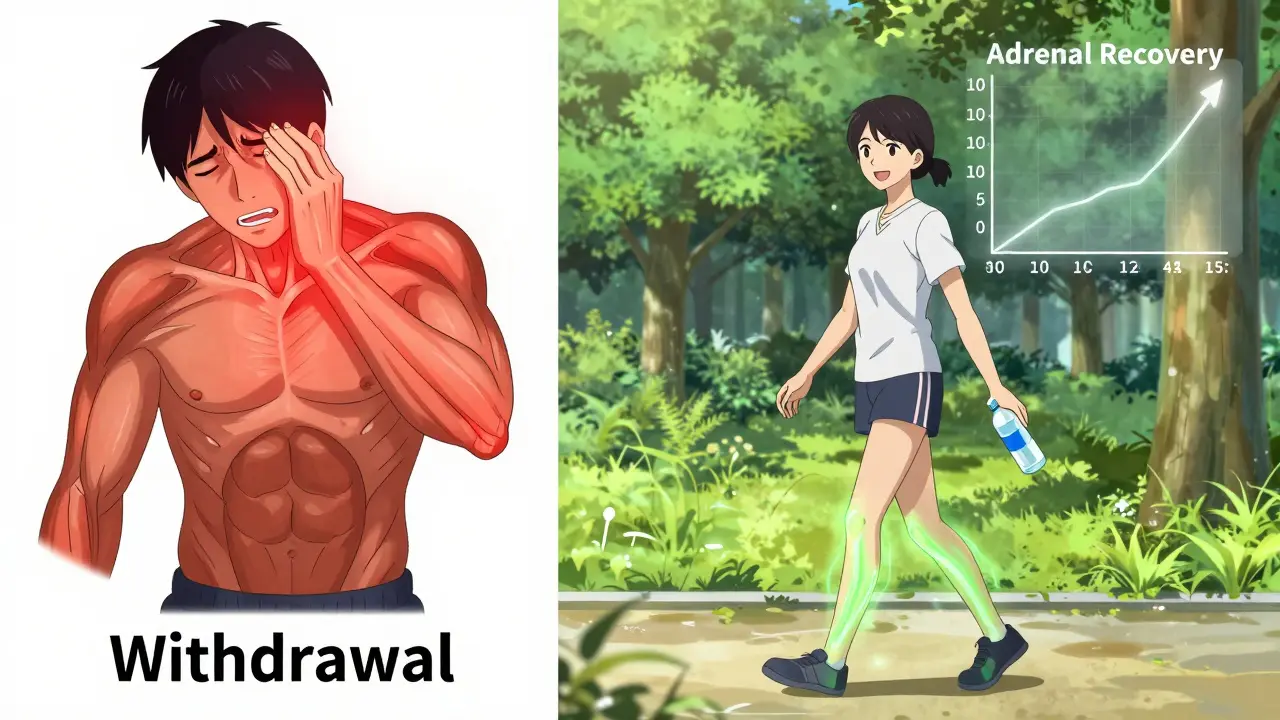
Not all aches and fatigue mean you’re withdrawing. It’s easy to confuse three different things:- Withdrawal syndrome: Generalized fatigue, muscle pain, joint stiffness, nausea, low appetite, trouble sleeping, mood swings. No fever. No swelling. No lab markers of inflammation.
- Disease flare: Your original condition comes back hard. For rheumatoid arthritis, that means swollen, hot joints. For Crohn’s, it’s bloody diarrhea and cramping. Lab tests show elevated inflammation markers.
- Adrenal insufficiency: This is dangerous. You might feel dizzy when standing, have low blood pressure, low sodium, low blood sugar, or vomiting. It can turn into shock. This isn’t just fatigue-it’s a medical emergency.
How to Manage Symptoms Without Going Back to High Doses
You don’t have to suffer through this alone. Research shows several non-drug strategies can cut withdrawal symptoms in half. Exercise helps more than you think. A 2022 study in Rheumatology found that patients who walked 20 minutes a day or did warm-water pool exercises saw a 42% drop in muscle and joint pain. Physical therapy cut pain scores from 7.2 to 3.1 on a 10-point scale in just four weeks. Sleep and diet are powerful tools. A Mayo Clinic review of 1,247 patients showed those who got 7-9 hours of sleep, limited caffeine to under 200 mg a day (about two cups of coffee), and ate a Mediterranean-style diet (lots of veggies, fish, olive oil, nuts) cut symptom severity by 55%. Cognitive behavioral therapy (CBT) is another game-changer. A trial by the American Addiction Centers found CBT reduced anxiety and depression linked to withdrawal by 68% compared to no treatment. Talking through fear, sleep disruption, and mood swings helps your brain rewire its response.When You Need to Go Back Up-And How to Avoid It
About 22% of people need to temporarily increase their dose during tapering. That doesn’t mean you failed. It means your body needs more time. If you start feeling extreme fatigue, nausea, or dizziness, don’t panic. Contact your doctor. They might hold your taper for 1-2 weeks or bump you up by 1-2 mg. Then try again. This is normal. The goal isn’t to taper fast-it’s to taper safely. The biggest mistake? Rushing. A 2023 survey of 3,872 patients on Drugs.com found that 18% had symptoms lasting over 60 days. Most of them had been told to cut their dose too quickly. Patients who followed a structured, step-by-step plan reported 89% satisfaction. Those who tapered “as needed” had only 32% satisfaction.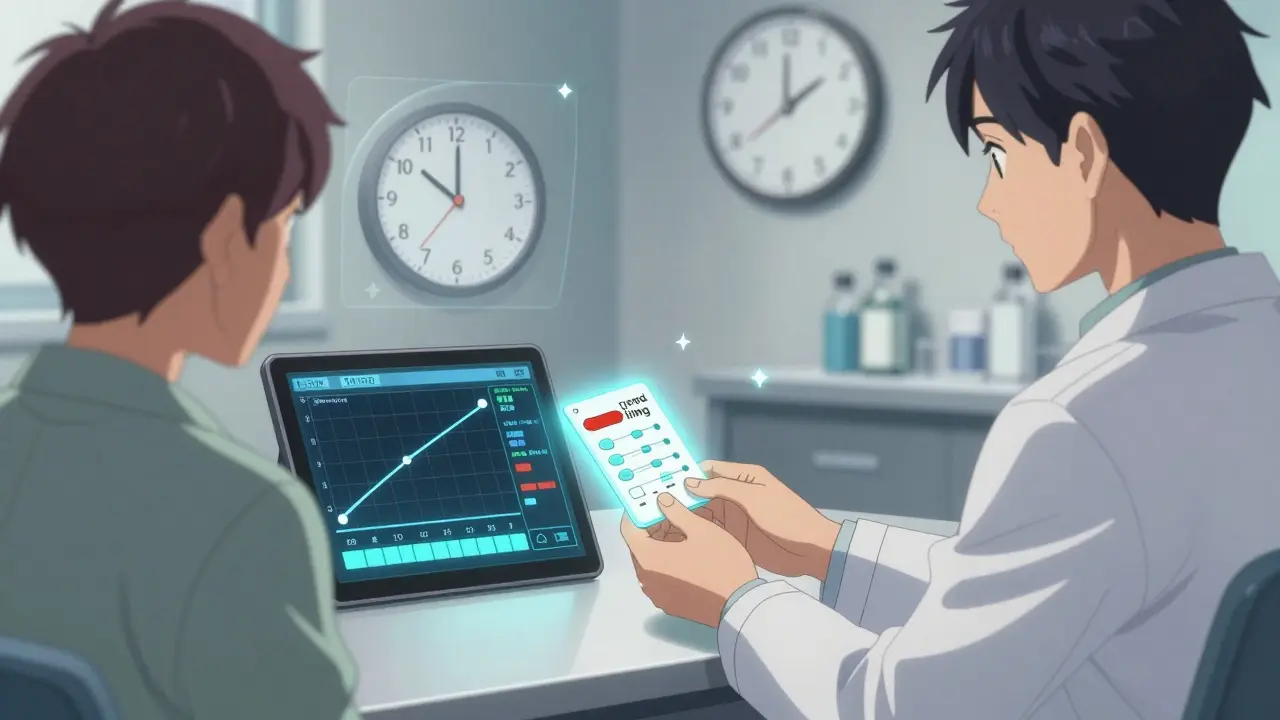
What Your Doctor Should Be Doing
A successful taper isn’t just about the pill schedule. It’s about coordination. You should have:- A written taper plan-no guesswork.
- Weekly check-ins during rapid tapering, then every two weeks below 15 mg.
- Education on when to call for help (dizziness, vomiting, fainting).
- An emergency steroid card that says you’re on a taper and need extra steroids during illness or injury.
What’s New in 2026
Tapering isn’t stuck in the past. New tools are making it smarter. Mayo Clinic rolled out a digital tapering assistant in March 2024. It tracks your symptoms, adjusts your schedule based on how you’re feeling, and sends alerts if you’re at risk. In a pilot study of 412 patients, it cut complications by 37%. Researchers are now testing salivary cortisol awakening response-measuring your cortisol levels right after waking. This gives a real-time read on how well your adrenals are recovering. Early results show 82% accuracy in predicting how long your taper should last. In the future, AI-driven systems integrated into electronic health records will automatically adjust tapering based on your data. Clinical trials are already underway at Johns Hopkins.What You Can Do Today
If you’re on corticosteroids and planning to stop:- Ask for a written taper plan. Don’t rely on memory.
- Track your symptoms daily: fatigue, pain, mood, sleep.
- Start walking 20 minutes a day-even if you’re tired.
- Limit caffeine. Aim for 7+ hours of sleep.
- Carry your steroid emergency card. It could save your life.
- Know the difference between withdrawal and a flare. If in doubt, call your doctor before changing your dose.
How long does corticosteroid withdrawal last?
Withdrawal symptoms typically last 2 to 6 weeks, but can stretch beyond 60 days if the taper was too fast. People who were on high doses for over a year may experience fatigue and joint pain for months. Recovery time depends on how long you were on steroids, your dose, and how slowly you tapered.
Can I stop prednisone cold turkey?
No. Stopping prednisone suddenly after more than 2-4 weeks of use can trigger adrenal insufficiency, a life-threatening condition. Symptoms include severe fatigue, low blood pressure, vomiting, and confusion. Always follow a medically supervised taper.
What’s the difference between withdrawal and a disease flare?
Withdrawal symptoms are general: fatigue, muscle aches, nausea, and mood changes without inflammation. A disease flare is specific to your condition-like swollen joints in rheumatoid arthritis or bloody diarrhea in Crohn’s. Lab tests can tell the difference. If you’re unsure, don’t increase your dose-call your doctor.
Do I need blood tests during tapering?
Not always, but if you have symptoms at low doses (below 5 mg), your doctor may order a cosyntropin stimulation test. This measures how well your adrenals respond. A peak cortisol level above 400-500 nanomol/L after the test means your HPA axis is recovering. If it’s low, you may need a slower taper or further testing.
Why do some people need to go back up on steroids during tapering?
It’s common and doesn’t mean you failed. Your body might need more time to restart cortisol production. If symptoms like extreme fatigue, nausea, or dizziness appear, your doctor may hold the taper for 1-2 weeks or increase your dose by 1-2 mg before trying again. This is part of a safe taper, not a setback.
Can exercise really help with steroid withdrawal?
Yes. A 2022 study showed that 20 minutes of daily walking or warm-water pool exercise reduced muscle and joint pain by 42%. Gentle movement improves circulation, reduces inflammation, and helps regulate mood. It’s not about intensity-it’s about consistency.
Is it safe to taper at home without doctor supervision?
No. Tapering requires monitoring for adrenal insufficiency, disease flare, and withdrawal symptoms. Without regular check-ins, you risk missing signs of danger. Always work with a provider who understands corticosteroid withdrawal and has a clear plan in place.
Brad Ralph
February 13, 2026 AT 17:44And now we’re supposed to ‘taper’ like we’re slowly unpluging a toaster? I’m just here for the drama.
christian jon
February 15, 2026 AT 16:50Suzette Smith
February 17, 2026 AT 15:31Autumn Frankart
February 17, 2026 AT 16:26Skilken Awe
February 18, 2026 AT 23:55Carla McKinney
February 20, 2026 AT 18:50Ojus Save
February 22, 2026 AT 01:08Jack Havard
February 22, 2026 AT 08:14Luke Trouten
February 23, 2026 AT 16:06Gabriella Adams
February 24, 2026 AT 11:05Kristin Jarecki
February 26, 2026 AT 03:39Jonathan Noe
February 27, 2026 AT 06:36