
Counterfeit Drugs in Developing Nations: How Fake Medicines Kill and What’s Being Done
 Mar, 12 2026
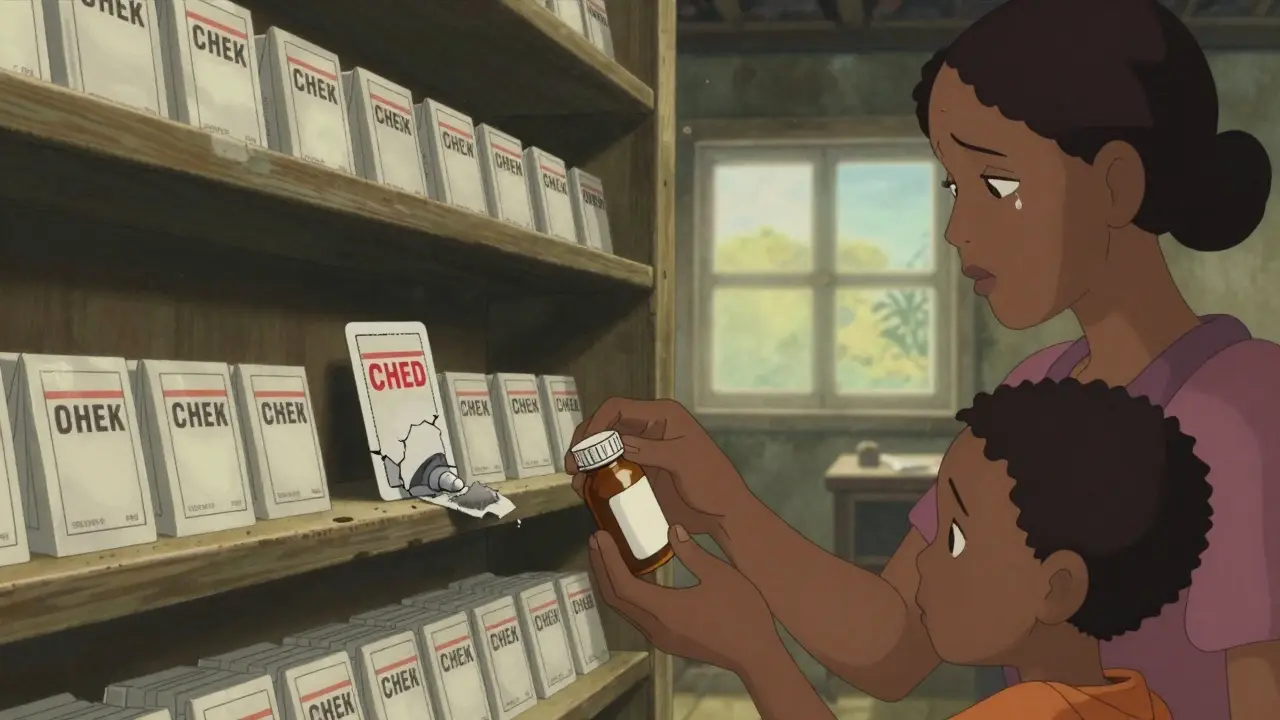
Every year, tens of thousands of people die in developing nations because they took a pill that looked real but did nothing - or worse, poisoned them. These aren’t rare tragedies. They’re the daily reality for millions who can’t afford or access real medicine. The World Health Organization says 1 in 10 medicines in low- and middle-income countries are fake or substandard. In some regions, that number climbs to 1 in 2. This isn’t just about fraud. It’s about survival.
What Makes a Medicine Fake?
Fake drugs don’t just mean counterfeit bottles with wrong labels. The WHO defines two main types: falsified and substandard. Falsified medicines are deliberately and fraudulently mislabeled - they might say they contain artemisinin for malaria, but have no active ingredient at all. Substandard medicines are made by authorized manufacturers but fail quality tests - maybe they expired, were stored wrong, or have too little of the drug to work.
Here’s what you might actually get:
- 30% of counterfeit drugs contain no active ingredient
- 45% have the wrong dose - too little, too much, or unevenly mixed
- 25% contain toxic substances like cement, rat poison, or industrial dye
These aren’t guesses. They’re based on lab tests from over 200,000 samples collected globally. In 2023, a study in rural Nigeria found that 61% of antimalarial drugs bought from local pharmacies failed basic chemical tests. In parts of Southeast Asia, nearly half of all antimalarials were fake. And it’s not just malaria. Antibiotics, heart pills, cancer drugs - all are targeted.
Why Does This Happen?
The problem isn’t that criminals are clever - though they are. It’s that systems meant to protect people are broken. In many developing nations, there’s no strong drug regulator. Pharmacies operate without inspections. Border checks are rare. And when medicines are smuggled across borders, they pass through 5 to 7 middlemen before reaching a patient. Each stop is a chance for substitution.
At the same time, real medicine is often unaffordable. A full course of genuine antimalarial drugs can cost $5-$10. Counterfeit versions sell for less than $1. For families living on $2 a day, the choice isn’t between safe and unsafe - it’s between medicine and hunger.
And the profit? It’s insane. Interpol reports counterfeit drugs can have a 9,000% markup. A pill that costs 2 cents to make sells for $2. That’s more profitable than drugs like cocaine. And the punishment? In many countries, getting caught selling fake medicine carries a fine - not jail time.
Who Pays the Price?
The human cost is brutal - and measurable.
According to the OECD, counterfeit anti-malarial drugs alone caused over 116,000 deaths in sub-Saharan Africa in 2018. That’s more than the population of many small cities. In 2020, the same group linked fake medicines to between 72,000 and 169,000 child deaths from pneumonia. Why? Because antibiotics with no active ingredient don’t cure infection - they let it spread.
And it doesn’t stop there. When people take weak antibiotics, bacteria don’t die - they adapt. That’s how drug-resistant strains of malaria, tuberculosis, and sepsis spread. The WHO calls this one of the biggest global health threats of the century. In 2024, a study in the Greater Mekong Subregion found that 28.4% of artemisinin-based combination therapies - the most effective malaria treatment - failed quality tests. That means nearly one in four patients got no treatment at all.
Real stories echo these numbers. A mother in Ghana told a WHO interviewer that her 4-year-old died after taking a fake antibiotic she bought at a roadside stall. A nurse in Kenya reported that 50% of malaria rapid test kits in her clinic were counterfeit - meaning patients were being misdiagnosed and sent home with deadly infections.
How Are Fake Drugs Made and Sold?
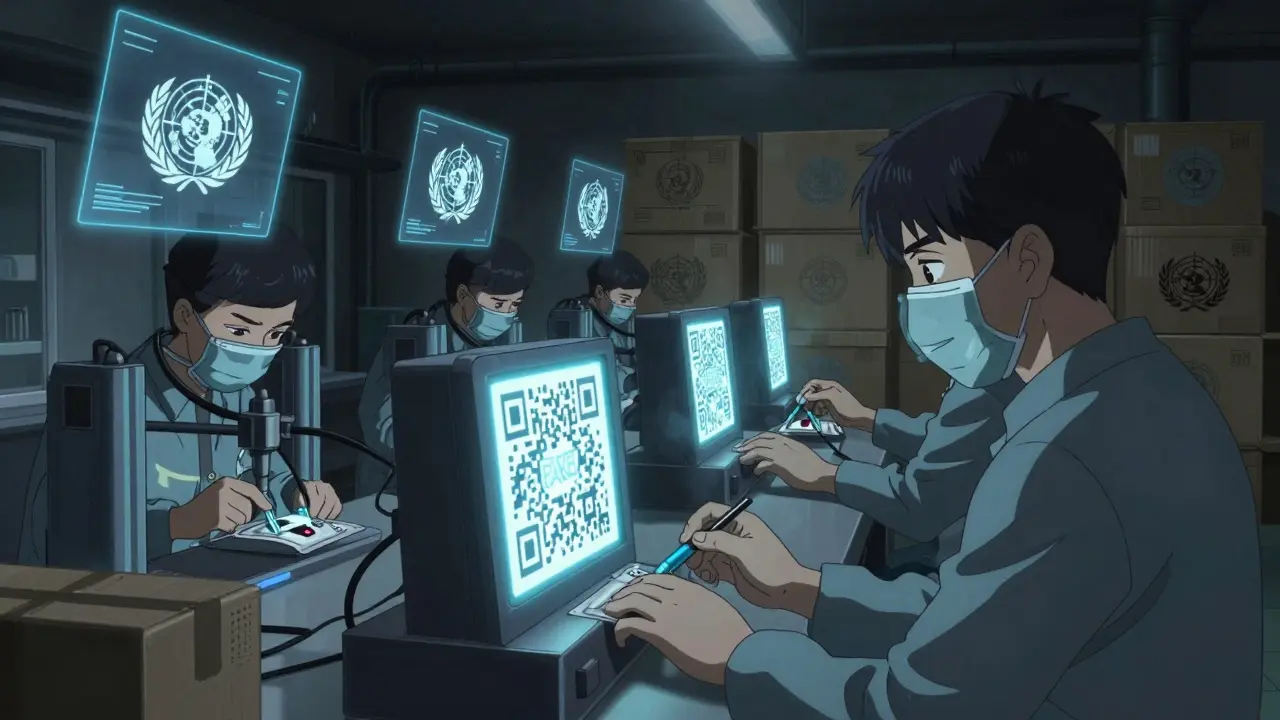
Most fake drugs come from China - 78% of high-quality counterfeits, according to Interpol. But distribution networks are global. Bangladesh, Lebanon, Syria, and Turkey now serve as regional hubs. The packaging? It’s terrifyingly accurate. Interpol says counterfeiters now replicate labels with 90% accuracy. Even pharmacists can’t tell the difference without tools.
Sophisticated criminals use 3D printing to mimic blister packs. They copy QR codes and holograms. Some even replicate the smell and texture of real pills. In 2025, a batch of fake cancer drugs was found in a rural clinic in Uganda - the packaging was identical to the real product, down to the batch number. Only lab testing revealed it had no active ingredient.
Sales channels are just as varied. You can find fake drugs in:
- Roadside stalls
- Unlicensed pharmacies
- Public hospitals with stolen or diverted stock
- Online pharmacies that look legitimate but ship from hidden warehouses
And it’s getting worse. In 2024, 15% of counterfeit medicines were found with AI-generated packaging - fake labels designed by algorithms that adapt to new regulatory labels in real time. Payments? Often made in cryptocurrency, making tracking nearly impossible.
What’s Being Done to Stop It?
There are solutions - but they’re not reaching everywhere.
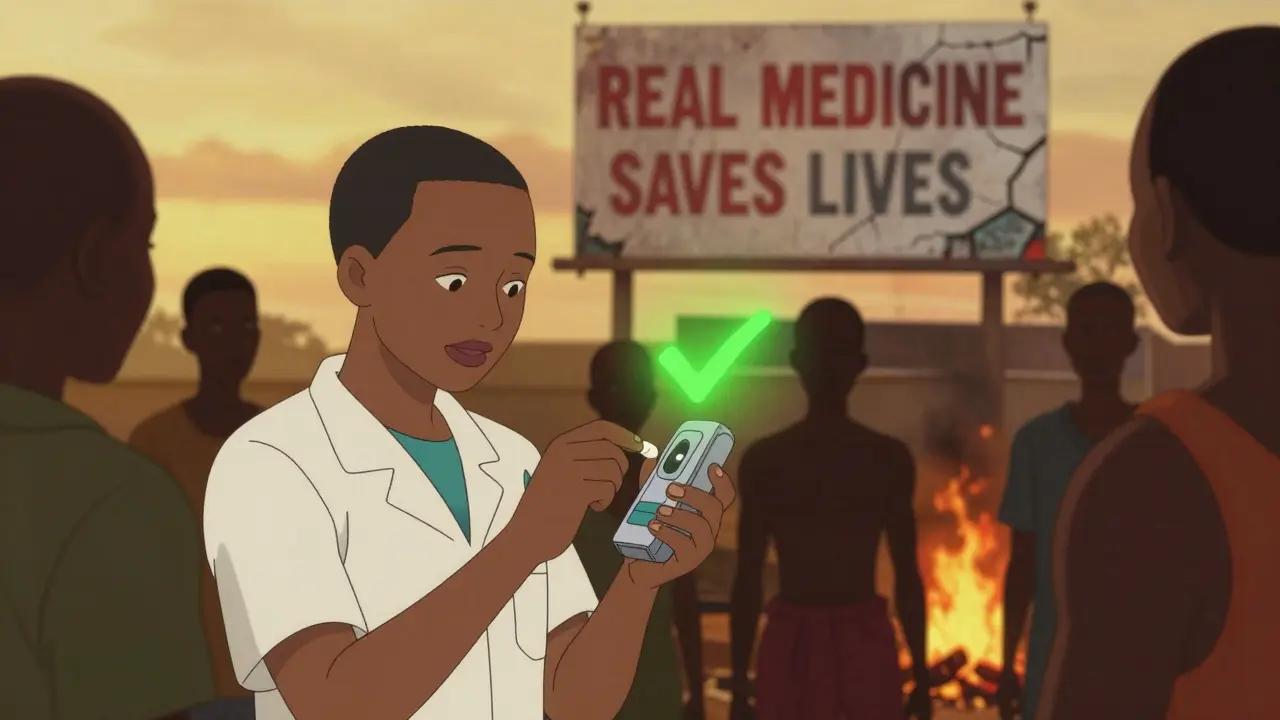
One of the most promising tools is mobile verification. Systems like mPedigree let users text a code from the medicine package to check authenticity. In Ghana, this system cut counterfeit use by 37% in pilot areas. One user wrote: “The SMS system saved my child’s life. We thought the antimalarial was real - until the reply said ‘fake’.”
But here’s the catch: only 28% of people in low-literacy areas can use these apps without help. And in rural clinics with no electricity or internet, even a smartphone doesn’t help.
Other tools exist:
- Spectroscopy devices - 95% accurate, but cost $10,000+ and need trained technicians. Only 15% of rural clinics have them.
- Chemical test kits - $5-$10 per test, 70% accurate. Used by NGOs in field clinics.
- Blockchain tracking - The WHO launched a global digital platform in March 2025 that tracks every medicine from factory to patient. So far, it’s active in 27 countries.
Some countries are making progress. Ghana, Kenya, and Senegal now require all imported medicines to carry a unique digital code. India has mandated serialization for all antimalarials. But in 85% of low-income countries, there’s no national system at all.
International efforts are growing. The Medicrime Convention, signed by 76 countries, makes counterfeiting a criminal offense. The EU is investing €250 million by 2026 to help 30 developing nations strengthen drug regulation. But enforcement remains weak. In 2024, Interpol’s Operation Pangea XVI seized 50.4 million fake doses - but only arrested 769 suspects. For every criminal caught, hundreds get away.
Why This Isn’t Just a “They” Problem
It’s easy to think this is someone else’s crisis. But fake drugs don’t respect borders. The same supply chains that deliver fake antimalarials in Nigeria also feed counterfeit insulin into Europe and the U.S. In 2023, the FDA seized shipments of fake diabetes drugs from India that were labeled for U.S. markets. The global pharmaceutical supply chain is one system - and when one link breaks, everyone’s at risk.
Also, when fake drugs cause drug resistance, it doesn’t stay in one country. A resistant strain of malaria born in Cambodia can spread to Africa in months. The same goes for antibiotic resistance. This isn’t a local problem. It’s a global one.
What Can Be Done - And What You Can Do
Fixing this won’t happen overnight. But progress is possible - if we act.
- Support strong regulation: Countries need independent drug regulators with real power - not just paper agencies.
- Invest in low-tech solutions: Solar-powered test kits, SMS verification, and community health worker training are affordable and scalable.
- Hold online sellers accountable: Platforms that sell medicines must verify sellers and block fake listings.
- Pressure governments: The WHO estimates $30.5 billion is spent yearly on fake drugs. That’s money that could train 100,000 nurses or build 10,000 clinics.
If you’re in a country where fake drugs are common, learn the signs: Is the packaging slightly off? Do the pills look different than before? Is the price suspiciously low? Ask for a batch number and verify it if you can. If you’re a healthcare worker, push for access to simple test kits. If you’re a donor or policymaker, fund verification systems - not just awareness campaigns.
There’s no magic bullet. But we know what works. The question is: do we have the will to scale it?
How common are counterfeit drugs in developing nations?
The World Health Organization estimates that at least 1 in 10 medicines in low- and middle-income countries are substandard or falsified. In some regions - like parts of West Africa or Southeast Asia - the rate climbs to 30% or higher. For certain drugs, like antimalarials, the rate can be as high as 50% in border areas.
What are the most common fake drugs?
Anti-infectives like malaria, HIV, and antibiotic drugs are the most commonly counterfeited - making up about 35% of cases. Cardiovascular drugs (20%) and central nervous system medications (15%) are also high-risk. Cancer drugs and insulin are increasingly targeted because they’re expensive and essential.
Can you tell fake medicine by looking at it?
Sometimes - but not reliably. Counterfeiters now replicate packaging with 90% accuracy. Subtle signs include misspelled words, mismatched colors, or pills that crumble too easily. But many fakes are nearly impossible to spot without lab tests or verification apps. Never rely on appearance alone.
Why don’t governments stop this?
Many lack resources, trained staff, or legal power to inspect every shipment. Corruption plays a role - some officials are bribed to look away. Even when laws exist, enforcement is rare. In 2024, only 45 of the 76 countries that signed the Medicrime Convention had fully implemented it into national law.
Are there apps or tools to check if a drug is real?
Yes. Systems like mPedigree (used in Ghana and Nigeria) let users text a code from the package to verify authenticity. The WHO’s new Global Digital Health Verification Platform uses blockchain to track medicines from factory to patient. These tools work - but only if people know about them and have access to phones or clinics that support them.
How do fake drugs cause drug resistance?
If a fake antibiotic contains only a small amount of the active drug - not enough to kill bacteria - the surviving germs adapt and become resistant. These superbugs then spread. This is how drug-resistant malaria and tuberculosis are growing. The WHO warns this could undo decades of medical progress.
Dylan Patrick
March 13, 2026 AT 23:24This is the kind of shit that keeps me up at night. Not because I’m scared for myself, but because I know someone’s kid in Ghana or Nigeria is dying right now because a $1 pill looked real. And we’re out here arguing about crypto taxes while people are burying their babies because of fake antibiotics.
Kathy Leslie
March 14, 2026 AT 06:56I had no idea counterfeit drugs were this bad. I thought it was just a 'third world problem'... but then I read about the FDA seizing fake insulin meant for the US. Holy shit. This isn’t just their problem. It’s ours too. 😔
Amisha Patel
March 15, 2026 AT 06:56My uncle works in a rural pharmacy in Rajasthan. He told me they get shipments with wrong labels and expired dates all the time. No one reports it. Too scared. Too poor. Just take the pills and hope. No one has a scanner. No one has an internet connection. Just hope.
Elsa Rodriguez
March 16, 2026 AT 00:589,000% markup?? Are you kidding me?? Someone’s making a fortune off dead children and I’m supposed to feel bad for the 'poor criminals'? Nah. Burn the whole system down. Let them rot in prison. This isn’t capitalism-it’s genocide with a receipt.
Serena Petrie
March 17, 2026 AT 10:45So what’s the solution? More apps? More blockchain? I’m tired of tech fixes for human problems.
Buddy Nataatmadja
March 18, 2026 AT 22:04It’s wild how the same supply chains that bring fake malaria meds to Africa also ship fake insulin to the US. Globalization’s dark side. We’re all connected now. No one’s immune.
mir yasir
March 19, 2026 AT 10:00The systemic failure in pharmaceutical governance across low-income nations is a direct consequence of institutional underinvestment and the absence of robust regulatory frameworks. One cannot expect market mechanisms to self-correct when public infrastructure is absent.
Stephanie Paluch
March 20, 2026 AT 17:49My cousin in Lagos used mPedigree and saved her daughter. 🙏 The SMS system is simple. It works. We need to push this everywhere-not just in cities. 📱❤️
Hugh Breen
March 21, 2026 AT 13:39Let me tell you something: I’ve seen fake drugs in rural Kenya. I’ve held them in my hands. They look real. They taste real. And then you find out the pill is just flour and chalk. That’s not fraud. That’s a war crime. We need soldiers, not spreadsheets.
Kelsey Vonk
March 23, 2026 AT 09:27It’s not just about medicine. It’s about trust. When you can’t trust the pills you take, you stop trusting the system. And once that’s gone… what’s left? 🤔
Kandace Bennett
March 25, 2026 AT 04:03Why do we even care? If they can’t afford real medicine, they shouldn’t be buying pills off the street. That’s just dumb. Why should we fund their poor choices? 🤷♀️
Tim Schulz
March 26, 2026 AT 23:55AI-generated fake labels? Wow. The future is here. And it’s selling counterfeit insulin to grandmas while wearing a suit. I’m not mad. I’m just disappointed. 😏
Jinesh Jain
March 28, 2026 AT 07:47My village in UP had a similar issue with fake diabetes pills. People died. The local clinic had no testing kit. No training. Just prayers. We need simple tools. Not expensive gadgets. Just something a nurse can use without electricity.
douglas martinez
March 29, 2026 AT 18:12While technological solutions such as blockchain and spectroscopy offer promise, the foundational imperative lies in strengthening institutional capacity within national regulatory authorities. Investment in human capital-training inspectors, empowering local laboratories, and ensuring legal enforcement-is not optional. It is the bedrock of sustainable change.