
Diabetic Complications: Preventing Kidney Disease, Neuropathy, and Eye Damage
 Jun, 9 2026
High blood sugar doesn't just show up on a meter reading; it silently rewires your body over time. For millions of people living with diabetes, a chronic condition characterized by elevated blood glucose levels due to insulin resistance or deficiency, the real fear isn't the daily management-it's the long-term damage that can happen if those numbers stay high for too long. We are talking about serious health issues like failing kidneys, loss of sensation in your feet, and even blindness. But here is the good news: these outcomes are not inevitable. Recent medical consensus shows that we have moved past simply checking blood sugar. The new standard is a multifactorial approach that protects your organs simultaneously.
The Shift from Blood Sugar to Whole-Body Protection
For decades, the focus was almost entirely on glycemic control-keeping your A1C low. While that remains critical, research published in PubMed (2024) highlights a major shift. Doctors now know that managing only glucose misses half the picture. To truly prevent complications, you need to attack multiple risk factors at once: diet, exercise, blood pressure, cholesterol, and weight. This isn't just theory; clinical trials show that newer medications combined with lifestyle changes can reduce the risk of major adverse cardiovascular events by 14-26%. The goal is no longer just "managing diabetes" but actively protecting your heart, kidneys, nerves, and eyes from the cumulative stress of metabolic dysfunction.
This holistic view acknowledges that high blood sugar damages blood vessels throughout the body. When those vessels narrow or leak, organs suffer. By addressing blood pressure and lipids alongside glucose, you create a safety net that single-focus strategies simply cannot provide.
Saving Your Kidneys: Beyond Just Glucose
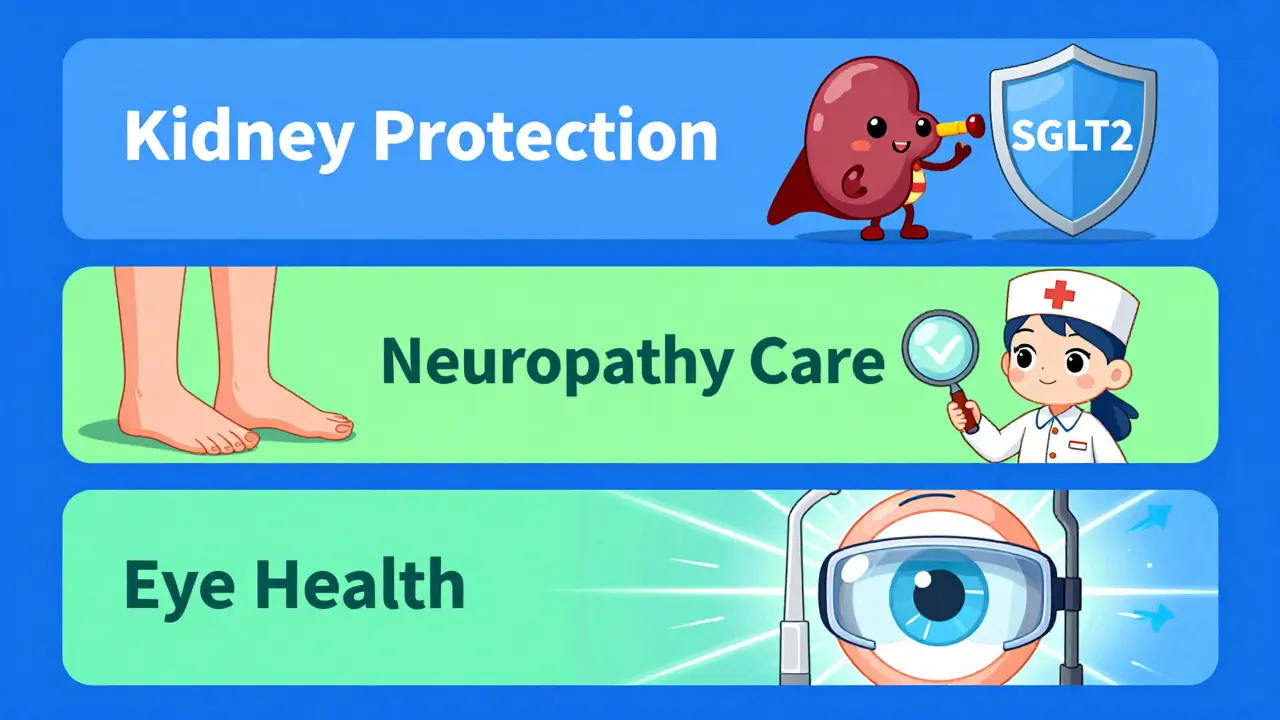
Your kidneys are powerful filters, working tirelessly to clean your blood. In diabetic nephropathy, kidney disease caused by diabetes damaging the filtering units (nephrons) in the kidneys, this system breaks down. High blood glucose forces the kidneys to work overtime, eventually scarring the delicate filtering structures. However, high blood pressure accelerates this damage significantly. According to the National Institute of Diabetes and Digestive and Kidney Diseases (NIDDK), meeting blood pressure goals is just as essential as controlling sugar for kidney protection.
The game-changer in recent years has been the introduction of specific classes of drugs. Sodium-glucose transport protein 2 (SGLT2 inhibitors, medications that help kidneys remove sugar from the body through urine) and glucagon-like peptide-1 (GLP-1 receptor agonists, injections that stimulate insulin release and slow digestion) have shown remarkable results. Clinical data indicates a 30-40% reduction in the risk of kidney disease progression for patients using these agents. These drugs offer benefits beyond lowering blood sugar; they directly protect kidney function and reduce inflammation.
To monitor your kidney health, ask your doctor for two specific tests annually:
- Estimated Glomerular Filtration Rate (eGFR): Measures how well your kidneys filter waste.
- Urine Albumin-to-Creatinine Ratio (UACR): Checks for albumin, a protein that shouldn't be in your urine. Its presence is an early warning sign of kidney damage.
Neuropathy: Why Your Feet Need Daily Attention
Nerve damage, or neuropathy, damage to the peripheral nervous system often causing numbness, tingling, or pain, is one of the most insidious complications. It usually starts in the toes and feet. The danger? You might not feel a cut, a blister, or a stone in your shoe. Without pain signals, minor injuries can turn into severe infections and ulcers. Statistics are stark: about 15% of people with diabetes will develop a foot ulcer in their lifetime.
Prevention here is mechanical and visual. You must become your own inspector. Dr. Nidal Hasan of Optimum Endocrine Care recommends a strict daily routine. Look at your feet every day. Use a mirror if you need to see the soles. Check for cuts, calluses, blisters, and sores. Keep your skin moisturized to prevent cracking, but avoid putting lotion between your toes, which can trap moisture and lead to fungal infections.
If you find any injury that doesn't heal within a few days, do not wait. See a podiatrist immediately. Early intervention prevents amputation. Furthermore, maintaining healthy blood glucose levels slows the progression of nerve damage, preserving sensation and reducing pain.
Protecting Your Vision: The Power of Dilated Exams
Your eyes contain tiny blood vessels called capillaries. High blood sugar weakens these walls, causing them to leak fluid or bleed-a condition known as diabetic retinopathy, eye damage caused by damaged blood vessels in the retina. In advanced stages, new, fragile blood vessels grow, which can rupture and cause vision loss. The scary part? You often won't notice symptoms until significant damage has occurred.
This is why annual comprehensive dilated eye exams are non-negotiable. The American Diabetes Association confirms that early detection through these exams can reduce the risk of blindness by 95%. During a dilated exam, your eye doctor uses drops to widen your pupils, allowing a thorough view of the retina. If problems are caught early, treatments like laser therapy or injections can stabilize your vision.
Beyond the exam, controlling your blood pressure and cholesterol is vital for eye health. High pressure strains the delicate vessels in the eyes, compounding the damage caused by high glucose.
The ABCs of Prevention: Actionable Targets
Preventing these complications boils down to hitting specific targets. The CDC's 'Put the Brakes on Diabetes Complications' initiative simplifies this into the "ABCs." Here is what you should aim for, in consultation with your healthcare provider:
| Metric | Target Goal | Why It Matters |
|---|---|---|
| A1C | Below 7% (individualized) | Reflects average blood sugar over 3 months; lowers risk of microvascular damage. |
| Blood Pressure | Below 140/90 mm Hg | Protects kidneys, eyes, and heart from vascular stress. |
| Cholesterol | LDL under 100 mg/dL (varies by risk) | Reduces plaque buildup in arteries, improving blood flow to all organs. |
These numbers aren't arbitrary. They represent thresholds where organ damage accelerates. Keeping your A1C below 7% significantly reduces the risk of retinopathy and nephropathy. Keeping blood pressure under control adds a layer of protection that glucose management alone cannot provide.
Lifestyle as Medicine: Movement and Weight
Medication helps, but lifestyle changes drive the engine of prevention. Physical activity improves insulin sensitivity, meaning your body needs less insulin to manage blood sugar. The recommendation is clear: at least 150 minutes of moderate-intensity exercise per week. This could be brisk walking, swimming, or cycling. Spread it out over at least three days, with no more than two consecutive days without activity.
Weight management is equally critical. Losing just 5-10% of your initial body weight can dramatically improve glucose metabolism and lower blood pressure. This doesn't require extreme diets. Focus on whole foods, fiber-rich vegetables, lean proteins, and healthy fats. Reduce processed sugars and refined carbohydrates, which spike blood glucose rapidly.
Don't forget the impact of smoking. Smoking constricts blood vessels, reducing blood flow to your extremities and organs. Quitting smoking is one of the most effective steps you can take to prevent neuropathy and cardiovascular disease. Combined with regular dental cleanings (twice a year) and wellness exams, these habits form a robust defense against complications.
Monitoring and Medical Follow-Up
Prevention requires vigilance. You cannot manage what you do not measure. Establish a rhythm with your healthcare team. The CDC suggests:
- Annual physical/wellness exams: To assess overall health status.
- Two to four diabetes checkups yearly: To adjust medications and review A1C trends.
- Annual comprehensive eye exams: As discussed, crucial for early detection.
- Twice-yearly dental cleanings: Gum disease is linked to higher blood sugar and increased infection risk.
Bring a log of your home blood sugar readings to these appointments. Discuss any new symptoms, such as tingling in your hands or feet, changes in vision, or swelling in your ankles. Early reporting allows for timely adjustments in your care plan.
Looking Ahead: Personalized Medicine
The future of diabetes care is moving toward personalized medicine. Genetic factors, environmental influences, and individual responses to medication mean that one size does not fit all. Researchers are exploring how tailored interventions can further reduce complication risks. Meanwhile, the current best practice remains consistent: aggressive management of the ABCs, regular screening, and proactive lifestyle choices.
While some people may still experience complications despite good management, the data is encouraging. Over the last 20 years, rates of heart attacks and strokes among U.S. adults with diabetes have decreased significantly. People with diabetes are living longer, healthier lives. You have the power to influence your outcome. Start today by scheduling that eye exam, checking your feet, and reviewing your latest lab results with your doctor.
Can diabetic kidney disease be reversed?
Early stages of kidney damage can sometimes be stabilized or slowed significantly with strict blood sugar and blood pressure control, and the use of SGLT2 inhibitors. However, advanced kidney disease is generally irreversible. The goal is to preserve remaining function and delay the need for dialysis or transplant.
How often should I get my eyes checked if I have diabetes?
You should have a comprehensive dilated eye exam at least once a year. If you already have signs of retinopathy, your eye doctor may recommend more frequent visits, such as every six months or quarterly, depending on the severity.
What are the first signs of diabetic neuropathy?
Early signs often include tingling, burning, or numbness in the toes or feet. You might also experience sharp pains or a loss of sensation, making it hard to feel temperature changes or pain. Some people report muscle weakness or digestive issues like nausea and constipation.
Do SGLT2 inhibitors work for Type 1 Diabetes?
Currently, SGLT2 inhibitors are primarily approved for Type 2 diabetes. Their use in Type 1 diabetes is being studied but carries a higher risk of diabetic ketoacidosis (DKA). Always consult your endocrinologist before considering these medications for Type 1 diabetes.
Is it possible to prevent all diabetic complications?
While you cannot guarantee 100% prevention due to genetic and other factors, you can drastically reduce your risk. Studies show that intensive management of blood sugar, blood pressure, and cholesterol can reduce the risk of microvascular complications by up to 75%. Consistency is key.