
FDA-Approved Medications You Can Flush Down the Toilet (And Why)
 Jan, 8 2026
Most people think flushing medicine down the toilet is bad for the environment-and they’re right. But there’s a small, specific list of medications the FDA says you should flush-if you have no other choice. This isn’t a suggestion. It’s a safety rule. And it’s only for drugs that can kill someone with one accidental dose.
Why Would the FDA Ever Say to Flush Medication?
The FDA doesn’t want you flushing pills. Not really. Their top recommendation? Take-back programs. Pharmacies, hospitals, and police stations across the U.S. have drop-off bins for old meds. In 2023, there were over 12,000 of them. But here’s the problem: many people don’t know where they are. A 2023 survey found that 78% of patients asked by pharmacists about disposal had no idea where to turn in unused drugs. That’s where the Flush List comes in. It’s not a loophole. It’s a last resort. The FDA created it because some medications are too dangerous to leave in a medicine cabinet, a trash can, or a child’s reach. If a kid finds a fentanyl patch or a bottle of methadone, they could die within minutes. Flushing these drugs immediately removes that risk.What’s on the FDA Flush List? (Updated April 2024)
The list is short. Very short. Only 15 active ingredients. Here’s what’s included:- Buprenorphine - found in SUBOXONE, BUAVAIL, BUTRANS, BELBUCA, SUBUTEX, ZUBSOLV
- Fentanyl - in ABSTRAL, ACTIQ, DURAGESIC patches, FENTORA, ONSOLIS
- Hydromorphone - EXALGO extended-release tablets
- Meperidine - DEMEROL
- Methadone - DOLOPHINE, METHADOSE
- Morphine - ARYMO ER, AVINZA, EMBEDA, KADIAN, MORPHABOND ER, MS CONTIN, ORAMPH SR
- Oxymorphone - OPANA, OPANA ER
- Tapentadol - NUCYNTA, NUCYNTA ER
- Sodium oxybate - XYREM, XYWAV
- Diazepam rectal gel - DIASTAT, DIASTAT ACUDIAL
- Methylphenidate transdermal system - DAYTRANA
That’s it. If your medication isn’t on this list, don’t flush it. Not even aspirin. Not even antibiotics. Not even leftover painkillers. The FDA removed 11 drugs from the list between 2021 and 2023 because safer alternatives became available. They’re constantly reviewing it.
How to Flush Correctly (And What Not to Do)
Flushing isn’t just dumping the pill bottle down the drain. There’s a proper way.For pills or liquids: Take the medication out of its container. Don’t crush it. Don’t dissolve it. Just drop it straight into the toilet. Flush once. That’s it.
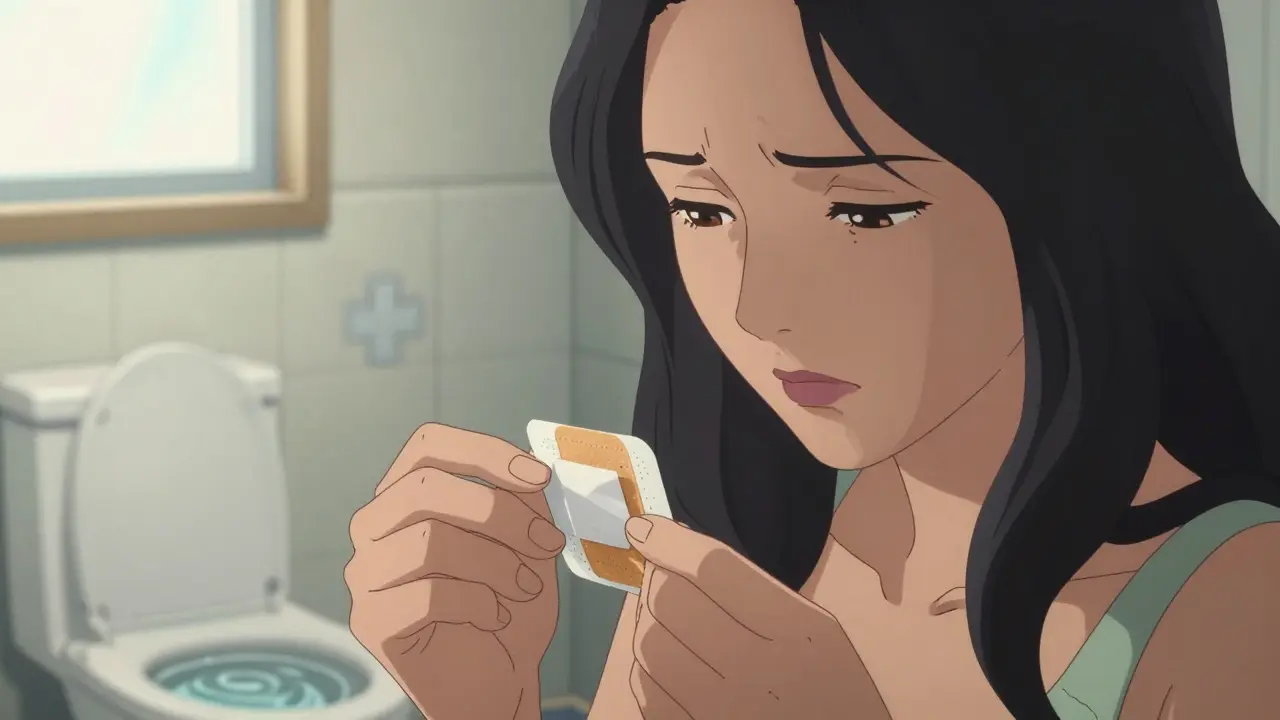
For fentanyl patches: This is critical. Fold the patch in half-sticky side to sticky side. Then flush it. Why? Because even a used patch still holds enough fentanyl to kill a child. A 2012 FDA alert followed several deaths of toddlers who found discarded patches on the floor. Folding it traps the drug inside and reduces environmental exposure.
For empty packaging: Remove any personal info-name, prescription number, dosage-before tossing it in the trash. Use a marker or scissors. Identity theft risk is real.
What If Your Medication Isn’t on the List?
Then you have two options:- Use a take-back program.
- Dispose of it at home using FDA-approved methods.
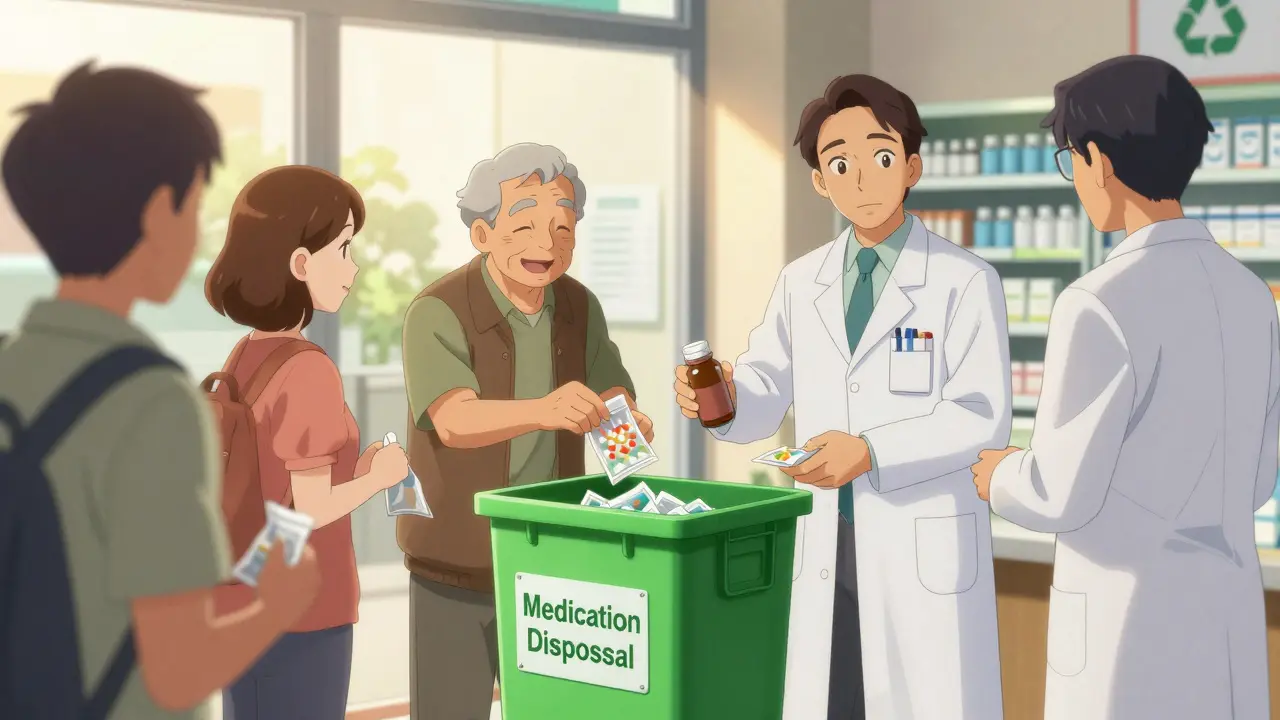
Take-back is always #1. The DEA runs National Take Back Days twice a year-in April and October. But you don’t have to wait. Search DEA’s website for year-round drop-off locations near you. Pharmacies like CVS, Walgreens, and many local clinics participate.
If no take-back is available, mix your meds with something unappetizing-cat litter, coffee grounds, dirt. Put them in a sealed plastic bag. Throw them in the trash. Don’t use a clear bag. Don’t label it. Make it look like garbage. This prevents pets or scavengers from digging it up.
Why Isn’t Everything on the List?
The FDA doesn’t flush everything because of environmental concerns. Water treatment plants can’t remove all pharmaceuticals. Trace amounts of drugs have been found in rivers and lakes. But here’s the trade-off: the risk of a child or pet dying from accidental exposure is far greater than the risk of low-level pollution from these 15 drugs.The EPA agrees. In their 2022 report, they made it clear: the Flush List is only for homes where children or pets might get into the trash. Hospitals, nursing homes, and clinics are banned from flushing anything. They have to use licensed hazardous waste handlers.
Dr. Scott Gottlieb, former FDA commissioner, put it bluntly: “The flush list is intentionally short. It only includes medicines that are most dangerous in the wrong hands.”
What’s Changing in 2025?
The FDA is actively reviewing the list. In January 2024, they announced they’re evaluating whether to add new transdermal patches-like buprenorphine patches-after 17 accidental exposures in children were reported in 2023. They’re also looking at whether newer abuse-deterrent formulations (like pills that turn to gel when crushed) might be safe enough to remove from the list.Right now, 3 of the 15 active ingredients are under review for possible delisting by 2025. That means the list isn’t set in stone. It’s updated based on real-world data.
Real-World Consequences of Getting It Wrong
Between 2010 and 2022, the FDA recorded 217 cases of accidental fentanyl exposure in children. Nine of them died. One case involved a toddler who found a discarded fentanyl patch on a playground slide. Another child ingested methadone from a trash can at a relative’s house.Community pharmacists report that 42% of patients admit to flushing medications not on the list-just because they didn’t know better. That’s dangerous. Flushing ibuprofen or amoxicillin doesn’t save lives. It just adds to pollution.
What You Should Do Right Now
1. Check your medicine cabinet. Look at the labels. Find any of the drugs on the Flush List. 2. Call your pharmacy. Ask if they have a take-back bin. Most do. 3. If you can’t find a drop-off site and you have a Flush List drug-flush it. Don’t wait. Don’t store it. Don’t hope you’ll find a program later. 4. For everything else-mix, bag, trash. No exceptions.Flushing isn’t the default. It’s the emergency override. Use it only when the alternative is a child’s death.
Can I flush any unused medication if I don’t have a take-back option?
No. Only medications on the FDA’s official Flush List should be flushed. Flushing other drugs like antibiotics, antidepressants, or pain relievers contributes to water pollution without providing any safety benefit. Always use a take-back program first, or dispose of non-listed drugs by mixing them with cat litter or coffee grounds and throwing them in the trash.
Why are fentanyl patches folded before flushing?
Fentanyl patches contain enough drug to be lethal even after use. Folding them sticky-side to sticky-side traps the remaining medication inside, reducing the chance of accidental exposure to children or pets if the patch is found in the environment. The FDA specifically recommends this step to prevent deaths.
Is it safe for the environment to flush these drugs?
The FDA and EPA agree that the environmental impact from flushing these 15 specific drugs is minimal compared to the risk of death from accidental exposure. Water treatment plants remove most pharmaceuticals, and concentrations found in waterways are far below levels that could harm aquatic life or human health. The priority is preventing immediate, life-threatening risks to people.
How do I know if my medication is on the FDA Flush List?
Check the drug’s prescribing information or visit the FDA’s official website at fda.gov/drug-safety/medication-disposal. Look for the active ingredient-not the brand name. The list includes generic names like fentanyl, methadone, and buprenorphine. If you’re unsure, call your pharmacist.
Can I flush expired medications?
Only if they’re on the FDA Flush List. Expiration date doesn’t change whether a drug belongs on the list. A 5-year-old bottle of fentanyl patches is just as dangerous-and just as eligible for flushing-as a new one. If it’s not on the list, dispose of it by mixing with kitty litter and trash, regardless of expiration.
Are there any penalties for flushing medications not on the list?
There are no legal penalties for individuals flushing medications at home. However, the EPA strictly prohibits healthcare facilities and pharmacies from doing so. For households, the issue is safety and environmental responsibility-not law. The goal is education, not punishment. Always follow FDA guidelines to protect people and the environment.
Lindsey Wellmann
January 9, 2026 AT 02:40OMG I JUST FLUSHED MY MOM’S OLD FENTANYL PATCHES LAST WEEK 😭 I HAD NO IDEA I WAS SUPPOSED TO FOLD THEM FIRST. I’M SO GLAD I READ THIS. MY KID’S 3. I’M A TERRIBLE PARENT. 🥲🩹
Drew Pearlman
January 9, 2026 AT 23:02You know, I think this is one of those rare cases where the government actually got it right-balancing environmental concerns with human safety. It’s not about convenience, it’s about preventing tragedy. I’ve seen too many stories of toddlers finding pills in drawers, and honestly? Flushing these specific drugs feels less like pollution and more like a last-resort act of love. The FDA didn’t make this list lightly. It’s the result of years of data, of real deaths, of parents waking up to a lifeless child because they didn’t know better. We need more awareness, not more guilt.
Meghan Hammack
January 11, 2026 AT 19:09Y’ALL. CHECK YOUR CABINETS. RIGHT NOW. 🚨
My cousin’s kid almost died from a patch on the floor. I’m not exaggerating. If you have ANY of these meds? FLUSH ‘EM. No excuses. Your kid’s life > a little pollution. I’m telling my whole family right now. 💪❤️
Maggie Noe
January 13, 2026 AT 02:11It’s fascinating how we’ve built a society that treats pharmaceuticals like toxic waste, yet allows them to sit in medicine cabinets like candy. The FDA’s Flush List isn’t just policy-it’s a moral compromise. We accept water contamination because we refuse to accept the alternative: children dying because we were too lazy to drop off a pill. The real tragedy isn’t the trace amounts of opioids in the river-it’s that we needed a list like this at all. Why aren’t we fixing the root problem? Why aren’t we making take-back programs as common as recycling bins? The flush list is a bandage on a gunshot wound.
Alicia Hasö
January 13, 2026 AT 06:31This is one of the most important public health messages I’ve seen in years. Thank you for sharing this with such clarity. I’ve shared it with my book club, my PTA, and my elderly neighbor who still keeps all her husband’s pain meds. We need more people like you spreading this knowledge. Let’s make sure no family has to go through what others have. 💙
Heather Wilson
January 14, 2026 AT 04:39So let me get this straight. You’re telling me it’s okay to dump fentanyl into the water supply, but not okay to flush ibuprofen? That’s not science. That’s political theater. The EPA says trace pharmaceuticals don’t harm aquatic life, but you’re willing to risk ecosystem damage for a 0.001% reduction in accidental ingestion? Where’s the data proving flushing saves more lives than proper disposal? This feels like fearmongering dressed as public safety.
Chris Kauwe
January 15, 2026 AT 02:08Let’s be real-this is just another federal overreach disguised as compassion. We’re not in a war zone. These are prescription drugs. If you can’t keep them locked up, maybe you shouldn’t have them in the house. The real problem? Parental negligence. Not the FDA’s flush list. And don’t get me started on the environmental cost. We’re importing pharmaceuticals from China, burning fossil fuels to transport them, and now we’re dumping them into our water? This isn’t safety. It’s performative panic.
Ian Long
January 15, 2026 AT 14:42I get where Heather’s coming from, but she’s missing the point. This isn’t about ‘permission’-it’s about survival. I work in ER. We had a 2-year-old come in last month with fentanyl toxicity. Parents didn’t know the patch was still active. They thought it was ‘used’ so it was safe. That kid almost died. The flush list isn’t perfect, but it’s the only thing that works when people are clueless. We need more of this, not less. Let’s stop arguing semantics and start saving lives.
Pooja Kumari
January 15, 2026 AT 22:52Actually, I think this is very wrong. In India, we don’t flush anything. We dry the pills, burn them in a safe way, or give them to someone who needs them. Why does America always think flushing is the answer? You have so many resources, so many pharmacies, so many programs-why not fix the system instead of polluting the water? This feels like laziness wrapped in a badge of responsibility. And you call yourselves advanced? We don’t flush. We care. You should too.
Angela Stanton
January 17, 2026 AT 10:33Okay but let’s talk about the cognitive dissonance here. The FDA says ‘flush only these 15’-but they removed 11 in 2 years. That means the list is unstable. So if you flush a drug that was on the list in 2022 but got delisted in 2023, are you now an environmental criminal? This isn’t safety-it’s bureaucratic whiplash. And why is there no public database that auto-checks your prescription against the list? Why do we have to Google it like it’s a secret club? This is a system designed to confuse, not protect.
Kiruthiga Udayakumar
January 19, 2026 AT 04:45Wow. I’m so disappointed. You’re telling people to flush dangerous drugs? That’s not responsible. That’s irresponsible. You’re not helping- you’re enabling. What about the fish? What about the water? What about future generations? You think a child dying is worse than poisoning the planet? I’m sorry, but that’s not moral. That’s just selfish. We should be teaching people to store meds safely, not flushing them like trash. This is a failure of parenting, not policy.
Catherine Scutt
January 19, 2026 AT 20:05Just flush it. No one cares.