
G6PD Deficiency and Medications: How to Prevent Hemolysis
 Dec, 1 2025
G6PD Medication Safety Checker
This tool checks if a medication is safe for people with G6PD deficiency. Based on WHO guidelines and clinical evidence, it identifies which drugs can trigger hemolysis and suggests safer alternatives.
Note: This tool is for informational purposes only. Always consult with your healthcare provider before making treatment decisions.
Enter a medication name and click "Check Medication Safety" to see if it's safe for people with G6PD deficiency.
When someone has G6PD deficiency, even a common medication can trigger a sudden, dangerous drop in red blood cells. This isn’t a rare condition-it affects 400 million people worldwide. Yet most people don’t know they have it until they get sick after taking a drug they never thought could harm them. The good news? Hemolysis from G6PD deficiency is almost always preventable. The key is knowing which medications to avoid and getting tested before taking them.
What Is G6PD Deficiency?
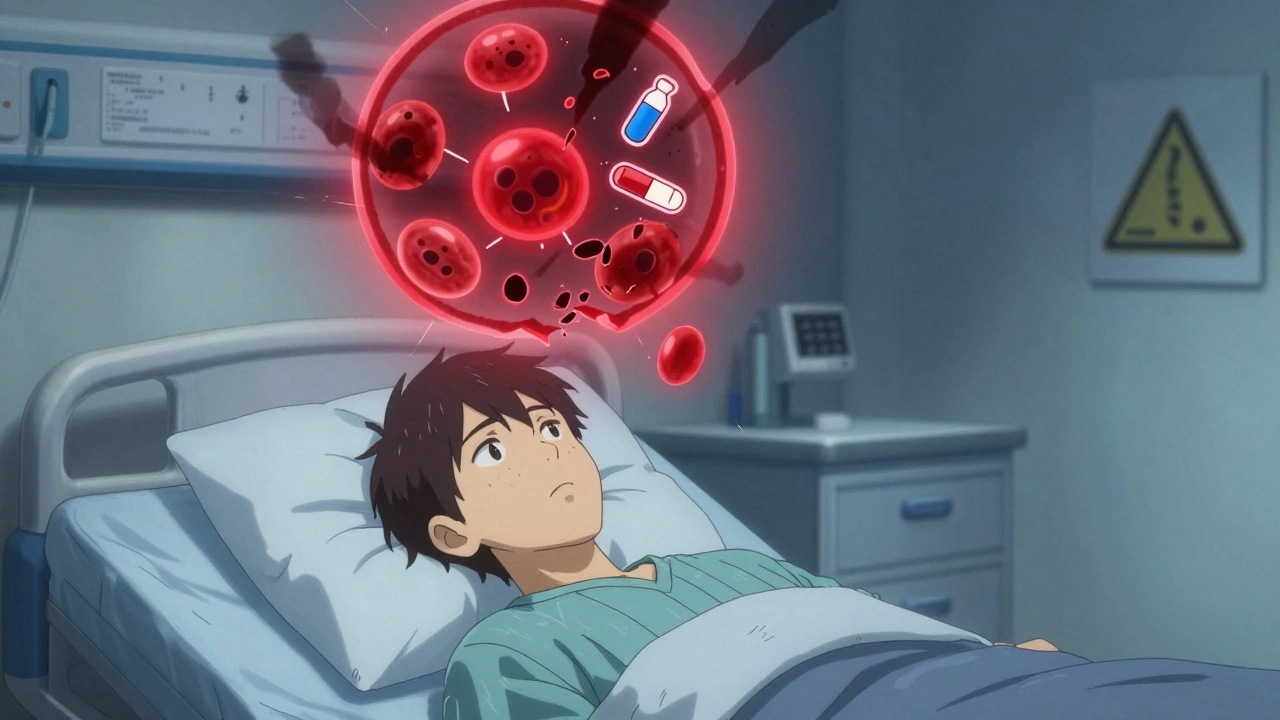
G6PD stands for Glucose-6-Phosphate Dehydrogenase. It’s an enzyme your red blood cells need to protect themselves from damage caused by oxidative stress. Think of it like a shield. Without enough G6PD, that shield breaks down. When you take certain drugs, eat fava beans, or get a severe infection, your red blood cells get attacked by free radicals. They burst. That’s hemolysis. And when too many red blood cells die at once, your hemoglobin plummets-sometimes by more than half in less than a week.
This isn’t just a theoretical risk. In 2021, a 28-year-old man in the U.S. was given rasburicase for tumor lysis syndrome. He hadn’t been tested for G6PD deficiency. His hemoglobin dropped to 3.1 g/dL-down from normal 14 g/dL. He needed 10 units of blood over three days. That’s not an outlier. It’s a preventable tragedy.
G6PD deficiency is inherited on the X chromosome. That’s why it’s more common in males, but 15% of females with the gene also experience hemolysis due to how X-chromosome inactivation works. It’s not just a male problem.
Who’s at Risk?
If your ancestors came from regions where malaria was common, you’re more likely to have G6PD deficiency. That’s because the gene mutation gives some protection against malaria. The trade-off? Higher risk of hemolysis.
- In sub-Saharan Africa: 1 in 5 people carry the gene
- In the Mediterranean: 1 in 7
- In Southeast Asia: 1 in 12
There are over 200 genetic variants. The most common are:
- G6PD A- (Africa): Most common in African and African-descended populations
- G6PD Mediterranean: Found in Southern Europe, the Middle East, and North Africa
- G6PD Canton: Predominant in China and Southeast Asia
Each variant reacts differently to triggers. Mediterranean variants are especially sensitive-some people with this type can have a severe reaction to just one pill of a risky drug.
Medications That Can Cause Hemolysis
There are 87 medications on the WHO’s Essential Medicines List that can trigger hemolysis in G6PD-deficient people. Here are the big ones:
- Rasburicase: Used to treat tumor lysis syndrome. FDA black box warning: 100% risk of hemolysis in deficient patients. Never give without testing.
- Methylene blue: Used for methemoglobinemia. Causes severe hemolysis in 95% of G6PD-deficient patients. A 2023 Reddit post from a nurse described giving it to a patient who hadn’t been tested-hemoglobin dropped from 14.2 to 5.8 in 48 hours.
- Primaquine: Used to kill dormant malaria parasites. Causes complete hemolysis in Class I and II G6PD deficiency. WHO now requires testing before use.
- Dapsone: Used for leprosy and some skin conditions. Hemolysis risk jumps to 80% at doses above 50mg daily.
- Sulfonamides: Antibiotics like sulfamethoxazole (Bactrim). Risk is real but varies by variant. Many doctors still prescribe them without testing.
Don’t assume a drug is safe just because it’s common. Even over-the-counter pain relievers like aspirin or NSAIDs can cause problems in high doses or in highly sensitive individuals.
Safe Alternatives
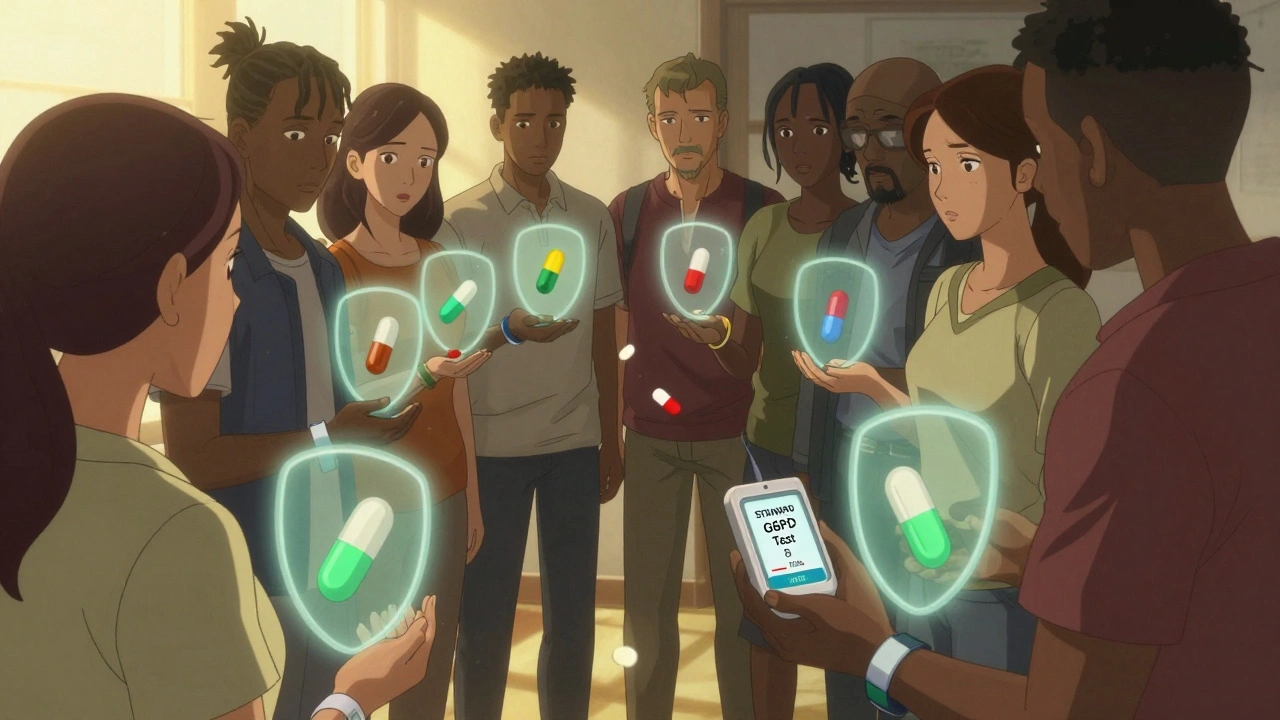
You don’t have to go without treatment. There are safe options for nearly every condition.
- Malaria prevention: Use atovaquone-proguanil (Malarone) instead of primaquine. Safe for all G6PD types. WHO recommends it for travelers.
- Malaria treatment: Artemisinin-based combination therapies (ACTs) are safe. Tafenoquine is approved but only if G6PD testing confirms you’re not deficient.
- Methemoglobinemia: Use vitamin C instead of methylene blue. It’s slower but safe.
- Antibiotics: Cephalosporins, penicillins, and macrolides (like azithromycin) are generally safe.
- Pain relief: Acetaminophen (Tylenol) is safe at normal doses. Avoid high-dose aspirin and naproxen.
Always check with your doctor or pharmacist. Don’t rely on memory or old advice.
Testing Is the Only Reliable Prevention
There’s no cure for G6PD deficiency. Prevention is everything. And the only way to prevent hemolysis is to know your status.
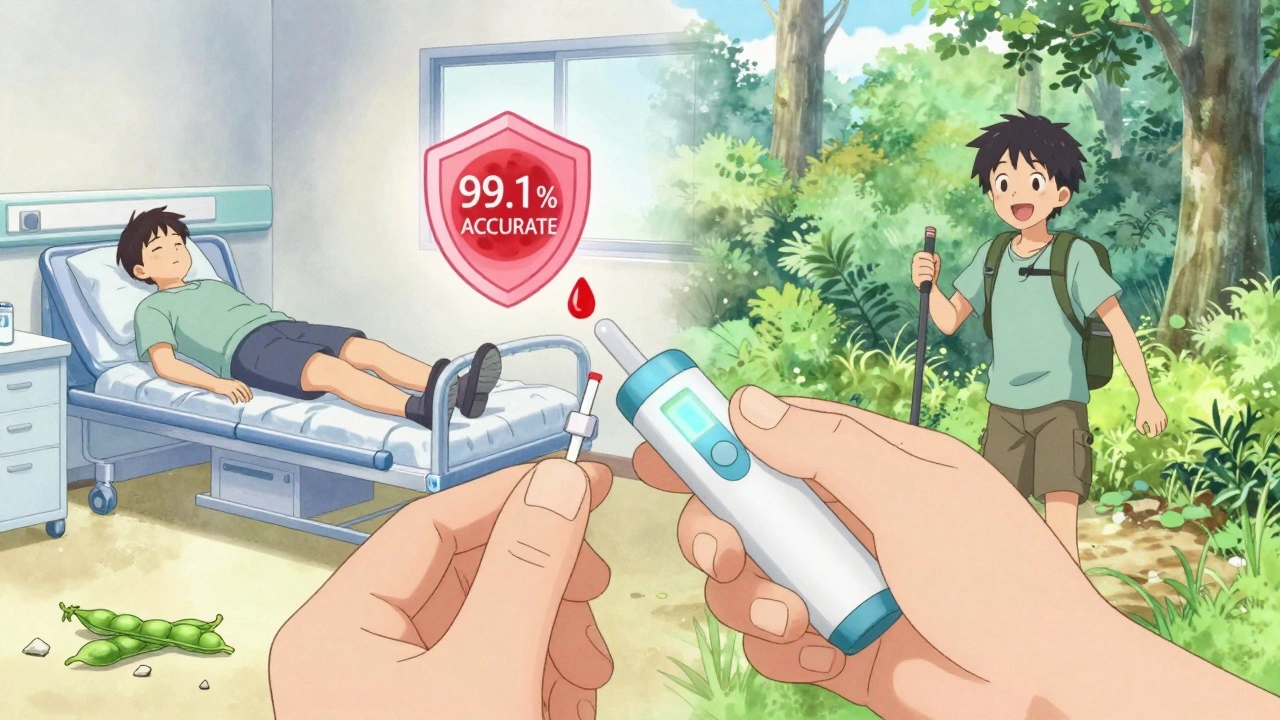
Testing isn’t complicated. The fluorescent spot test gives results in 15 minutes. The new STANDARD G6PD Test System, approved by the FDA in January 2024, gives lab-quality results in just 8 minutes. It’s accurate to 99.1%.
But here’s the catch: you can’t test during or right after a hemolytic episode. Your body makes new red blood cells after an attack, and they have normal enzyme levels. That gives a false negative. You need to wait at least 3 months after the crisis to get an accurate result.
That’s why newborn screening matters. In Saudi Arabia, universal newborn testing reduced hospital admissions for hemolytic crises by 78% between 2010 and 2020. In Thailand, mandatory testing before primaquine use dropped hemolysis rates from 15.2% to 0.3%.
Yet in the U.S., only 12 states require newborn G6PD screening-even though 1 in 10 African American males has it. That’s not just a gap. It’s a failure.
What to Do If You’re Diagnosed
Getting diagnosed isn’t the end-it’s the start of living safely.
- Get a medical alert bracelet. It saves lives when you can’t speak for yourself.
- Keep a list of unsafe medications. Update it every time you see a new doctor. Use the WHO’s 2024 list as your baseline.
- Carry a copy of your test results. If you’re in an emergency room, show it. Don’t wait for them to ask.
- Teach your family. Your sister, your partner, your child-they need to know what to do if you collapse.
- Avoid fava beans. They’re the most common food trigger. Even inhaling pollen from fava plants can cause hemolysis in sensitive people.
People who get proper education and avoid triggers have a 92% chance of never having another hemolytic episode. That’s not a guess. It’s from the NIH’s survey of 850 patients over five years.
Why This Isn’t Common Knowledge
Doctors don’t always know. A 2022 survey of 1,247 G6PD-deficient patients found that 68% had a hemolytic episode-and 42% said their doctor didn’t know about their medication restrictions.
Drug labels are messy. Many warn against sulfonylureas like glyburide for diabetes, even though only 17 cases of hemolysis have ever been documented since 1965. Yet 92% of these drug inserts still carry the warning. That creates confusion. Some doctors avoid prescribing anything risky, even if it’s safe. Others ignore warnings entirely.
Dr. David C. Rees of King’s College London says it best: “Many drug labels contain precautions based on scarce evidence.”
The solution? Ask. Always ask: “Is this safe for someone with G6PD deficiency?” If the answer isn’t clear, don’t take it.
The Future: Better Testing, Better Treatments
Progress is happening. The WHO and Global Fund are spending $127 million from 2023 to 2025 to roll out G6PD testing in 32 malaria-endemic countries. The goal: prevent 15,000 hemolytic crises a year.
Research is moving fast. A 2024 study in Blood Advances showed that N-acetylcysteine (NAC)-a common antioxidant supplement-reduced hemolysis by 75% in lab tests when given with primaquine. That could change how we treat malaria in G6PD-deficient people.
Phase I trials for a recombinant human G6PD enzyme replacement therapy begin in late 2024. It’s early, but if it works, it could one day eliminate the need for lifelong avoidance.
By 2035, experts believe preventable deaths from G6PD deficiency could be nearly zero in countries with strong healthcare systems. But in places without testing or education? 85% of deaths still happen there.
Final Takeaway
G6PD deficiency isn’t a death sentence. It’s a manageable condition-if you know the rules. The most dangerous thing isn’t the deficiency. It’s ignorance. Your body can handle almost any medication-except the ones that trigger oxidative stress. Avoid them, and you live normally. Take them without knowing your status, and you risk a life-threatening crisis.
Get tested. Know your triggers. Speak up. Your life depends on it.
Can G6PD deficiency be cured?
No, G6PD deficiency cannot be cured. It’s a genetic condition. But it can be managed effectively by avoiding oxidative stressors like certain medications, fava beans, and severe infections. With proper prevention, most people live normal, healthy lives without any hemolytic episodes.
Is G6PD deficiency only a problem for men?
No. While G6PD deficiency is more common in men because it’s X-linked, about 15% of women with the gene also experience hemolysis. This happens due to X-chromosome inactivation, where some of their red blood cells express the defective gene. Women can have mild, moderate, or even severe symptoms, depending on how their X chromosomes are activated.
Can I get tested for G6PD deficiency at my regular doctor’s office?
Yes. Most clinics can order a G6PD test. The fluorescent spot test is quick, cheap, and gives results in 15 minutes. A newer FDA-approved point-of-care device (STANDARD G6PD Test System) delivers lab-quality results in just 8 minutes. Ask your doctor if they offer it. If not, ask for a referral to a lab that does.
What should I do if I accidentally take a risky medication?
Seek medical attention immediately. Symptoms of hemolysis include dark urine (cola-colored), yellowing skin, extreme fatigue, rapid heartbeat, and shortness of breath. Don’t wait. Hemolysis can progress quickly. Go to the ER and tell them you have G6PD deficiency. Bring your test results if you have them. Early treatment can prevent kidney failure and other complications.
Are herbal supplements safe for people with G6PD deficiency?
Many are not. Some herbs like tea tree oil, naphthalene (mothballs), and high doses of vitamin C or E can trigger oxidative stress. Even natural doesn’t mean safe. Always check with your doctor before taking any supplement. There’s no regulation for herbal products, so their effects on G6PD-deficient people are often unknown.
Should my children be tested if I have G6PD deficiency?
Yes. If you’re male, all your daughters will be carriers, and your sons will be unaffected. If you’re female, each child has a 50% chance of inheriting the gene. Testing newborns is ideal, especially if you’re from a high-prevalence region. Early knowledge prevents accidental exposure to dangerous drugs later in life.
Edward Hyde
December 3, 2025 AT 01:41This post is basically a public service announcement disguised as a medical article. 400 million people worldwide and half the docs don’t know what G6PD is? That’s not negligence-it’s systemic laziness. I’ve seen ERs give Bactrim to African American kids like it’s candy. No testing. No questions. Just scribble and send them home. And now we’re surprised when they show up in ICU with hemoglobin at 4? Wake up. This isn’t rare. It’s predictable. And it’s killing people because we treat genetic conditions like they’re optional footnotes.
Charlotte Collins
December 3, 2025 AT 16:43The WHO’s list of 87 risky medications is terrifyingly comprehensive, but the real failure is in the labeling. Drug inserts are a minefield of overwarnings and underwarnings. Some medications carry black boxes for theoretical risks while ignoring proven ones. The methylene blue example is chilling-95% hemolysis risk, and nurses still administer it without testing because the label doesn’t scream ‘DO NOT USE’ loud enough. We need mandatory electronic alerts in EHRs tied to genetic flags. Not just a footnote in a PDF no one reads.
Margaret Stearns
December 4, 2025 AT 11:08I just got diagnosed last year. I never knew I had it. My doctor never asked. I took ibuprofen for a headache and ended up in the hospital. I didn’t even know fava beans were dangerous until I Googled it. Now I have a bracelet, a printed list, and I carry my test results everywhere. It’s scary how easy it is to almost die from something no one talks about.
Mary Ngo
December 6, 2025 AT 01:49Consider this: if G6PD deficiency is an evolutionary adaptation against malaria, then why are we pathologizing a natural genetic variation? The real threat isn’t the deficiency-it’s the pharmaceutical industry’s profit-driven expansion of drug use without regard for genetic diversity. We are engineering a global monoculture of pharmacology that ignores biological reality. The fact that 15% of women experience hemolysis due to X-inactivation is not a medical anomaly-it’s a systemic failure to account for human variability. The STANDARD G6PD Test System? A band-aid on a hemorrhage. Until we stop treating genetics as an afterthought, we are not healing-we are controlling.
James Allen
December 6, 2025 AT 17:59Look, I get it. G6PD is real. But let’s not pretend the U.S. is the only place this matters. In Africa and Southeast Asia, people don’t have access to testing, let alone a medical alert bracelet. Meanwhile, we’re here in America acting like this is some new epidemic. We’ve got people dying from lack of clean water and vaccines, and we’re spending millions on point-of-care tests for a condition that’s manageable with basic education. Maybe we should fix the system before we give everyone a sticker for their fridge.
Kenny Leow
December 8, 2025 AT 16:12As someone from Singapore, I’ve seen this firsthand. In Southeast Asia, G6PD testing is routine at birth. My cousin got diagnosed as a baby because her uncle had a bad reaction to sulfa. No drama. No panic. Just a note in the chart. We don’t wait for someone to collapse before we act. The fact that only 12 U.S. states screen newborns is a disgrace. It’s not just about medicine-it’s about culture. We prioritize prevention here. In the U.S., we wait for crisis, then overreact. The STANDARD G6PD Test System is great, but why wasn’t it adopted nationwide in 2010? Because we don’t value prevention. We value liability.
Kelly Essenpreis
December 10, 2025 AT 12:29Y’all are blowing this way out of proportion. G6PD deficiency isn’t some secret death sentence. I’ve taken aspirin for years and never had a problem. And fava beans? That’s a myth. My abuela ate them every Sunday and lived to 92. The real problem is doctors overtesting and scaring people into thinking every pill is poison. If you’re not having symptoms, why are you stressing? Let people live.
Alexander Williams
December 10, 2025 AT 12:42There’s a fundamental misalignment between pharmacokinetic risk stratification and clinical practice. The current paradigm relies on binary categorization of G6PD variants (Class I–IV), yet the phenotypic expression is highly heterogeneous due to epigenetic modifiers, concurrent oxidative stressors, and polymorphisms in NADPH-generating enzymes. The WHO’s list is statistically valid but clinically reductive. Without polygenic risk scoring and real-time redox biomarkers, we’re managing a spectrum disorder with a dichotomous algorithm. This is why 42% of clinicians remain unaware of their patients’ restrictions-they’re working with outdated heuristics.
Suzanne Mollaneda Padin
December 10, 2025 AT 13:48As a nurse who’s worked in rural clinics, I’ve seen what happens when you don’t test. I once had a toddler come in with jaundice and dark urine after his mom gave him Children’s Motrin for a fever. He didn’t have a diagnosis. We ran the test on the spot-it came back positive. He needed a transfusion. Since then, I keep printed lists of safe meds in every exam room. I hand them to parents. I tell them: ‘If you’re from Africa, the Mediterranean, or Southeast Asia, ask about G6PD before you give anything.’ It takes 30 seconds. It saves lives. This isn’t rocket science. It’s basic care.