
Generic Drug Savings: Real Numbers and National Statistics
 Dec, 21 2025
Every year, Americans fill over 3.9 billion prescriptions. Ninety percent of them are generic. And yet, those generics cost just 12% of what brand-name drugs do. That’s not a coincidence. It’s the result of a system that works-when it’s allowed to.
How Much Are Generic Drugs Actually Saving You?
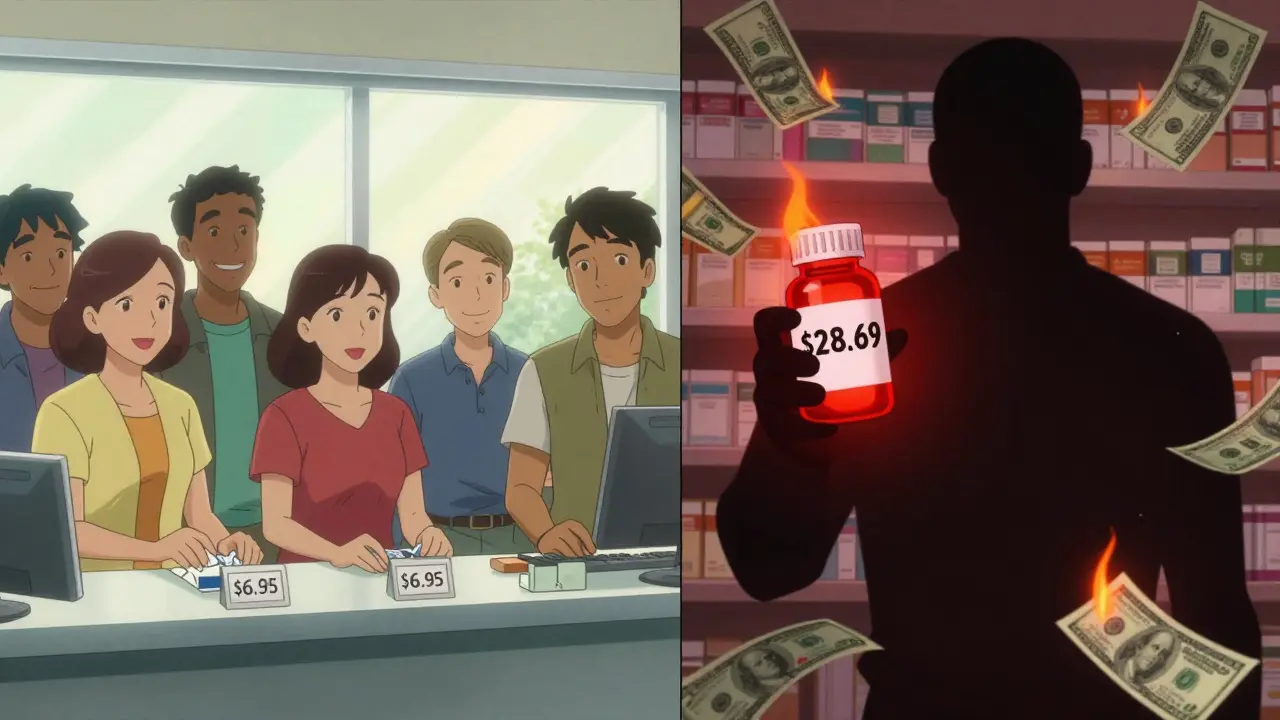
In 2024, generic and biosimilar drugs saved the U.S. healthcare system $467 billion. That’s not a guess. That’s the official number from the Association for Accessible Medicines and The IQVIA Institute. Think about that for a second. Nearly half a trillion dollars. That’s more than the entire annual budget of many U.S. states. And it’s all because patients chose-or were given-the generic version of their medication. For the average person, the difference is stark. The out-of-pocket cost for a generic prescription in 2024 was $6.95. For a brand-name drug? $28.69. That’s almost five times more. If you take three prescriptions a month, switching from brand to generic saves you over $600 a year. For someone on five medications? That’s $1,200. For seniors on Medicare, the savings were even bigger: $2,643 per person in 2024 alone. And it’s not just about pills. Biosimilars-generic versions of complex biologic drugs like those used for cancer or rheumatoid arthritis-saved $20.2 billion in 2024. That’s nearly double what they saved the year before. Since 2015, biosimilars have saved the system over $56 billion. And they’ve been used in nearly 3.3 billion days of patient therapy with zero unique safety issues reported.Why Are Generics So Much Cheaper?
Generic drugs aren’t cheaper because they’re low quality. They’re cheaper because they don’t need to repeat the billion-dollar clinical trials that brand-name drugs do. Once a patent expires, other manufacturers can produce the same active ingredient. The FDA requires them to prove they work the same way, in the same amount, in the same body. That’s it. There’s no marketing budget. No expensive TV ads. No sales reps paying doctors to prescribe them. That’s why, even as more generics hit the market, their total cost keeps dropping. Since 2019, the total amount spent on all generic drugs in the U.S. has gone down by $6.4 billion-even though more people are using them and more generics are being approved. Compare that to brand-name drugs. In January 2025, major pharmaceutical companies raised prices on 250 drugs by an average of 4.5%. That’s nearly double the rate of general inflation. Some drugs jumped even higher. Meanwhile, generic prices kept falling. One drug, Vasostrict, saw its list price drop 76% in just a few months.The Unseen Crisis: Who Makes Generic Drugs?
Here’s the problem no one talks about: the companies making these cheap drugs are barely surviving. A generic pill might cost you $1. But the manufacturer might only make a few cents per pill after accounting for production, shipping, FDA compliance, and competition. When five different companies make the same drug, the price gets driven down to the bone. That’s great for patients. But it’s not great for the people who make the medicine. The Biosimilars Council warns that this relentless price pressure could lead to shortages. If a manufacturer can’t make a profit on a drug, they stop making it. And when they do, patients get stuck. There’s no backup. No alternative. And sometimes, the drug doesn’t come back for months-or ever. That’s why we’ve seen shortages of antibiotics, blood pressure meds, and even insulin generics in recent years. It’s not because there’s no demand. It’s because the system is squeezing manufacturers until there’s nothing left.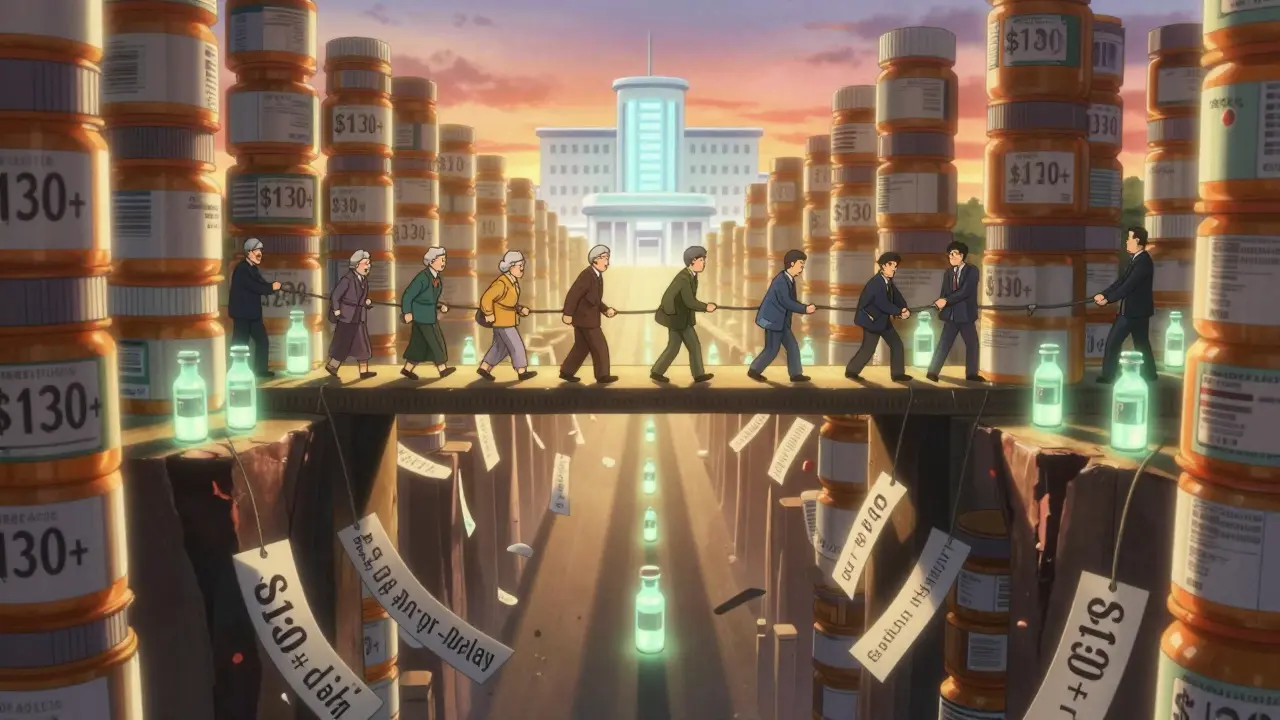
What’s Driving Up Brand-Name Prices?
Brand-name drug companies aren’t just raising prices. They’re playing games to keep generics off the market. One tactic is called “product hopping.” That’s when a company slightly changes a drug-maybe switches from a pill to a liquid-and then immediately launches a new patent. That blocks generics from entering, even though the medicine is essentially the same. Another tactic is “pay-for-delay.” That’s when a brand-name company pays a generic manufacturer to wait before selling their cheaper version. These deals cost consumers $12 billion a year, according to the Actuarial Research Corporation. Medicare alone loses $3 billion annually because of them. The Congressional Budget Office estimates that stopping these practices would save $1.8 billion over 10 years from patent abuse and $1.1 billion from ending product hopping. Banning pay-for-delay deals could save $45 billion over the same period.Generics Are Not Just Affordable-They’re Essential
For people without insurance, the gap is even wider. In 2024, a brand-name prescription cost an average of $130.18. That’s up 50% since 2019. Meanwhile, the cost of generics went down by 6% over the same time. For someone on a fixed income, that’s the difference between taking their medicine and skipping doses. Medicare saved $142 billion in 2024 just by using generics. That’s $2,643 per beneficiary. That money didn’t disappear. It went back into the system-into hospitals, into home care, into preventative services. And yet, policy makers are still debating whether to cap drug prices. Some argue that price controls on generics will hurt supply. Others say brand-name companies are the real problem. The truth? The system is working exactly as designed for patients-but it’s breaking for manufacturers.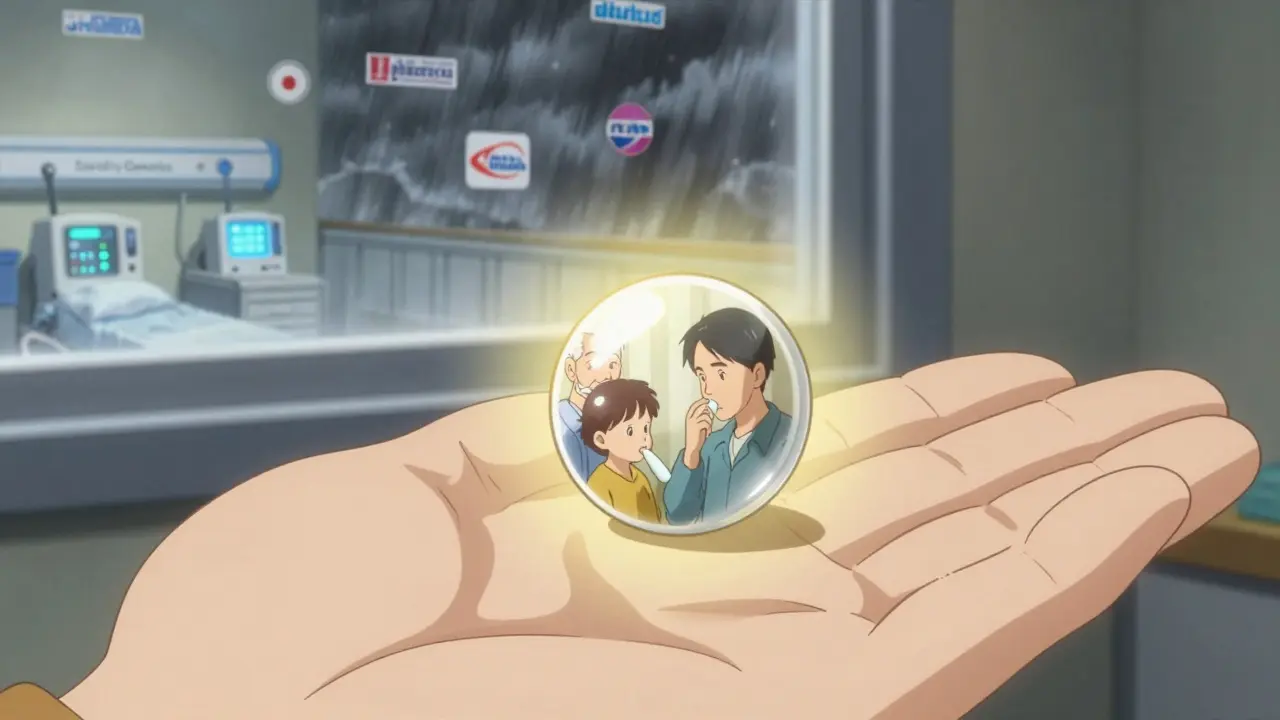
What You Can Do
If you’re on medication, ask your pharmacist: “Is there a generic version?” If your doctor says no, ask why. Sometimes it’s because of insurance rules, not medical need. Sometimes it’s because the doctor isn’t aware of the latest options. Check your Medicare Part D plan. Some plans have lower copays for generics. Switching to a generic can drop your monthly bill by hundreds of dollars. If you’re uninsured, look into patient assistance programs. Many generic manufacturers offer free or low-cost meds to people who qualify. And if you’re concerned about shortages, contact your representatives. Ask them to support policies that stop pay-for-delay deals, end product hopping, and ensure generic manufacturers can stay in business.Generics Are the Backbone of Affordable Care
They’re not magic. They’re not a loophole. They’re the result of smart policy, competition, and regulation. And they’ve delivered over $3.4 trillion in savings over the past decade. The next time you pick up a prescription, look at the label. If it says “generic,” you’re not getting second-best. You’re getting the same medicine, at a fraction of the cost-and you’re helping keep the entire system running. The real question isn’t whether generics work. It’s whether we’ll let them keep working.Are generic drugs as safe and effective as brand-name drugs?
Yes. The FDA requires generic drugs to have the same active ingredient, strength, dosage form, and route of administration as the brand-name version. They must also meet the same strict standards for purity, stability, and performance. Generic drugs are tested in the same way as brand-name drugs to ensure they work the same way in the body. Millions of people take generics every day with no difference in results.
Why do generic drugs look different from brand-name drugs?
Generic drugs can look different because U.S. law requires them to have a different shape, color, or markings than the brand-name version. This is to avoid trademark infringement. But the active ingredient-the part that makes the drug work-is identical. The fillers, coatings, or flavors might be different, but these don’t affect how the drug works in your body.
Why are some generic drugs still expensive?
Some generics remain expensive because there’s little competition. If only one or two companies make a particular drug, prices stay high. This often happens with older drugs, complex formulations, or those with manufacturing challenges. The FDA is working to approve more manufacturers for these drugs, but it takes time. In the meantime, patients can ask about alternatives or patient assistance programs.
Do biosimilars save as much money as regular generics?
Biosimilars don’t save as much per unit as regular generics because they’re more complex to make. But overall, they’ve saved $56.2 billion since 2015 and $20.2 billion in 2024 alone. That’s still massive savings compared to the original biologic drugs, which can cost over $1,000 per dose. Biosimilars typically cost 15-35% less than the brand-name biologic, making them a critical tool for reducing costs in cancer, autoimmune, and chronic disease treatment.
Why are generic drug prices falling even as more are sold?
It’s called price deflation. When multiple companies make the same generic drug, they compete on price. As more manufacturers enter the market, the price drops further. In 2024, over 3.9 billion generic prescriptions were filled-up from 3.4 billion in 2015-but total spending on generics dropped by $6.4 billion since 2019. That’s because competition keeps driving prices down, even as demand grows. This is unique to the generic market and doesn’t happen with brand-name drugs.
Can I trust a generic drug from another country?
Only if it’s approved by the FDA. Many generic drugs sold in the U.S. are made overseas, but they must meet the same FDA standards as those made in the U.S. If you buy a generic drug from an online pharmacy that’s not U.S.-based and not FDA-approved, you risk getting a counterfeit or substandard product. Always get your generics from a licensed U.S. pharmacy or one that’s verified by the National Association of Boards of Pharmacy (NABP).
Why do pharmacies sometimes switch my generic brand?
Pharmacies often switch generic brands because they’re trying to get the lowest price available. Different manufacturers offer different prices, and pharmacies are incentivized to choose the cheapest option. This doesn’t affect how the drug works. All FDA-approved generics are therapeutically equivalent. If you notice a change in appearance or experience side effects, talk to your pharmacist. But don’t assume the new version is less effective.
Do insurance plans favor generic drugs?
Yes. Most insurance plans, including Medicare Part D, have lower copays for generics. Some plans won’t cover the brand-name version unless you first try the generic and it doesn’t work. This is called “step therapy.” It’s designed to save money for both you and the plan. Always check your plan’s formulary to see which drugs are preferred and what your cost will be.
Chris Buchanan
December 22, 2025 AT 02:50Let me get this straight - we’re saving half a trillion dollars a year on generics, but the people making them are barely scraping by? That’s not a system, that’s a goddamn hostage situation. 🤡
Wilton Holliday
December 22, 2025 AT 07:07Just had my script switched to generic metformin - $3 instead of $48. My bank account hugged me. 🙌
Also, my doctor didn’t even mention it was available. Why is that still a surprise?
Raja P
December 22, 2025 AT 22:04From India, here - we know generics. Some are amazing, some are trash. But the FDA system? It’s one of the few things that actually works. We export tons of these pills, and the quality control is tighter than my grandma’s curry recipe.
Joseph Manuel
December 23, 2025 AT 15:42While the statistics presented are accurate, they fail to account for the macroeconomic distortion caused by artificially suppressed pricing. The erosion of manufacturer margins creates systemic fragility, which, when coupled with global supply chain dependencies, constitutes a non-linear risk to pharmaceutical resilience. This is not sustainable.
Harsh Khandelwal
December 24, 2025 AT 22:49Bro, think about it - generics are cheaper because Big Pharma *lets* them be. They own the patents, they own the FDA loopholes, they own the pharmacies. This whole ‘cheap generics’ thing? It’s a trap. They let you save $600 a year so you don’t notice they’re charging $12,000 for the insulin you *need* to survive. 🧠💣
Andy Grace
December 25, 2025 AT 02:27Interesting read. I’ve seen this play out in Australia - generics are everywhere, prices are low, but shortages still happen. The system works until it doesn’t. Maybe we need a middle path - not just ‘cheapest possible’ but ‘sustainably viable’.
Delilah Rose
December 26, 2025 AT 20:39I just want to say that I’ve been on a generic blood pressure med for six years now, and I’ve had zero issues, but I also know someone who switched and had a weird reaction - not because the drug was bad, but because their body just reacted differently to the fillers, which is totally normal, and I think people need to understand that even though the active ingredient is the same, the *experience* can vary a little bit, and that doesn’t mean it’s unsafe or less effective, it just means our bodies are weird little machines that don’t always behave the same way, and maybe we should be more patient with the process and less quick to panic when the pill looks different or tastes a little off, because honestly, most of the time it’s fine, and the savings are just too massive to ignore, especially when you’re on a fixed income or you’re a parent trying to afford three kids’ meds at once, and I just wish more people realized how much this actually matters in real life, not just in spreadsheets.
Spencer Garcia
December 28, 2025 AT 10:30Ask for the generic. Always. Pharmacies will switch it unless you say no. No doctor visit needed.
Abby Polhill
December 29, 2025 AT 04:54Generic market dynamics are a textbook example of perfect competition in action - price discovery, economies of scale, regulatory arbitrage via ANDA filings. The real friction point? Vertical integration by brand-name players via pay-for-delay and product hopping - classic rent-seeking behavior. We’re seeing the Pareto efficiency of generics being undermined by monopolistic rent extraction. It’s not broken. It’s being sabotaged.
Bret Freeman
December 30, 2025 AT 13:18They’re letting people die so shareholders can get a bonus. That’s the real story. You think this is about savings? Nah. It’s about CEOs flying to the Bahamas while grandma skips her pills because the generic was pulled and the brand costs $1,200. This isn’t healthcare - it’s a casino where the house always wins, and we’re all just pawns with prescriptions.
Lindsey Kidd
December 30, 2025 AT 16:51My grandma switched to generic lisinopril and now she’s dancing at my cousin’s wedding 😭💖
Generics aren’t ‘cheap’ - they’re *fair*. Let’s protect them. 🙏💊
Austin LeBlanc
December 31, 2025 AT 20:55You’re all naive. The real villains? The pharmacists who switch your generic without telling you. They don’t care if you get a different filler that makes you nauseous. They just want the rebate. You think you’re saving money? You’re being played. And your doctor? They’re on the pharma payroll. Wake up.