
Grapefruit and Statins: Why This Fruit Can Be Dangerous for Your Heart Medication
 May, 8 2026
Grapefruit & Statin Interaction Checker
Ready to Check?
Enter your medication name above to instantly see if it interacts with grapefruit, understand the mechanism, and learn about potential risks.
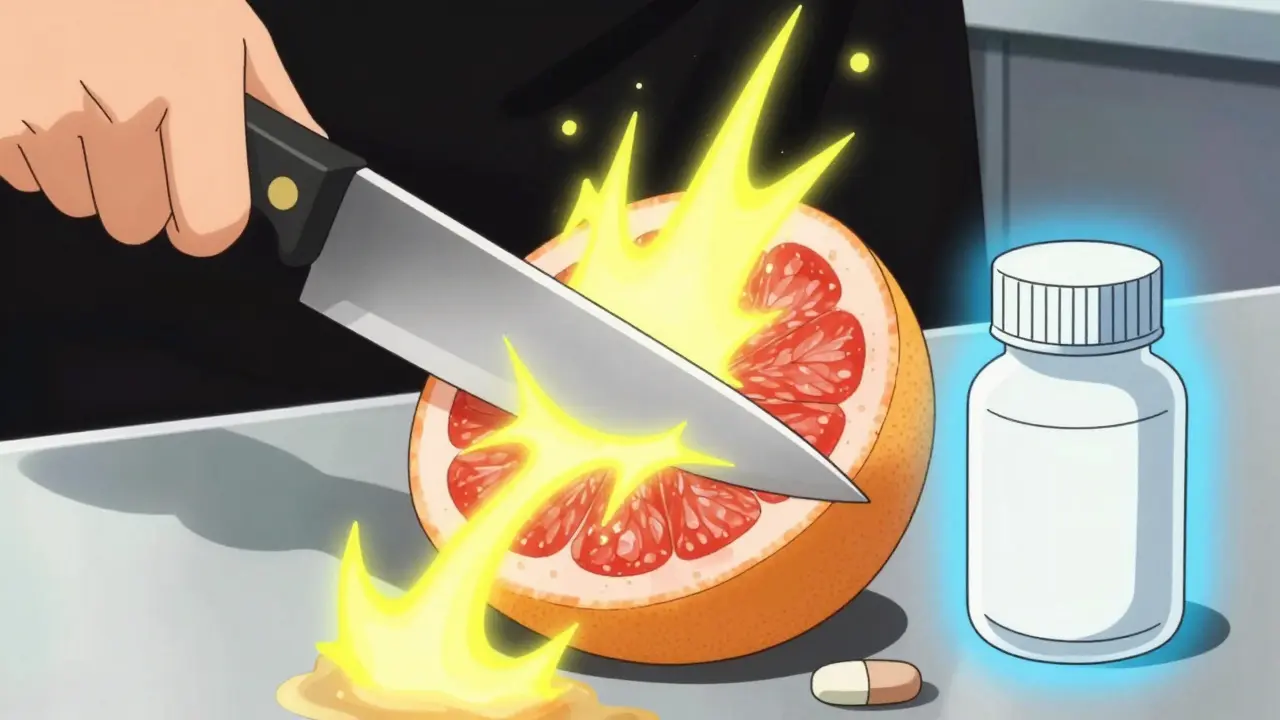
You love your morning grapefruit juice. It’s fresh, tangy, and packed with Vitamin C. But if you are taking a cholesterol-lowering medication known as a statin, that glass of juice might be quietly turning into a health hazard. This isn’t just an old wives’ tale or a minor dietary restriction; it is a well-documented pharmacokinetic phenomenon that can significantly alter how your body processes life-saving drugs.
The interaction between grapefruit and certain statins was first highlighted in scientific literature in the 1990s. A pivotal study published in Clinical Pharmacology & Therapeutics in 1998 revealed that grapefruit juice could increase the mean peak serum concentration of simvastatin by approximately 9-fold. In some cases, this spike reached up to 31.4 times the normal level. When drug levels in your blood skyrocket like this, the risk of severe side effects increases dramatically. Understanding why this happens-and which specific medications are affected-is crucial for anyone managing their cardiovascular health.
The Biochemical Mechanism: How Grapefruit Blocks Drug Metabolism
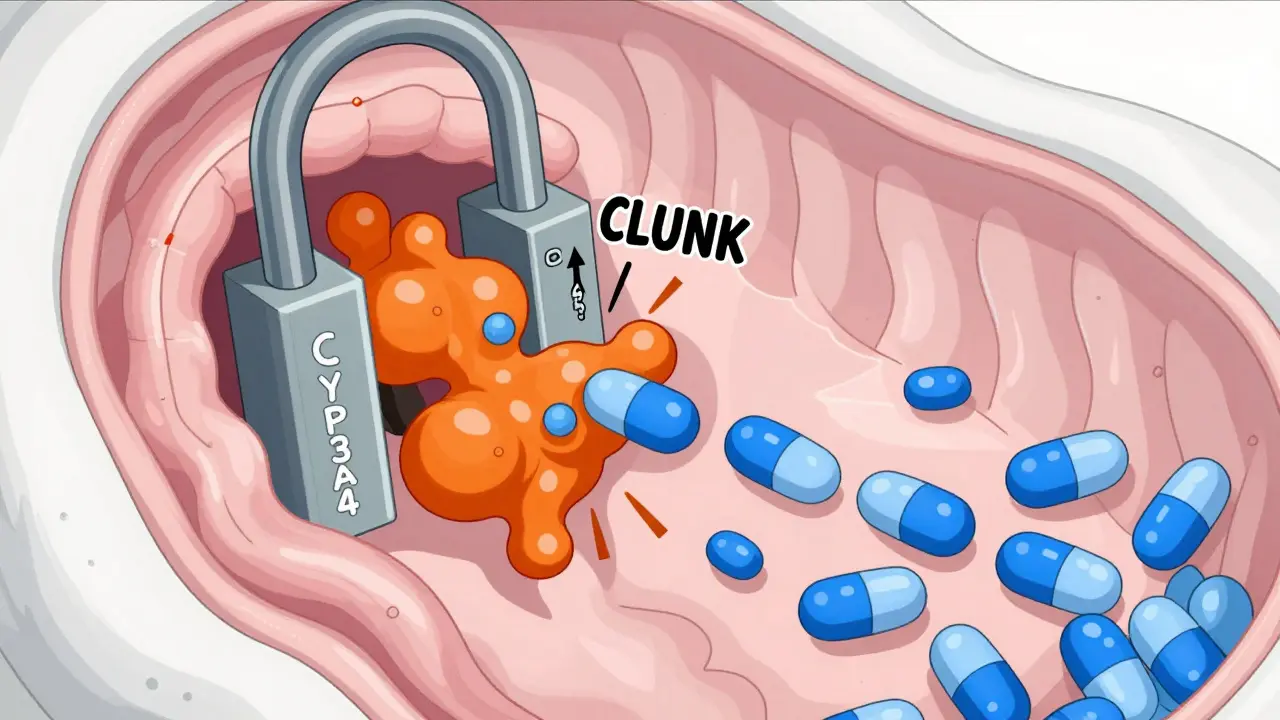
To understand why grapefruit is problematic, we need to look at what happens inside your small intestine. Most oral medications undergo "first-pass metabolism," where enzymes break down the drug before it enters your bloodstream. The primary enzyme responsible for breaking down many common statins is cytochrome P450 3A4 (often abbreviated as CYP3A4). This enzyme acts like a gatekeeper, ensuring only a safe amount of the drug reaches your system.
Grapefruit contains natural chemicals called furanocoumarins. These compounds do not just temporarily slow down CYP3A4; they irreversibly inhibit it. Think of it like gluing a key into a lock. Once the furanocoumarins bond covalently to the enzyme's active site, that enzyme is permanently disabled. Your body must wait to grow new enzymes to replace the damaged ones.
This process, known as mechanism-based inhibition, primarily affects the CYP3A4 enzymes in the lining of the small intestine (enterocytes), rather than those in the liver. Because the intestinal enzymes are blocked, more of the statin drug is absorbed directly into your bloodstream without being broken down first. This leads to higher bioavailability, meaning your body receives a much larger dose than prescribed. The effect is long-lasting; studies indicate that enzyme activity takes approximately 72 hours to return to baseline after consumption. This means even eating grapefruit intermittently can keep statin levels elevated for days.
Which Statins Are Affected?
Not all cholesterol medications react to grapefruit. The risk depends entirely on how the specific drug is metabolized. If a statin relies heavily on the CYP3A4 pathway, it is high-risk. If it uses different metabolic pathways, it is generally safe.
| Statin Brand Name | Generic Name | Risk Level | Mechanism Note |
|---|---|---|---|
| Zocor | Simvastatin | High / Contraindicated | Heavily metabolized by CYP3A4 |
| Mevacor | Lovastatin | High / Contraindicated | Heavily metabolized by CYP3A4 |
| Lipitor | Atorvastatin | Moderate / Major | Metabolized by CYP3A4, but less sensitive than simvastatin |
| Pravachol | Pravastatin | Low / Safe | Not metabolized by CYP3A4 |
| Crestor | Rosuvastatin | Low / Safe | Minimal CYP3A4 metabolism |
| Livalo | Pitavastatin | Low / Safe | Minimal CYP3A4 metabolism |
| Lescol | Fluvastatin | Low / Safe | Metabolized by CYP2C9, not CYP3A4 |
The U.S. Food and Drug Administration (FDA) requires warnings on labels for simvastatin, lovastatin, and atorvastatin due to these interactions. For simvastatin and lovastatin, the guidance is often strict avoidance. For atorvastatin, moderate consumption may be permitted under doctor supervision, but caution is still advised.
The Dangers: From Muscle Pain to Kidney Failure
When grapefruit boosts statin levels, the most common complaint is myalgia, or muscle pain. Approximately 5-10% of affected patients report this symptom. While painful, it is usually manageable if caught early. However, the real danger lies in a rare but life-threatening condition called rhabdomyolysis.
Rhabdomyolysis occurs when muscle tissue breaks down rapidly. This releases a protein called myoglobin into the bloodstream. Myoglobin is toxic to the kidneys and can cause acute kidney failure. According to data from the FDA Adverse Event Reporting System, rhabdomyolysis affects fewer than 1 in 10,000 statin users annually. However, combining high-dose statins with grapefruit consumption significantly spikes this risk.
A documented case study involved a 40-year-old woman who developed rhabdomyolysis after consuming grapefruit daily for 10 days while taking simvastatin. Her symptoms included severe muscle weakness, intense pain, and tea-colored urine-a classic sign of myoglobinuria. Not everyone will experience all three symptoms simultaneously, but any combination of these signs requires immediate medical attention.
How Much Grapefruit Is Too Much?
Determining a "safe" limit is tricky because individual sensitivity varies. However, clinical studies provide some benchmarks. In the landmark 1998 study, participants consumed 200 mL (about 6.7 ounces) of double-strength grapefruit juice three times daily. This regimen resulted in the dramatic 9-fold increase in simvastatin levels mentioned earlier.
Current clinical guidelines suggest that for high-risk statins like simvastatin, any amount of grapefruit should be avoided. For atorvastatin, some experts permit no more than one small grapefruit or 8 ounces of juice per week. But remember, the enzyme inhibition lasts 72 hours. Eating a grapefruit today can affect your drug levels tomorrow and the next day. There is no "washout period" short enough to safely separate the fruit from the pill.
It is also important to note that the interaction is dose-dependent. Higher doses of statins (such as simvastatin 80 mg) combined with larger quantities of grapefruit (more than 1.2 liters daily) create the greatest danger. Even concentrated juices or supplements containing grapefruit extract can trigger this reaction.
Myths About Other Citrus Fruits
A common question is whether other citrus fruits are off-limits. The answer is mostly no, but with one critical exception. Only grapefruit, Seville oranges (the bitter variety used in traditional marmalade), and pomelos contain significant levels of furanocoumarins.
Regular sweet oranges, lemons, limes, and tangerines do not contain these enzyme-inhibiting compounds in meaningful amounts. You can safely enjoy a glass of orange juice or squeeze lemon over your fish while taking statins. If you buy marmalade, check the label to ensure it is made from sweet oranges, not Seville oranges.

What Should You Do If You Love Grapefruit?
If you are diagnosed with high cholesterol and prescribed a statin, you do not necessarily have to give up grapefruit forever-but you likely cannot take *any* statin. The solution is often switching medications.
Dr. Stanley Hazen, a preventive cardiology specialist at Cleveland Clinic, notes that patients concerned about interactions should consult their healthcare provider rather than discontinuing their medication abruptly. Stopping statins on your own increases the risk of heart attack and stroke. Instead, ask your doctor about switching to a non-interacting statin like pravastatin or rosuvastatin. These drugs bypass the CYP3A4 pathway entirely, allowing you to eat grapefruit without fear of toxicity.
Pharmacists play a vital role here too. A 2021 study found that pharmacist-led interventions reduced inappropriate grapefruit-statin combinations by 78% in Medicare populations. Don't hesitate to ask your pharmacist: "Does my current medication interact with grapefruit?" They can quickly check the metabolic pathway of your specific prescription.
Future Solutions: Breeding Safer Fruit
Science is working on a permanent fix. Researchers at the University of Florida are currently breeding grapefruit varieties with significantly reduced furanocoumarin content. Preliminary studies in 2023 showed promising results, maintaining the nutritional benefits of the fruit while removing the dangerous compounds. While this "safe" grapefruit may not hit grocery shelves for another decade, it offers hope for future generations of patients.
Until then, awareness is your best defense. Approximately 39 million Americans take statins. Of those, an estimated 12-15% consume grapefruit regularly. Yet, surveys show that only 42% of primary care physicians routinely screen for grapefruit consumption when prescribing high-risk statins. You must advocate for your own safety. Know your medication, know your diet, and keep them in balance.
Can I eat grapefruit if I take Crestor (rosuvastatin)?
Yes. Rosuvastatin is not metabolized by the CYP3A4 enzyme, so it does not interact with grapefruit. You can consume grapefruit safely while taking this medication.
How long does the grapefruit effect last after eating it?
The inhibition of the CYP3A4 enzyme is irreversible and lasts approximately 72 hours. This means eating grapefruit once can affect your drug metabolism for three days, making timing separation ineffective.
Are lemons and regular oranges safe with statins?
Yes. Regular sweet oranges, lemons, limes, and tangerines do not contain furanocoumarins and are safe to consume with all statins. Avoid Seville oranges (bitter marmalade oranges) and pomelos.
What are the symptoms of rhabdomyolysis?
Symptoms include severe muscle pain, muscle weakness, and dark or tea-colored urine. If you experience these while taking statins, seek immediate medical attention as it can lead to kidney failure.
Should I stop taking my statin if I accidentally ate grapefruit?
Do not stop your medication abruptly without consulting your doctor, as this increases heart attack risk. If you accidentally consumed grapefruit, monitor for muscle pain and contact your healthcare provider for advice on whether to skip a dose or switch medications.
Why does grapefruit interact with some statins but not others?
It depends on the metabolic pathway. Statins like simvastatin and atorvastatin use the CYP3A4 enzyme, which grapefruit blocks. Statins like pravastatin and rosuvastatin use different pathways, so they are unaffected by grapefruit.