
Grapefruit Juice and Medications: A Complete Interaction Guide
 May, 29 2026
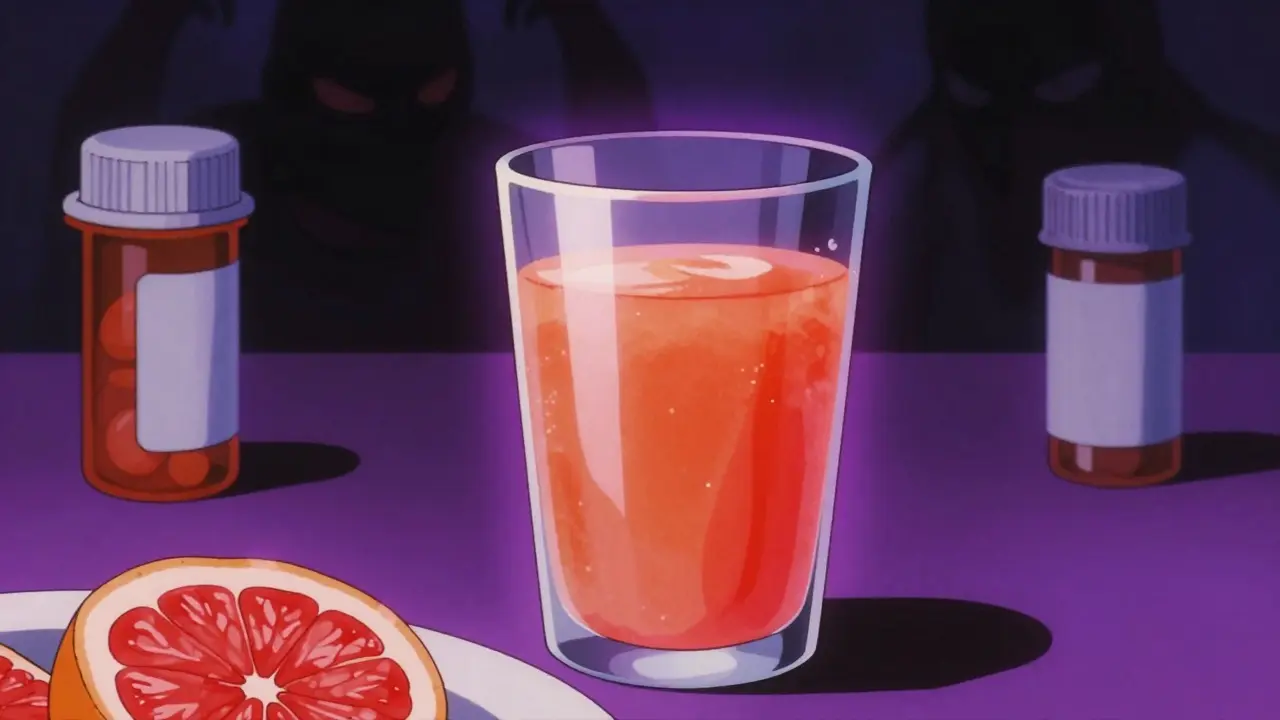
That morning glass of fresh-squeezed grapefruit juice is a popular breakfast beverage rich in vitamin C but containing compounds that can dangerously alter how your body processes certain prescription medications might be doing more than just waking up your taste buds. For millions of people taking common drugs for cholesterol, blood pressure, or anxiety, this citrus drink acts like a hidden trapdoor in their digestive system. It doesn't just slightly tweak the medicine; it can triple the amount of drug entering your bloodstream, turning a safe dose into a toxic overdose without you ever changing your pill count.
This isn't a minor dietary suggestion-it's a clinically significant pharmacokinetic phenomenon first identified in 1989 by researchers at the University of Western Ontario. Dr. David Bailey and his team discovered that grapefruit juice unexpectedly increased the bioavailability of felodipine, a calcium channel blocker. Since then, the U.S. Food and Drug Administration (FDA) has documented over 85 prescription medications that interact significantly with grapefruit products. Of those, 43 are capable of causing life-threatening adverse effects. If you take any of these drugs, understanding why this happens-and exactly which fruits to avoid-is critical for your safety.
The Biochemical Mechanism: Why Grapefruit Blocks Your Body’s Filters
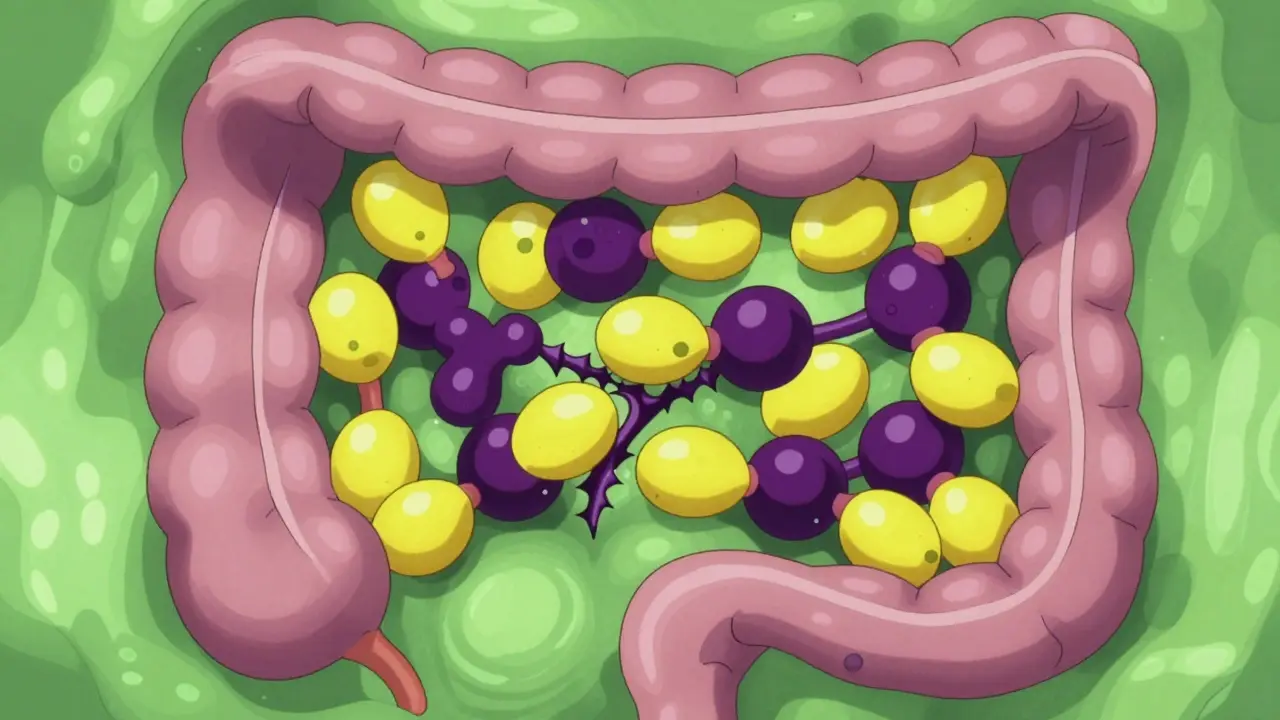
To understand the danger, you have to look inside your small intestine. Normally, when you swallow a pill, your body uses a specific enzyme system called Cytochrome P450 3A4 (commonly known as CYP3A4) is a liver and intestinal enzyme responsible for metabolizing approximately 50% of all orally administered drugs before they enter systemic circulation to break down about half of all oral medications before they reach your blood. This process ensures you get the right therapeutic dose-not too little, not too much.
Grapefruit contains natural compounds called furanocoumarins are plant-derived chemicals found primarily in grapefruit, including bergamottin and 6',7'-dihydroxybergamottin, that irreversibly inhibit intestinal CYP3A4 enzymes, specifically bergamottin and 6',7'-dihydroxybergamottin. These compounds act like glue, permanently sticking to the CYP3A4 enzymes in your gut lining. Because the inhibition is irreversible, your body cannot simply "wash them away." It must synthesize entirely new enzymes to replace the blocked ones. This regeneration process takes 24 to 72 hours.
Here is what that means in practice: A single 200-milliliter (roughly 7-ounce) glass of grapefruit juice can inhibit intestinal CYP3A4 activity by 47% within four hours. The maximum inhibition hits around 24 hours after consumption. Unlike alcohol or caffeine, where timing matters less, grapefruit’s effect lingers. The FDA explicitly states that patients must avoid consuming grapefruit for the entire period they are on the medication, not just at the time of dosing. Even if you drink the juice at breakfast and take your pill at bedtime, the interaction is still active.
High-Risk Medication Classes: Who Is Most Vulnerable?
Not every drug reacts to grapefruit, but several major classes do so with dangerous consequences. Knowing which category your medication falls into helps you assess your risk immediately.
| Medication Class | Common Examples | Interaction Severity | Potential Consequence |
|---|---|---|---|
| Statins are cholesterol-lowering drugs that include simvastatin, atorvastatin, and lovastatin, many of which are metabolized by CYP3A4 | Simvastatin (Zocor), Lovastatin (Mevacor) | Severe | Rhabdomyolysis (muscle breakdown leading to kidney failure) |
| Calcium Channel Blockers are blood pressure medications such as felodipine, nifedipine, and diltiazem that relax blood vessels | Felodipine (Plendil), Nifedipine (Procardia) | Moderate to Severe | Hypotension (dangerously low blood pressure), dizziness, fainting |
| Immunosuppressants are drugs like cyclosporine and tacrolimus used to prevent organ transplant rejection | Cyclosporine (Neoral) | Severe | Nephrotoxicity (kidney damage), increased infection risk |
| Antiarrhythmics are heart rhythm medications such as amiodarone that treat irregular heartbeats | Amiodarone (Cordarone) | Moderate | Fatal arrhythmias, prolonged QT interval |
| Anxiolytics & Sedatives are central nervous system depressants including buspirone and triazolam used for anxiety and sleep | Buspirone (Buspar), Triazolam (Halcion) | Moderate | Excessive sedation, respiratory depression |
Among statins, the variation is stark. Simvastatin levels can triple with daily grapefruit consumption, increasing the risk of rhabdomyolysis-a condition where muscle tissue breaks down and releases damaging proteins into the blood-from 0.04 per 100 person-years to 0.44 per 100 person-years. In contrast, pravastatin and rosuvastatin show no significant interaction because they bypass the CYP3A4 pathway. Similarly, while felodipine sees a five-fold increase in exposure, amlodipine shows minimal interaction. This variability means you cannot generalize; you must check your specific drug name.
Myths vs. Reality: Timing, Variety, and Alternatives
A common misconception is that spacing out your juice and your pill solves the problem. You might think, "If I drink grapefruit at 8 AM and take my pill at 8 PM, I’m safe." This is incorrect. Because the enzyme inhibition lasts up to three days, separating them by hours offers zero protection. The FDA warns that the effect persists regardless of timing.
Another myth involves the color of the fruit. White grapefruit actually contains higher levels of furanocoumarins than red varieties. So switching to pink or ruby red grapefruit does not eliminate the risk. Processing also plays a role: fresh-squeezed juice has a greater inhibitory effect than pasteurized commercial juices, though even bottled versions carry enough furanocoumarins to trigger interactions in sensitive individuals.
What about other citrus fruits? Sweet oranges and lemons are generally safe because they lack significant furanocoumarin content. However, you must avoid Seville oranges are bitter oranges commonly used in marmalades and preserves that contain high levels of furanocoumarins similar to grapefruit and pomelos. Seville oranges are the standard ingredient in traditional marmalades. If you love marmalade on your toast, check the label-if it says "Seville oranges," put it back. Pomelos, which are larger cousins of grapefruit, also contain these dangerous compounds and should be avoided if you are on interacting medications.
Individual Susceptibility: Why Some People Are More at Risk
Genetics play a surprising role here. Not everyone experiences the same degree of enzyme inhibition. A study published in *Pharmacotherapy* showed that systemic felodipine concentrations after drinking 250mL of grapefruit juice ranged from zero increase to an eight-fold increase compared to water administration among different participants. Patients with naturally higher baseline expression of CYP3A4 in their intestinal cells tend to experience greater increases in drug bioavailability when those enzymes are blocked.
This unpredictability makes blanket avoidance the safest strategy. As Dr. John D. Scott of the University of Washington noted in *American Family Physician*, the inability to routinely measure individual susceptibility in clinical practice means doctors cannot predict who will suffer severe toxicity. Older adults are particularly vulnerable. According to USDA dietary surveys, adults aged 65 and older represent 40% of grapefruit consumers. Yet, this demographic typically takes 3 to 5 medications on average, many of which fall into the high-risk categories listed above. The American Geriatrics Society specifically warns seniors to exercise extreme caution, as age-related changes in metabolism can compound the interaction effects.

Practical Management: What Should You Do Now?
If you drink grapefruit regularly, do not stop taking your prescribed medication. Instead, take these immediate steps:
- Review your medication list. Look for the brand names mentioned earlier: Zocor, Plendil, Neoral, Cordarone, Buspar, Halcion. If you see any of these, flag them.
- Consult your pharmacist. Pharmacists are trained to screen for these interactions. A 2021 study found that 89% of community pharmacists routinely check for grapefruit conflicts during dispensing. Ask them directly: "Does my current regimen interact with grapefruit?"
- Check for alternatives. If you are on simvastatin, ask your doctor about switching to pravastatin or rosuvastatin, which do not interact. If you are on cyclosporine, tacrolimus may be a safer alternative with less CYP3A4 dependence.
- Read labels carefully. Many manufacturers now include explicit "avoid grapefruit" language on their packaging due to FDA mandates since 2014. Look for this warning in the patient information leaflet.
Be aware that patient awareness remains low. A 2022 survey by the National Community Pharmacists Association found that only 38% of patients recalled receiving counseling about grapefruit interactions when prescribed affected drugs. Don't assume your provider mentioned it-proactively ask.
Future Outlook: Can We Ever Drink Grapefruit Safely Again?
Science is working on a solution. The USDA's Agricultural Research Service announced in October 2023 that CRISPR-edited grapefruit varieties with 90% reduced furanocoumarin content had completed Phase 1 safety trials. These genetically modified fruits aim to preserve the flavor and nutritional benefits of grapefruit while removing the dangerous enzyme inhibitors. While these fruits are not yet widely available in supermarkets, their development signals a potential future where patients won't have to choose between their health and their favorite breakfast drink.
Until then, the regulatory framework continues to tighten. The FDA’s 2017 Drug Interaction Guidance requires manufacturers to test new drugs against grapefruit juice under fasting conditions. The European Medicines Agency expanded similar requirements in 2021. These measures ensure that future medications will come with clearer warnings, helping to close the gap in patient knowledge.
How long does the grapefruit-medication interaction last?
The interaction can last up to 72 hours (three days) after consumption. This is because grapefruit furanocoumarins irreversibly inhibit CYP3A4 enzymes, and your body needs time to produce new enzymes to replace the blocked ones. Separating your juice and medication by a few hours does not mitigate the risk.
Are all statins affected by grapefruit juice?
No. Simvastatin (Zocor) and lovastatin (Mevacor) have severe interactions. Atorvastatin (Lipitor) has a mild interaction. Pravastatin (Pravachol) and rosuvastatin (Crestor) do not interact significantly with grapefruit juice because they are metabolized differently.
Is it safe to eat whole grapefruit instead of drinking the juice?
Whole grapefruit still contains furanocoumarins and can cause interactions, although the concentration may vary depending on how much of the white pith (which holds higher concentrations) you consume. To be safe, avoid all forms of grapefruit, including segments and juice, if you are taking high-risk medications.
Do orange and lemon juices interact with medications?
Sweet oranges and lemons generally do not contain significant levels of furanocoumarins and are considered safe. However, Seville oranges (used in marmalades) and pomelos do contain these compounds and should be avoided by patients on interacting medications.
What symptoms indicate a grapefruit-drug interaction?
Symptoms depend on the medication but can include extreme dizziness, fainting, rapid or irregular heartbeat, severe muscle pain or weakness (indicative of rhabdomyolysis), excessive sedation, or dark urine. If you experience these after consuming grapefruit, seek medical attention immediately.
Can I switch medications to continue drinking grapefruit?
In many cases, yes. Doctors can often switch patients from high-risk drugs like simvastatin to non-interacting alternatives like pravastatin. Consult your healthcare provider to discuss whether a therapeutic alternative exists for your specific condition.