
How to Prepare for Pediatric Procedures with Pre-Op Medications
 Feb, 20 2026
When a child is scheduled for surgery or a procedure that requires sedation, the biggest worry for parents isn’t just the procedure itself-it’s how their child will handle it. Will they cry? Will they panic? Will they breathe okay? The good news is that with the right preparation, most children go through these procedures with far less stress than you might expect. And a big part of that success comes from using the right pre-op medications at the right time.
Why Pre-Op Medications Matter for Kids
Children aren’t just small adults. Their bodies process medicine differently. Their airways are smaller, their metabolism is faster, and their fear response is stronger. That’s why skipping pre-op meds or using adult protocols can lead to problems-like increased anxiety, difficulty with IV placement, or even breathing issues during anesthesia.
Studies from the Royal Children’s Hospital in Melbourne show that using proper pre-medication reduces postoperative behavioral disturbances by 37%. That means fewer nightmares, less clinginess, and less crying after surgery. Parents report higher satisfaction scores-jumping from 6.2 to 8.7 out of 10-when their child is calm and cooperative before the procedure.
The goal is simple: make the child feel safe, reduce fear, and set the stage for smooth anesthesia. It’s not about sedating them into unconsciousness-it’s about helping them transition calmly.
What Medications Are Used and How
There are three main pre-op medications used for kids, each with specific uses and methods:
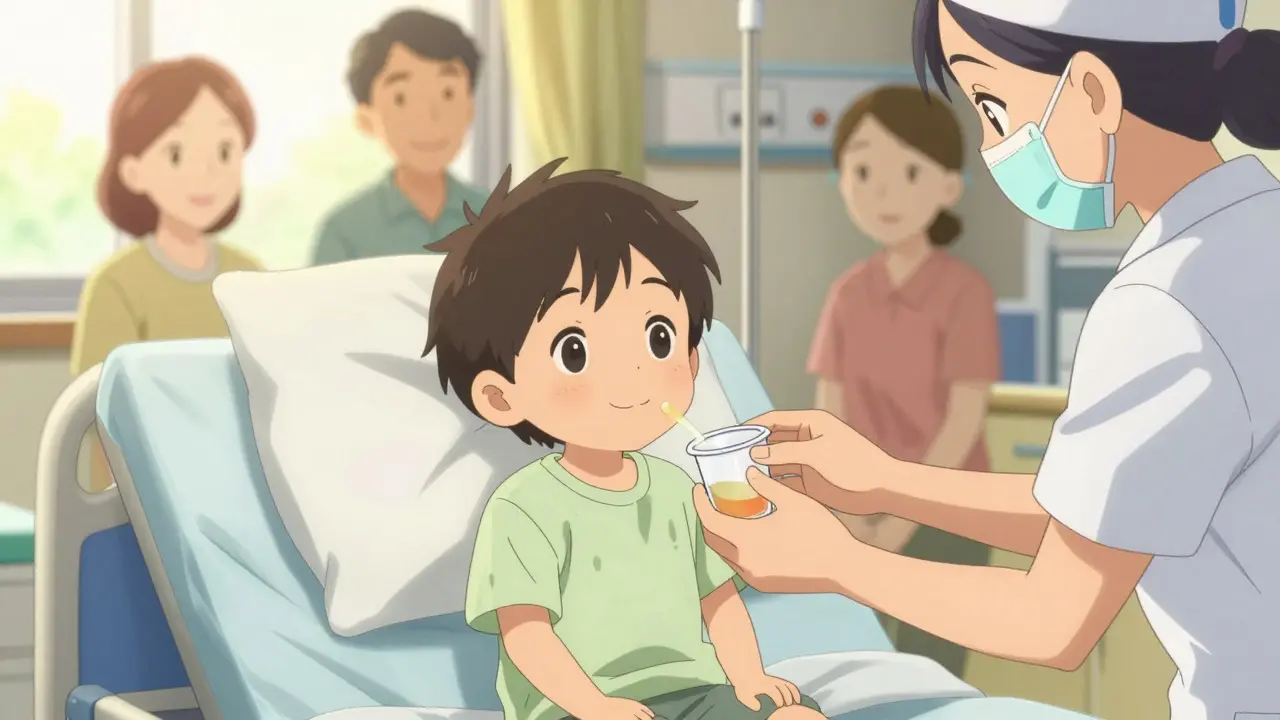
- Oral Midazolam: This is the most common. Given as a sweet-tasting liquid, it’s usually dosed at 0.5 to 0.7 mg per kilogram of body weight (max 20 mg). It’s given 20 to 30 minutes before the procedure. Most kids feel sleepy and relaxed within 15 to 20 minutes. Parents often say their child becomes “dreamy” or “drowsy but not out cold.”
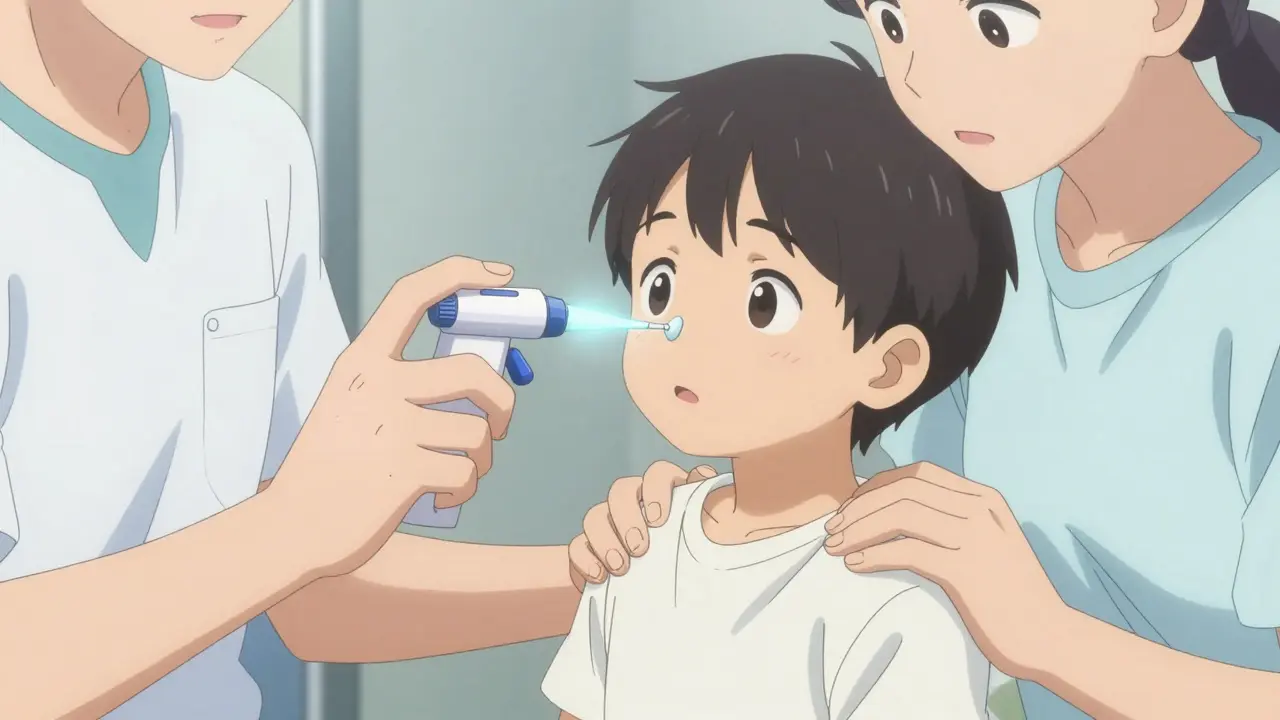
- Intranasal Midazolam: Sprayed into the nose, this works faster-about 10 to 15 minutes. Dose is 0.2 mg per kg (max 10 mg). It’s great for kids who won’t swallow pills or liquids. But about 12% of children get nasal irritation or a burning sensation, so it’s not always the first choice.
- Intramuscular Ketamine: Used only when oral or nasal meds won’t work-like for very anxious kids, those with autism, or when IV access is needed. Dosed at 4 to 6 mg per kg, it takes 3 to 5 minutes to kick in. It doesn’t make kids sleep deeply but creates a dissociated state where they’re calm but still aware of their surroundings. Parents report their child often clings to them right before it works, then suddenly becomes quiet and cooperative. The downside? About 8 to 15% of kids have emergence delirium afterward-crying, thrashing, or confusion as they wake up.
One key point: never use nitrous oxide (laughing gas) alone for kids with asthma or pulmonary hypertension. It can worsen airway reactivity by 25 to 30%, according to StatPearls (2020). Always check for respiratory conditions before deciding on sedation type.
Fasting Rules: What Your Child Can and Can’t Have
Fasting isn’t just about avoiding vomiting-it’s about preventing life-threatening aspiration. But the rules for kids are different than for adults.
Here’s what’s recommended by Texas Children’s Hospital (2023) and the American Society of Anesthesiologists:
- Clear liquids (water, Pedialyte, apple juice, Sprite/7-Up without pulp): Allowed up to 2 hours before the procedure.
- Breast milk: Allowed up to 4 hours before.
- Formula or cow’s milk: Allowed up to 6 hours before.
- Solid foods: No food after midnight for children over 12 months.
Why are these times shorter than for adults? Kids empty their stomachs faster. Adults wait 8 hours for solids; kids only need 6. And while adults must stop clear liquids 4 hours out, kids can have them right up until 2 hours before.
Parents often get confused. One Texas Children’s focus group found that 28% didn’t know what counted as a “clear liquid.” Some thought orange juice was okay-but pulp can slow gastric emptying. Stick to water, apple juice, or clear sports drinks. No milk, no smoothies, no Jell-O.
Special Cases: Medications Your Child Should Keep Taking
Many kids take daily meds for conditions like epilepsy, asthma, or acid reflux. The biggest mistake? Stopping them.
Here’s what to keep giving:
- Antiepileptic drugs (like levetiracetam, valproate): Give with a sip of water on the morning of surgery. Stopping these can trigger seizures.
- H2 blockers and PPIs (like famotidine, omeprazole): Keep giving. They reduce stomach acid and lower aspiration risk.
- Bronchodilators (like albuterol): Use as usual, even on the day of surgery. CHOP data shows this cuts intraoperative bronchospasm by 40%.
But there’s a new warning: if your child takes GLP-1 agonists like semaglutide (Ozempic) or exenatide (Byetta), these must be held. The ASA updated guidance in June 2023. Semaglutide delays stomach emptying by 30-40% in older children. Hold it for 1 week before elective surgery. Exenatide? Hold for 3 days. This isn’t just advice-it’s a safety rule.
How to Prepare Your Child (and Yourself)
Pre-op prep isn’t just about meds and fasting. It’s about psychology.
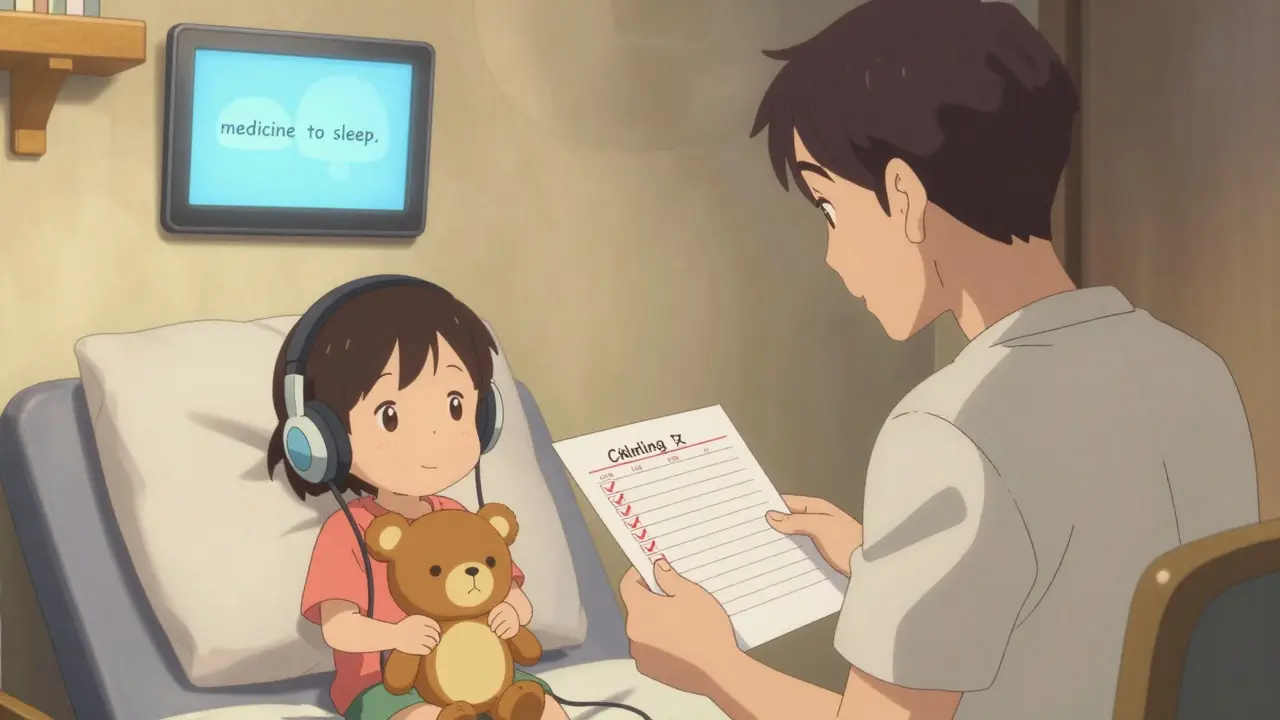
Start talking to your child the day before. Use simple words: “The doctors will give you special medicine to help you sleep so you won’t feel anything.” Don’t say “shot” or “needle.” Say “medicine to help you rest.”
For children with autism, ADHD, or anxiety disorders, plan ahead. RCH Melbourne data shows 40% of these kids need modified protocols-like giving clonidine 4 hours before the procedure (4 mcg/kg) to reduce agitation. Talk to the anesthesiologist early. Don’t wait until the day of surgery.
Bring comfort items: a stuffed animal, a blanket, or a favorite song on a phone. Many hospitals now let one parent stay in the pre-op room until the child is asleep. That’s huge. Your presence reduces anxiety more than any pill.
And don’t forget yourself. Ask questions. Write down instructions. If you’re confused about fasting times or meds, call the hospital. It’s better to double-check than to risk a delay or cancellation.
What Happens If You Miss a Dose or Fasting Rule?
Life happens. Your child eats a cookie. You forget the medicine. The hospital will assess the situation.
If a child eats solid food too late, the procedure will likely be canceled. It’s not about being strict-it’s about safety. Aspiration can cause pneumonia or even death.
If the pre-op med is missed, the team may use an alternative route (like nasal instead of oral) or delay the procedure. In high-risk cases, they might switch to general anesthesia with a different approach.
Medication errors are still common. The ASA reports 17% of facilities have at least one pre-op medication error per month. The top two? Incorrect dosing (27%) and stopping antiepileptic drugs (32%). Always double-check with the nurse. Say: “Can you confirm the dose and timing?”
What You Should Expect After the Medication
After the pre-op med is given, your child will likely:
- Get drowsy within 15 to 30 minutes
- Be calm and cooperative
- Not remember the IV placement or the trip to the OR
Some kids get giggly. Others just zone out. That’s normal. Don’t panic if they don’t respond to your voice right away. The goal is for them to be unaware of the stress-not unconscious.
When they wake up, they may be groggy for a few hours. But because they were calm before surgery, they’re less likely to cry, cling, or have nightmares afterward. That’s the real win.
Final Checklist Before the Day
Use this simple list to make sure nothing gets missed:
- Confirm fasting times with the hospital (no food after midnight, clear liquids until 2 hours before).
- Check which meds to continue (epilepsy, asthma, reflux meds).
- Confirm if your child takes GLP-1 agonists-hold them if needed.
- Ask if oral, nasal, or IM pre-med is recommended based on your child’s age and anxiety.
- Prepare comfort items: favorite toy, blanket, music.
- Write down all meds and doses to show the nurse.
- Arrive early. Rushing adds stress for everyone.
Most children do incredibly well with this system. The data doesn’t lie: fewer complications, fewer cancellations, happier families.
Can I give my child a snack if they’re hungry before surgery?
No. Solid foods must be avoided after midnight. Even a small cookie or piece of toast can delay stomach emptying and increase the risk of aspiration during anesthesia. If your child eats anything solid after the cutoff time, the procedure will likely be canceled for safety reasons.
Is it safe to give midazolam if my child has asthma?
Yes, midazolam is generally safe for children with asthma. In fact, it’s often preferred because it reduces anxiety without affecting airway function. However, if your child is having an active asthma flare-up, the team may delay the procedure or give a bronchodilator like albuterol beforehand. Always inform the anesthesiologist about your child’s asthma history.
Why can’t my child have orange juice before surgery?
Orange juice often contains pulp or fiber, which slows gastric emptying. Only clear liquids without pulp are allowed-water, apple juice, Pedialyte, or Sprite/7-Up. Pulp can stay in the stomach longer, increasing the risk of vomiting during anesthesia. Stick to what’s listed in the hospital’s guidelines.
What if my child refuses to take the medicine?
If your child refuses oral medication, the medical team can switch to intranasal midazolam (a spray in the nose) or, in rare cases, an intramuscular injection. Most hospitals have backup plans. Don’t panic-just let the nurse know your child won’t take it. They’ve seen this before.
Can I stay with my child until they fall asleep?
Yes, in most hospitals, one parent is allowed to stay in the pre-op room until the child is asleep. This significantly reduces anxiety for both the child and parent. Ask ahead of time-some facilities have specific rules about how many people can be present.
What Comes Next
As technology improves, more hospitals are using digital tools to guide parents through pre-op prep. Apps now send reminders for fasting times, medication schedules, and even video tutorials on how to give oral meds. By 2026, 78% of major children’s hospitals will have these tools in place.
But no app replaces clear communication. If you’re unsure about anything-medication, fasting, behavior-call the hospital. Ask for the pre-op nurse. They’ve seen hundreds of kids like yours. They know what works.
Preparing for pediatric surgery isn’t about perfection. It’s about preparation. And with the right meds, the right timing, and a calm parent, your child will get through it better than you think.
aine power
February 21, 2026 AT 05:11Oral midazolam is the gold standard. Anything else is just theater.
Jayanta Boruah
February 22, 2026 AT 03:48It is imperative to note that the pharmacokinetic profile of pediatric patients necessitates a nuanced approach to preoperative sedation, particularly when considering the hepatic metabolism of benzodiazepines. The Royal Children’s Hospital data, while statistically significant, fails to account for inter-individual variability in CYP3A4 enzyme activity, which can lead to subtherapeutic or toxic plasma concentrations. Furthermore, the use of intranasal midazolam in children under two years of age remains controversial due to the absence of long-term neurodevelopmental outcome studies. One must also consider the ethical implications of parental coercion in medication administration, especially when cultural or linguistic barriers exist. This is not merely a clinical decision-it is a multidimensional bioethical challenge.
Ashley Paashuis
February 22, 2026 AT 21:19This is such a thoughtful, well-researched guide. I especially appreciate the emphasis on emotional preparation-so many families focus only on the meds and fasting, but the psychological piece is just as vital. I’ve seen kids who were calm because they had their stuffed animal, not because of the midazolam. And yes, letting one parent stay until sleep? That’s not a perk-it’s a necessity. Thank you for including the GLP-1 agonist warning. So many providers still don’t know about that update.
Marie Crick
February 23, 2026 AT 06:49HOW DARE SOME HOSPITALS NOT LET PARENTS STAY UNTIL SLEEP? THIS IS CHILD ABUSE. MY SON WAS TAKEN AWAY SCREAMING BECAUSE THEY SAID "POLICY." I STILL HAVE NIGHTMARES. THEY NEED TO BAN THIS.
Benjamin Fox
February 24, 2026 AT 02:59USA rules when it comes to pediatric anesthesia 🇺🇸🔥 No other country does it right. All this European nonsense about "comfort items" and "emotional prep"? We just give the kid the shot and move on. Efficiency. That's what matters. 🚀
Jonathan Rutter
February 24, 2026 AT 07:13Look, I get it-you want to be gentle. But let’s be real: most parents are clueless. I’ve seen moms give their 4-year-old a granola bar at 3 a.m. because "they were hungry." Then they’re mad when the surgery gets canceled. And don’t even get me started on the parents who think "clear liquid" means Gatorade with pulp. You think your kid’s special? They’re not. This isn’t a buffet. It’s a hospital. Follow the rules or don’t show up. That’s how you keep kids safe.
Jana Eiffel
February 25, 2026 AT 15:25The notion of "calm transition" in pediatric anesthesia is not merely clinical-it is metaphysical. To sedate fear is to acknowledge that the child’s psyche is not a vessel to be filled, but a landscape to be navigated. The oral midazolam, then, is not a chemical intervention, but a ritual of trust. The parent’s presence, the blanket, the song-all are sacraments. We have lost the sacred in medicine. We measure success in compliance metrics, not in the quiet of a child’s breath as they drift, held by love, not just by dose.
Robert Shiu
February 27, 2026 AT 15:20Y’all are killing it with this info. Seriously. I’ve been through this twice with my daughter, and this checklist? Perfect. I wish I’d had this before. One thing I’d add: if your kid has ADHD, ask about clonidine ahead of time. It’s not magic, but it’s the reason my daughter didn’t try to climb out of the gurney. And yes-let the parent stay. Always. No exceptions. That’s not soft. That’s smart.
Scott Dunne
February 27, 2026 AT 18:43Irish hospitals have been doing this right for decades. We don’t need American protocols. Our children are calmer because we don’t over-medicate. We use reassurance, not pharmacology. The data you cite? Flawed. Selection bias. Confounding variables. And why are you quoting Texas Children’s? We have Our Lady’s Children’s Hospital. They know better.
Davis teo
March 1, 2026 AT 12:43My kid got ketamine. He was fine. Then he woke up screaming like a banshee and clawing at the ceiling. I thought he was possessed. The nurse said "emergence delirium." I said "you gave my child a demon." They laughed. I didn’t. I’m still mad. Why is this not on the warning label? Why isn’t this a mandatory consent form? I need a lawyer.
James Roberts
March 1, 2026 AT 17:42Wow. So much detail. So much care. So much... unnecessary complexity. Let me summarize: give the right drug, at the right time, with the right parent nearby. Don’t give orange juice. Don’t skip epilepsy meds. Don’t panic. And for heaven’s sake, don’t make this a 5,000-word manifesto. You’ve got a kid. They’re scared. You’re scared. Just do the basics. The rest? Nice. But not necessary. Also, GLP-1 agonists? Really? That’s the headline? You’re not wrong... but you’re making it sound like a nuclear threat. It’s a delay. Not a disaster. Chill. 😅