
How to Spot Expired Medications: A Guide to Color, Odor, and Texture Changes
 Jul, 3 2026
Have you ever dug through your medicine cabinet and found a bottle of pills that looked slightly different than when you first bought them? Maybe the white tablets have turned a faint yellow, or the cream feels grainy instead of smooth. It’s easy to ignore these small changes, assuming they’re just part of aging. But ignoring them can be dangerous. Taking degraded medication doesn’t just mean you might not get better; it could make you sick.
Recognizing physical changes in expired medications is a critical safety practice that helps prevent adverse health outcomes from taking degraded pharmaceutical products is one of the most accessible ways to protect yourself and your family. You don’t need a laboratory or expensive equipment to spot the red flags. Your eyes, nose, and sense of touch are powerful tools. This guide will walk you through exactly what to look for in pills, liquids, creams, and ointments so you can decide whether to keep a drug or toss it out.
The Science Behind Drug Degradation
Medications aren’t static. Over time, the active ingredients break down due to exposure to heat, light, moisture, and air. The U.S. Food and Drug Administration (FDA) requires manufacturers to conduct rigorous stability testing to determine how long a drug remains safe and effective under specific storage conditions. These tests establish the expiration date printed on the label.
However, an expiration date is a guarantee only if the drug has been stored correctly. If you leave antibiotics in a hot car or store insulin in direct sunlight, the chemical breakdown happens much faster. According to research published by NASA in 2011, physical changes like discoloration were observed in nearly 70% of expired solid dosage forms. This means visual inspection is a highly reliable first step in checking drug integrity. When a drug degrades, it often produces byproducts that change its color, smell, or texture. Recognizing these shifts allows you to identify compromised drugs before they cause harm.
Spotting Changes in Solid Dosage Forms
Pills and capsules are the most common forms of medication, and they show clear signs of age. Here is what to check:
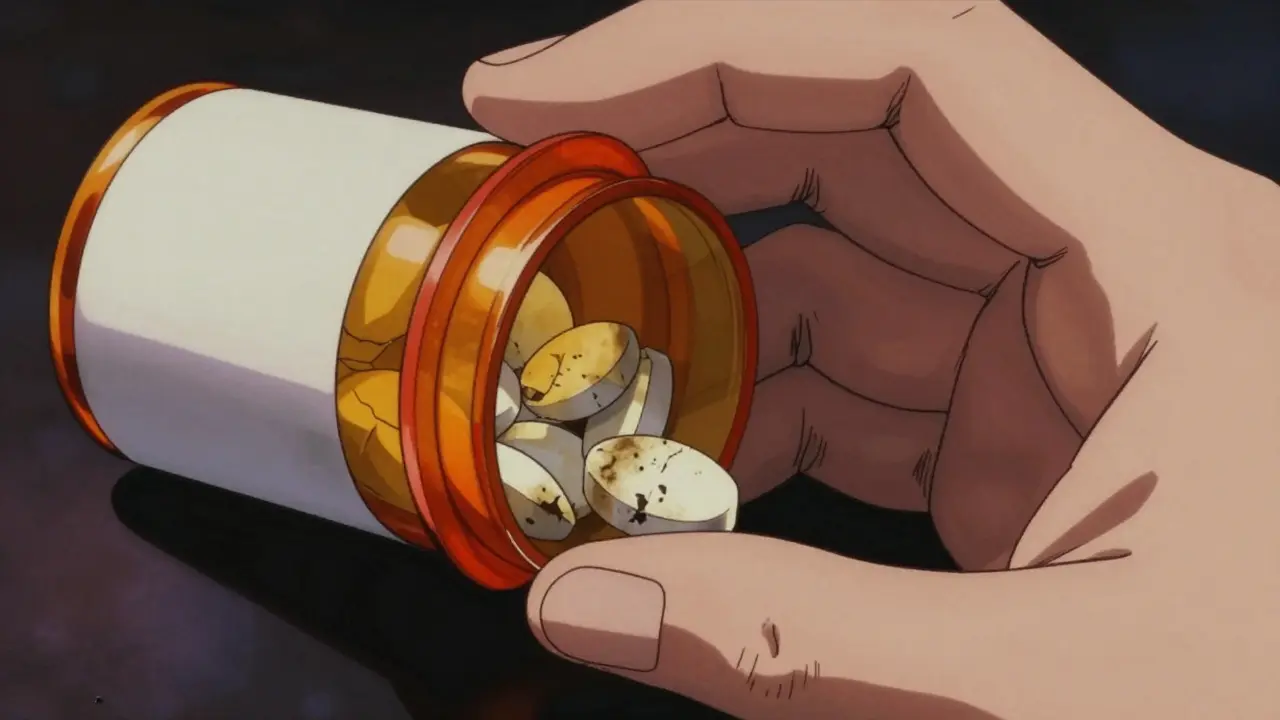
- Discoloration: This is the most frequent sign of degradation. White tablets may turn yellow, brown, or develop dark spots. For example, tetracycline antibiotics are known to turn yellow to brown as they oxidize. If your white pain reliever looks gray or stained, it’s likely degraded.
- Caking and Clumping: Capsules contain powder. If that powder absorbs moisture from the air-a process called hygroscopy-it can clump together. If you shake a capsule and it feels hard or stuck inside the shell, the drug has likely absorbed too much water. Amoxicillin capsules are particularly prone to this issue.
- Cracking or Chipping: While minor chips can happen during transport, widespread cracking suggests the tablet has become brittle due to drying out. Conversely, if a tablet feels soft or sticky, it has absorbed moisture.
- Odor Changes: Some pills should be odorless. If you open a bottle and smell a sharp, chemical, or rancid scent, throw it away. Even a faint "off" smell indicates chemical breakdown.
Keep in mind that some pills naturally have coatings or colors. Always compare the current appearance with a fresh pill from a new bottle if possible. If you can’t do that, rely on the rule of thumb: any significant deviation from the original uniform color or shape is a warning sign.
Checking Liquids, Syrups, and Suspensions
Liquid medications are more vulnerable to contamination and separation than solids. They require careful inspection every time you use them.
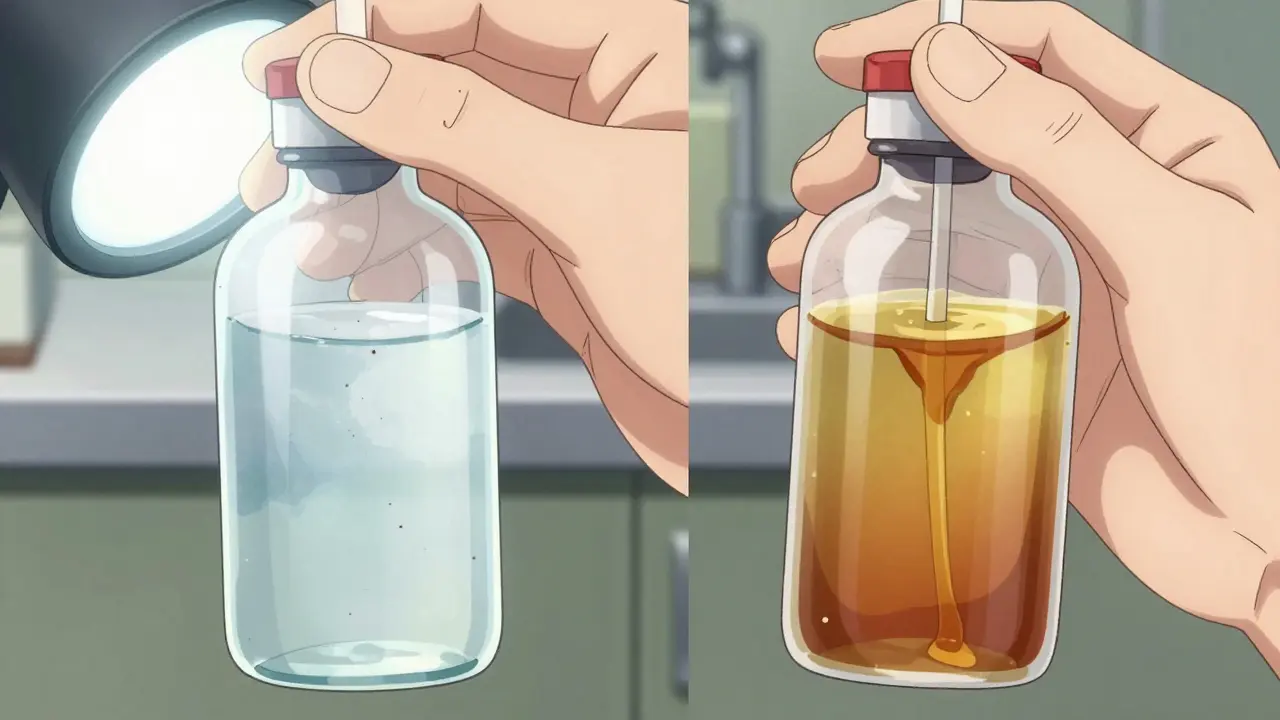
- Particulate Matter: Hold the bottle up to the light. Clear liquids should remain clear. If you see floating specks, clouds, or fibers, the solution is contaminated. The United States Pharmacopeia (USP) sets strict limits on particles in injectable and oral liquids. Any visible debris means the drug is unsafe.
- Phase Separation: Many syrups and suspensions separate over time. This is normal for some formulations, but there’s a difference between natural separation and degradation. Shake the bottle vigorously. If the liquid returns to a uniform consistency quickly, it’s usually fine. If it remains cloudy, oily, or leaves a distinct layer that won’t mix back in, the emulsion has broken down.
- Color Shifts: Clear liquids turning yellow or brown is a major red flag. For instance, nitroglycerin solutions are light-sensitive and can darken significantly when exposed to air or light, losing their potency in the process.
- Fermentation Smells: Cough syrups often contain sugar. If a syrup smells alcoholic, sour, or fermented, bacteria or yeast may have grown in it. Do not taste it to check-smell is enough to tell.
Inspecting Creams, Ointments, and Gels
Semisolid formulations like topical creams and ointments undergo unique physical changes. Because they contain both oil and water components, they are prone to phase separation.
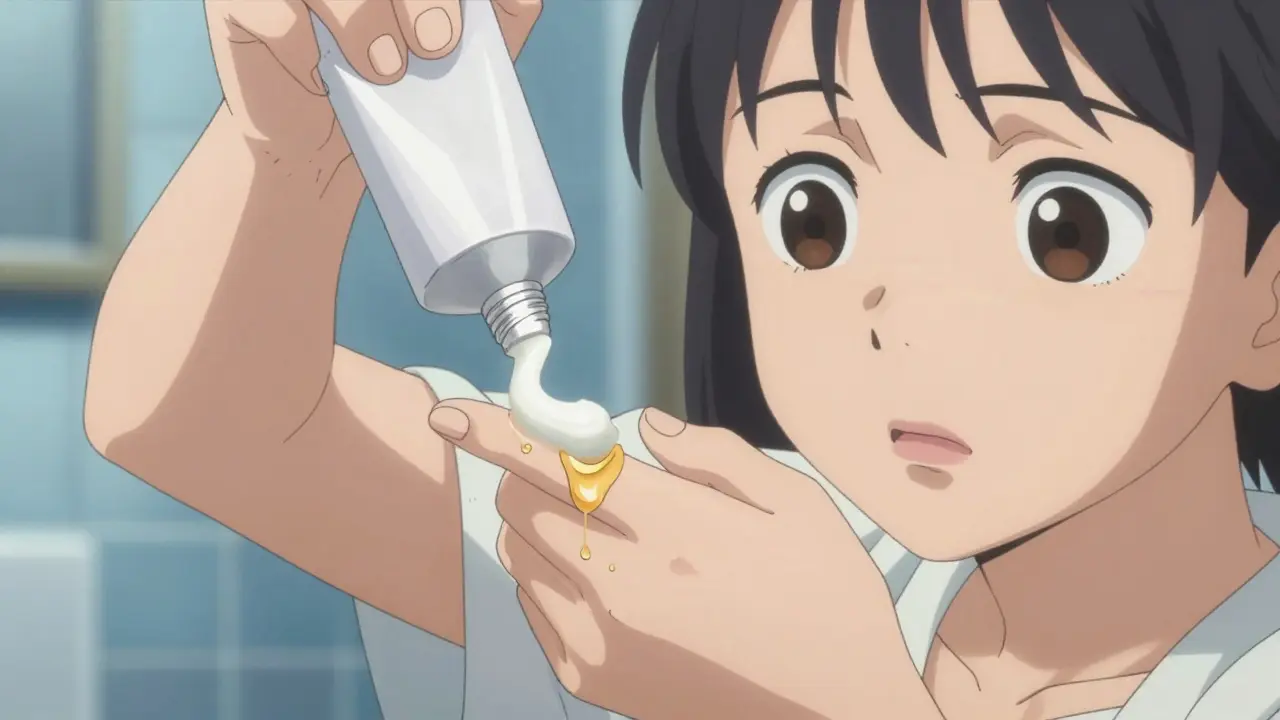
- Oil-Off or Water-Off Separation: Squeeze a small amount onto your finger. A stable cream should feel smooth and uniform. If you see beads of oil pooling on the surface or water leaking out, the emulsion has failed. This means the active ingredient may no longer be evenly distributed, leading to ineffective treatment.
- Texture Changes: Creams should not feel gritty, grainy, or lumpy. If a once-smooth hydrocortisone cream now feels like sandpaper, the preservatives may have broken down, allowing microbial growth or crystallization of ingredients.
- Drying Out: If the cream becomes hard, cracked, or difficult to spread, it has lost its moisture content. This alters how the drug penetrates the skin, reducing its effectiveness.
- Rancidity: Ointments containing fats or oils can go rancid. If the product develops a stale, paint-like, or unpleasant odor, discard it immediately.
Why Visual Inspection Isn't Enough
While looking, smelling, and touching are excellent first steps, they have limitations. Some drugs degrade chemically without showing obvious physical changes. For example, certain injections may lose potency while remaining perfectly clear and colorless. Relying solely on your senses can give you a false sense of security.
According to the National Institute of Justice, human visual assessment of drug color has an accuracy rate of only about 65% compared to instrumental methods. This means you might miss subtle changes that still impact safety. Furthermore, some color changes are cosmetic and don’t affect potency, while others signal toxic byproducts. Because of this uncertainty, the safest rule is to never use a medication past its expiration date, regardless of how good it looks.
If you suspect a drug is expired but looks fine, consult a pharmacist. They can access detailed stability data and advise you on whether a specific medication is likely to retain efficacy beyond its date. Never guess when it comes to critical medications like heart drugs, asthma inhalers, or seizure medications.
Best Practices for Storage and Disposal
To minimize premature degradation, store your medications properly. Keep them in a cool, dry place away from direct sunlight. Bathrooms are poor storage locations because humidity fluctuates wildly with showers. A bedroom drawer or closet shelf is ideal.
When you identify an expired or degraded drug, dispose of it safely. Do not flush most medications down the toilet unless the label specifically instructs you to do so. Instead, mix them with an unappealing substance like dirt, cat litter, or used coffee grounds in a sealed bag, and throw them in the trash. Many pharmacies also offer take-back programs where you can drop off expired drugs for secure disposal.
Can I take medication one month after the expiration date?
It depends on the drug. The FDA's Beyond Use Dating program found that many solid oral medications retain 90% of their potency years after expiration. However, this does not apply to all drugs. Liquid antibiotics, insulin, nitroglycerin, and epinephrine auto-injectors degrade faster and can become unsafe or ineffective quickly. Never rely on expired versions of life-saving medications. For non-critical drugs, check with your pharmacist before using anything past its date.
What does it mean if my pills have changed color?
Color change usually indicates chemical degradation. Oxidation, exposure to light, or moisture can alter the molecular structure of the active ingredient. For example, tetracycline turns yellow-brown as it breaks down into toxic compounds. Even if the color change seems minor, it suggests the drug is no longer stable. Discard discolored pills immediately.
Is it safe to use expired eye drops?
No. Eye drops are sterile solutions. Once opened, they are susceptible to bacterial contamination. Even if the liquid looks clear, microbes may have grown. Using contaminated eye drops can lead to serious infections. Most eye drops should be discarded 28 days after opening, regardless of the expiration date on the bottle.
How can I tell if a cream has gone bad?
Check for separation, texture changes, and odor. If the cream separates into oil and water layers that don't mix back together, it has failed. If it feels gritty, hard, or sticky, the formulation has broken down. A rancid or unusual smell also indicates spoilage. Apply a small amount to your inner arm first if you're unsure, but if it stings or burns, wash it off and discard the tube.
Does storing medicine in the fridge extend its life?
Only if the label says so. Refrigeration slows down chemical reactions for some drugs, like certain insulins or probiotics. However, freezing can destroy other medications, causing crystals to form in liquids or breaking down emulsions in creams. Always follow the manufacturer's storage instructions. If no special storage is listed, room temperature in a dry place is best.