
Hyperacusis: Understanding Sound Sensitivity and How Desensitization Therapy Works
 Feb, 2 2026
Imagine walking into a grocery store and the hum of the refrigerator feels like a drill in your skull. A door closing sounds like a gunshot. Your own voice echoes too loudly in your head. This isn’t imagination-it’s hyperacusis, a real and often misunderstood condition where everyday sounds become painful or overwhelming. It’s not about having better hearing. It’s about the brain misreading sound as dangerous.
What Exactly Is Hyperacusis?
Hyperacusis isn’t just being sensitive to loud noises. People with this condition hear normal sounds-like running water, utensils clinking, or car horns-as painfully loud, sometimes even physically painful. It’s not a hearing loss issue. In fact, most people with hyperacusis have perfectly normal hearing test results. The problem lies in how the brain processes sound. Studies show that about 1 to 2% of the population has clinically significant hyperacusis. That’s roughly 17 million people in the U.S. alone. It can start after a single loud event-like a concert, explosion, or even a sudden scream-or develop slowly over time. Some people develop it after head injuries, Lyme disease, or neurological conditions. Others have no clear trigger at all. The key sign? Normal sounds trigger a fight-or-flight reaction. Your heart races. You feel anxious. You want to escape. This isn’t just annoyance-it’s a neurological response. The brain’s auditory system has become oversensitive, turning up the internal volume on sound signals. This is called “central gain increase,” a term audiologists use to describe how the nervous system amplifies sound signals abnormally.Why Avoiding Sound Makes It Worse
The natural reaction to painful sounds is to protect yourself. Earplugs. Noise-canceling headphones. Staying home. Avoiding restaurants, schools, public transport. It makes sense. But here’s the catch: avoiding sound actually makes hyperacusis worse. Research from Henry et al. (2012) found that people who avoid noise experience a 30-40% increase in sensitivity over time. Why? Because your brain starts to treat silence as the norm. When you finally hear a sound again-even a quiet one-it feels shocking, overwhelming. It’s like keeping a muscle in a cast for months and then trying to lift weights. Your nervous system forgets how to handle normal input. Worse, using hearing protection too often can lead to auditory deprivation. Your brain starts to misinterpret even faint sounds as threats. It’s a vicious cycle: pain → avoidance → increased sensitivity → more pain.Desensitization Therapy: How It Actually Works
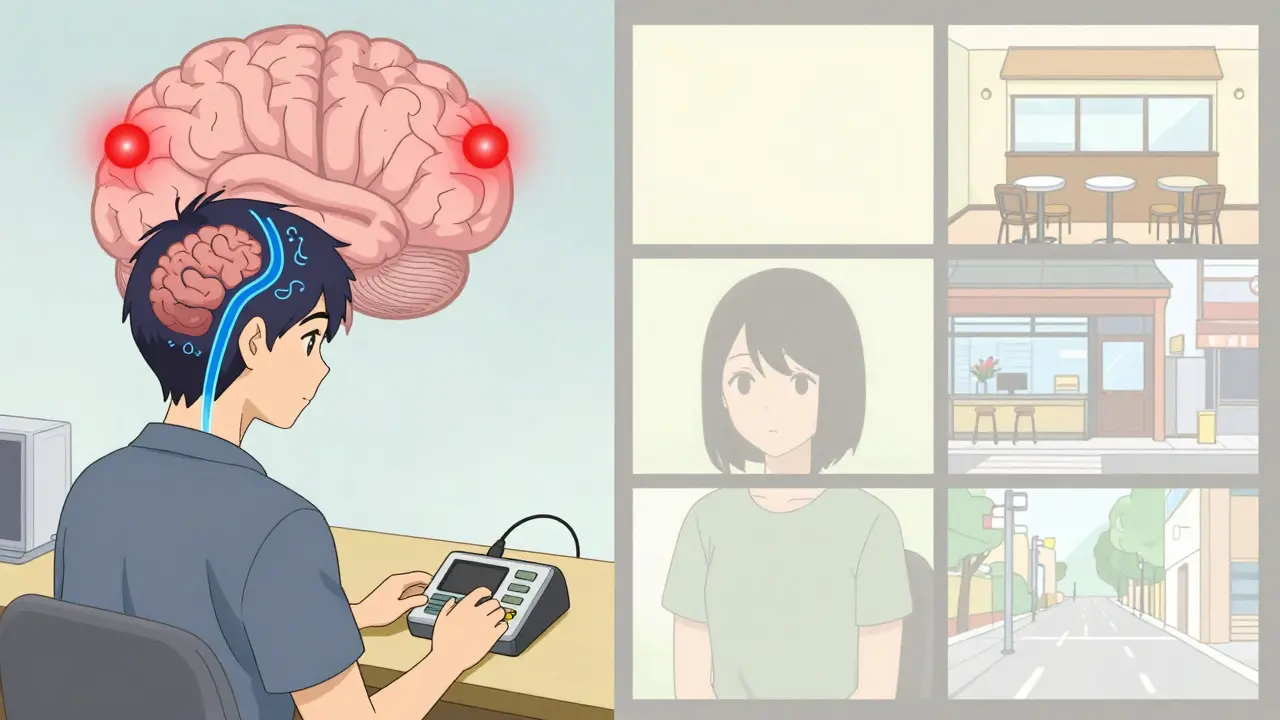
Desensitization therapy is the most effective, science-backed treatment for hyperacusis. It’s not a quick fix. It’s not a pill. It’s a slow, daily retraining of your brain’s sound processing system. The core idea? Expose yourself to low-level, non-threatening sounds every day-so your brain learns they’re not dangerous. This approach was developed by Dr. Pawel Jastreboff in the 1980s as part of Tinnitus Retraining Therapy. His neurophysiological model showed that hyperacusis isn’t just an ear problem-it’s a brain-limbic system issue. The emotional centers of the brain (like the amygdala) get wired to associate sound with fear. Desensitization therapy untangles that link. Here’s how it works in practice:- Audiologist measures your loudness discomfort levels (LDLs) across frequencies. This tells them exactly how quiet a sound can be before it feels uncomfortable.
- You start with sound generators-small devices that play low-level broadband noise (like static or pink noise) or specially filtered music.
- The volume is set 10-15 dB above your hearing threshold, or 20-30 dB below your discomfort level. For many, that’s barely audible.
- You wear the device for 4-8 hours a day while doing normal activities: reading, cooking, watching TV.
- Every week, the volume increases by 1-2 dB. No more, no less.
- Over months, you gradually move from quiet rooms to noisy environments: cafes, traffic, family gatherings.
Success Rates and Real Results
Clinical studies show that 60-80% of people who stick with the full protocol see significant improvement. A 2014 study in the American Journal of Audiology found that after 12-18 months, most patients could tolerate sounds they once found unbearable. User stories back this up. One Reddit user, SoundSufferer2020, wrote: “After 11 months of daily sound therapy starting at barely audible levels, I can now tolerate grocery stores and restaurants without earplugs-life-changing but incredibly frustrating process.” Common wins include:- Being able to eat in restaurants without panic
- Not flinching when someone speaks loudly
- Sleeping through household noises
- Reduced anxiety around sudden sounds
Why Professional Help Matters
You can’t just play white noise on YouTube and call it therapy. Desensitization therapy requires precise calibration. Start too loud? You risk triggering a flare-up. Start too quiet? You won’t make progress. A 2022 survey by Hyperacusis Research Limited found that 89% of people who worked with a trained audiologist completed treatment. Only 52% of those who tried self-managed therapy stuck with it. Specialized clinics use calibrated sound generators-devices that output exact decibel levels. These cost $200-$800. Standard hearing aids ($1,500-$6,000) won’t work. They’re designed to amplify speech, not deliver low-level noise for retraining. Also, therapy works best when paired with counseling. The emotional side of hyperacusis is huge. Anxiety, depression, social isolation-these aren’t side effects. They’re part of the condition. Cognitive Behavioral Therapy (CBT) helps reframe thoughts like “This sound will hurt me” into “This sound is uncomfortable, but not dangerous.”What Doesn’t Work
There are a lot of false promises out there. Medication? No drug has been proven to cure hyperacusis. Some people try anti-anxiety meds, but they only mask symptoms. Once you stop, the sensitivity returns. Earplugs all day? As mentioned, this makes it worse. They’re okay for sudden loud events-like fireworks or construction-but not for daily use. Sound machines without guidance? Apps and YouTube videos often play sounds too loud or inconsistent. One review on Google from May 2023 said: “I quit after 6 months because I only gained tolerance to 5 extra decibels-it felt hopeless.” That’s usually because the volume wasn’t calibrated. Just waiting it out? Hyperacusis doesn’t usually resolve on its own. Without intervention, it often gets more severe.
Who Responds Best-and Who Doesn’t
Desensitization therapy works best for people with noise-induced hyperacusis-like musicians, factory workers, or people exposed to loud environments. Success rates here are 75-85%. It also works well after acoustic trauma-a sudden loud blast or explosion. About 70% of these patients improve. But it’s less effective for people with neurological conditions:- Ramsay Hunt syndrome
- Superior canal dehiscence
- Autism spectrum disorder with severe sensory processing issues
- Comorbid misophonia (anger-triggered sound sensitivity)
The Future of Treatment
New tech is emerging. In 2023, the FDA cleared the Lenire device from Neuromod Devices. It combines sound therapy with mild tongue stimulation to calm the brain’s auditory pathways. Early trials showed 67% improvement. Researchers at MIT are testing AI-driven sound therapy that adapts in real time based on your heart rate and stress levels. Early results show 23% faster progress. Telehealth is growing too. Since 2020, virtual hyperacusis therapy has grown 40% per year. Now, you can get professional guidance from home-something that wasn’t possible a decade ago. But the biggest barrier remains access. Only 22% of U.S. audiology clinics offer formal hyperacusis programs. And only 35% of audiologists are certified in desensitization therapy.What to Do If You Think You Have Hyperacusis
If everyday sounds are causing you pain or panic:- Stop using earplugs daily. Use them only for unavoidable loud events.
- See an audiologist who specializes in hyperacusis-not just hearing loss.
- Ask for loudness discomfort level (LDL) testing.
- Request a referral to a therapist trained in Tinnitus Retraining Therapy or CBT for hyperacusis.
- Be patient. This isn’t a 3-month fix. It’s a 9-18 month journey.
Is hyperacusis the same as tinnitus?
No. Tinnitus is hearing ringing, buzzing, or hissing when no external sound is present. Hyperacusis is when real sounds feel too loud or painful. Many people have both, but they’re different conditions. Treatment for one doesn’t always help the other, though therapies like desensitization can help both.
Can children get hyperacusis?
Yes. Children can develop hyperacusis after ear infections, head injuries, or exposure to loud noises. It’s often misdiagnosed as behavioral issues or autism. If a child reacts with extreme distress to normal sounds-vacuum cleaners, clapping, or even a dog barking-consult a pediatric audiologist trained in sensory processing disorders.
How long does desensitization therapy take?
Most people see noticeable improvement within 6 months, but full results usually take 9 to 18 months. Daily sound exposure is required-typically 4 to 8 hours per day. The key is consistency, not intensity. Skipping days or pushing too hard can delay progress.
Do I need special equipment?
Yes. Standard headphones or phone speakers won’t work. You need a calibrated sound generator that delivers low-level, consistent noise at precise decibel levels. These devices cost $200-$800 and are prescribed by audiologists. Avoid apps claiming to “cure” hyperacusis-they usually play sounds too loudly and lack clinical calibration.
Is hyperacusis permanent?
Not necessarily. With proper therapy, most people regain normal sound tolerance. Some may always have mild sensitivity, especially to sudden loud noises, but they can live without fear or avoidance. Without treatment, symptoms often worsen over time. Early intervention is key.
Jamillah Rodriguez
February 4, 2026 AT 02:28Susheel Sharma
February 5, 2026 AT 20:28Janice Williams
February 7, 2026 AT 10:14Roshan Gudhe
February 7, 2026 AT 15:15Rachel Kipps
February 8, 2026 AT 22:20Prajwal Manjunath Shanthappa
February 9, 2026 AT 09:17Wendy Lamb
February 11, 2026 AT 00:07Antwonette Robinson
February 12, 2026 AT 01:44Ed Mackey
February 13, 2026 AT 19:17Katherine Urbahn
February 14, 2026 AT 20:15Alex LaVey
February 15, 2026 AT 05:15