
Insomnia in Older Adults: Safer Medication Choices
 Jan, 30 2026
By age 65, nearly half of all adults struggle with insomnia. It’s not just about lying awake at night-it’s about waking up tired, shaky, confused, or worse, after a fall. For years, doctors reached for sleeping pills like benzodiazepines or z-drugs, thinking they were harmless fixes. But we now know these drugs are risky for older adults. They don’t just help you sleep-they can make you fall, forget, or even end up in the hospital.
Why Older Adults Are More at Risk
As we age, our bodies change in ways that make medications behave differently. The liver and kidneys don’t clear drugs as quickly. Fat increases, muscle mass decreases, and brain receptors become more sensitive. A pill that worked fine at 50 can become dangerous at 70. Even small doses of sleeping pills can cause next-day drowsiness, confusion, or loss of balance. One study found that older adults taking these meds had a 50% higher chance of breaking a hip. Another showed they were 1.6 times more likely to fall.And it’s not just the pills. Most older adults are already taking multiple medications-for blood pressure, arthritis, heart disease. Mixing those with sleep aids can be like pouring gasoline on a fire. Some drugs slow down how the body breaks down sleeping pills, making their effects stronger and longer-lasting. That’s why even a low dose of zolpidem (Ambien) can leave someone groggy and unsteady the next morning.
The Old Way Isn’t Safe Anymore
For decades, benzodiazepines like lorazepam and triazolam were the go-to treatments for insomnia. But in 2012, the American Geriatrics Society sounded the alarm: stop using them as first-line treatment. Their review of 45 clinical trials showed these drugs increased the risk of any side effect by 80% compared to placebo. Triazolam, in particular, was linked to a 2.3 times higher chance of bad reactions-ranging from memory loss to hallucinations.Even the so-called “safer” z-drugs-zolpidem, eszopiclone, zaleplon-aren’t much better. They may not cause dependence as quickly, but they still carry the same fall risk. A 2024 survey of 452 older adults found that 34% of those on zolpidem reported next-day drowsiness. Some even reported sleepwalking, eating, or driving while not fully awake. These aren’t rare side effects-they’re common enough that the FDA now requires black-box warnings on all these drugs.
The Safer Alternatives
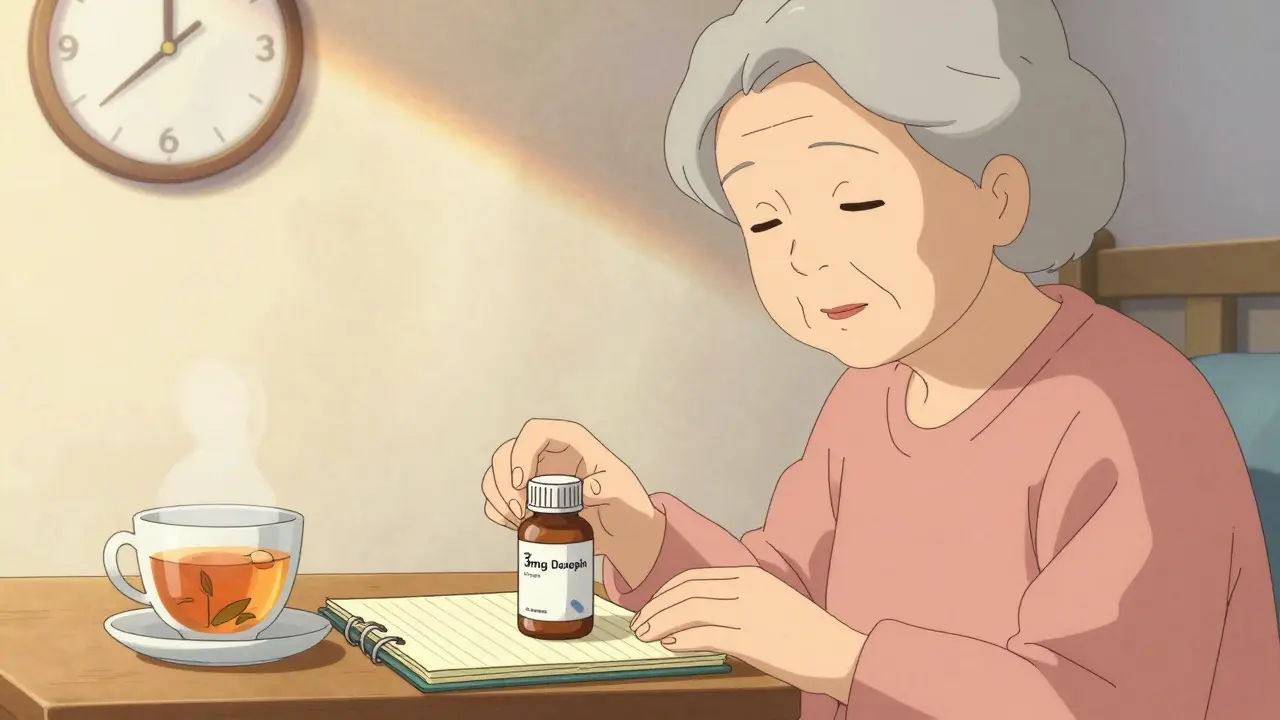
The good news? There are safer options. And they’re not just theoretical-they’re backed by real data from older adults using them daily.Low-dose doxepin (3-6 mg) is one of the most underrated sleep aids for older adults. It’s the same drug used as an antidepressant, but at a fraction of the dose. At 3 mg, it doesn’t affect mood-it just blocks histamine receptors in the brain that keep you awake. In clinical trials, it improved sleep maintenance better than any other medication, adding over 6% to sleep efficiency. Patients on Drugs.com gave it a 7.2/10 rating. Only 12% reported morning grogginess. And at $15 a month, it’s affordable-even without insurance.
Ramelteon (8 mg) works differently. It mimics melatonin, helping your body know it’s time to sleep. It doesn’t sedate you-it just nudges your internal clock. Studies show it reduces the time it takes to fall asleep by about 10 minutes. It’s not a miracle cure, but it’s extremely safe. No risk of falls, no dependency, no next-day fog. Dr. Karl Doghramji calls it a “valuable first-line option.”
Lemborexant (5-10 mg) is newer and more expensive, but it’s promising. Approved in 2019, it blocks orexin-the brain chemical that keeps you alert. In a 12-month trial with adults over 65, it cut time to fall asleep by 15 minutes, reduced nighttime wake-ups by 21 minutes, and added over 40 minutes of total sleep. Users reported feeling like their sleep was “natural,” not drugged. The catch? It costs around $750 a month without insurance. For many, that’s not an option.
What About Melatonin?
Over-the-counter melatonin is popular, but most pills are way too strong-5 mg, 10 mg, even 20 mg. That’s not helpful. It can throw off your internal clock even more. The real winner is controlled-release melatonin (2 mg). It slowly releases melatonin over hours, helping you stay asleep. It’s not a powerhouse, but it’s safe. One study found it improved sleep quality without increasing fall risk. And it costs less than $10 a month.Non-Medication First
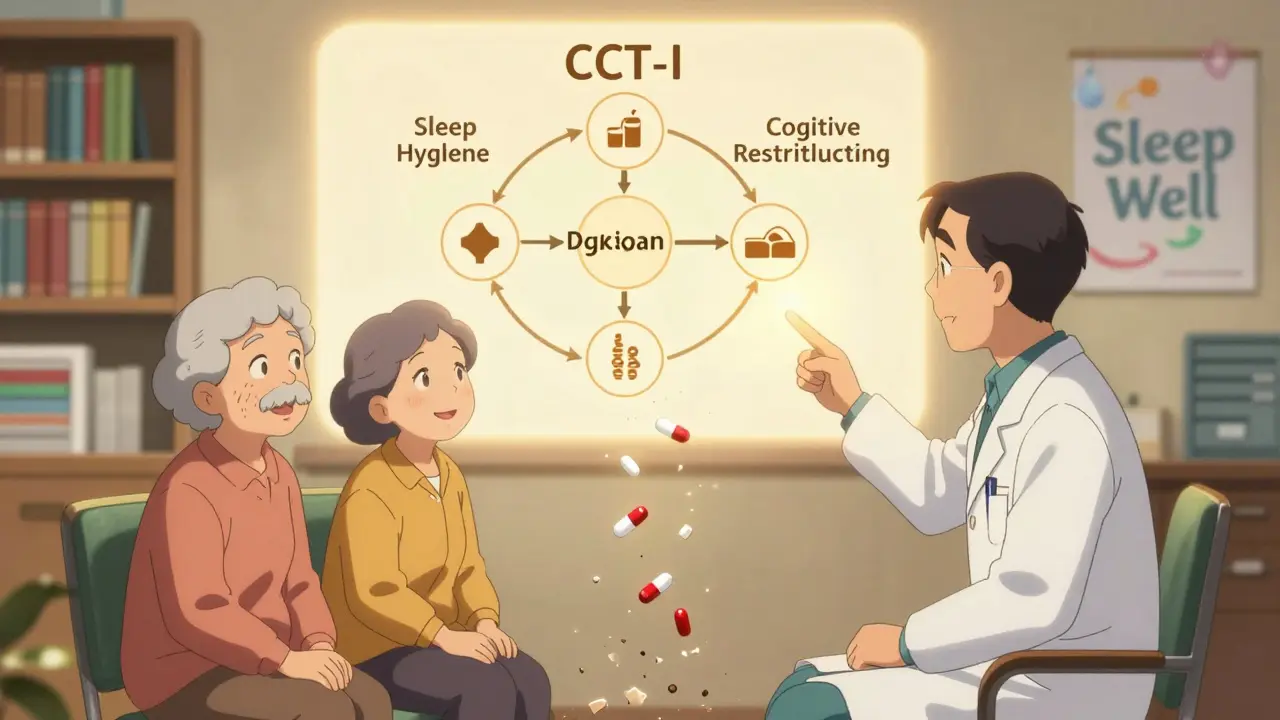
Here’s the truth most doctors don’t tell you: the best treatment for insomnia isn’t a pill. It’s Cognitive Behavioral Therapy for Insomnia, or CBT-I. It’s not magic. It’s structured. You learn to fix bad sleep habits, manage anxiety about sleep, and reset your body clock. Studies show CBT-I works better than any medication-long-term. It improves sleep quality, reduces daytime fatigue, and cuts fall risk without any side effects.But here’s the problem: only 1 in 5 older adults are even told about CBT-I. Insurance rarely covers it. And many doctors still default to prescribing pills because it’s faster. A 2022 study found 68% of inappropriate sleep prescriptions happened because no sleep assessment was done first. No sleep diary. No check for depression. No discussion of lifestyle. Just a prescription.
What to Ask Your Doctor
If you or a loved one is struggling with sleep, here’s what to say:- “Have we tried non-drug options like CBT-I or sleep hygiene changes?”
- “What are the risks of this medication for someone my age?”
- “Is this dose the lowest possible?”
- “Could this interact with my other medications?”
- “How long should I take this? Is there a plan to stop?”
Don’t accept “this is what most people take” as an answer. Ask for the evidence. Ask for alternatives. Ask for a plan to get off it.
Real Stories, Real Results
One Reddit user, u/Senior_Sleeper_65, wrote: “Doxepin 3mg gave me 5 extra hours of solid sleep without the hangover I got from Ambien-wish my doctor had tried this first.” That’s not an outlier. On PatientsLikeMe, 72% of lemborexant users reported satisfaction. On Drugs.com, low-dose doxepin users said they finally felt rested without the fog.But cost matters. One 78-year-old wrote: “Lemborexant works great, but I can’t afford it. My pension doesn’t stretch that far.” That’s why low-dose doxepin and controlled-release melatonin are so important. They’re not flashy. They’re not new. But they’re safe, effective, and affordable.
What’s Next?
The medical world is slowly changing. The Veterans Health Administration now follows safe prescribing guidelines 82% of the time. Medicare is starting to penalize hospitals and clinics that overprescribe benzodiazepines. A new drug, danavorexton, is in late-stage trials and may offer even better safety for older adults by 2026.But change moves slowly. Until then, the safest choice is simple: avoid benzodiazepines and z-drugs. Start with CBT-I. If you need a pill, pick low-dose doxepin or controlled-release melatonin. Ramelteon is a good middle ground. Lemborexant is excellent-if you can afford it.
Sleep isn’t just about feeling rested. It’s about staying independent. It’s about avoiding falls, hospital stays, and loss of dignity. Choosing the right sleep aid isn’t just medical-it’s about protecting your quality of life.
What’s the safest sleep medication for older adults?
The safest options are low-dose doxepin (3-6 mg) and controlled-release melatonin (2 mg). Both have minimal risk of falls, confusion, or next-day drowsiness. Ramelteon is also very safe and helps with falling asleep. Avoid benzodiazepines and z-drugs like zolpidem-they increase fall risk and cognitive decline.
Why are benzodiazepines dangerous for seniors?
Benzodiazepines slow brain activity too much in older adults, leading to dizziness, confusion, and poor balance. Studies show they increase fall risk by 50-60% and hip fracture risk by 40-50%. They also impair memory and can cause delirium. The American Geriatrics Society says they should never be first-line treatment for insomnia in people over 65.
Does melatonin help older adults sleep better?
Yes-but only if it’s the right kind. Over-the-counter melatonin is often too strong (5-10 mg), which can disrupt your natural rhythm. Controlled-release melatonin (2 mg) mimics your body’s natural release pattern and helps you stay asleep longer. It’s safe, non-habit-forming, and has no known serious side effects in older adults.
Can I just take a sleeping pill for a few nights?
Even short-term use can be risky. Older adults metabolize drugs slower, so side effects can last longer. A single dose of zolpidem can cause next-day drowsiness, increasing fall risk. If you need a pill, use the lowest dose for the shortest time possible-no more than 2-4 weeks. Always pair it with non-drug strategies like sleep hygiene or CBT-I.
What is CBT-I, and how do I get it?
CBT-I (Cognitive Behavioral Therapy for Insomnia) is a structured program that teaches you how to fix habits that keep you awake-like spending too much time in bed, worrying about sleep, or using screens before bed. It’s proven to work better than medication long-term. You can find it through sleep clinics, online programs like Sleepio or CBT-I Coach, or sometimes through your doctor. Insurance coverage is limited, but it’s worth asking.
Why is doxepin used at such a low dose for sleep?
Doxepin is an antidepressant at doses of 25-150 mg. But at 3-6 mg, it acts only on histamine H1 receptors in the brain-those that keep you awake. At this low dose, it doesn’t affect mood or heart rhythm. It’s specifically FDA-approved for sleep maintenance insomnia in older adults. It’s not sedating-it’s calming, without the fog.
Kimberly Reker
January 31, 2026 AT 18:43Just read this and I’m crying. My mom was on Ambien for years and no one ever told us the risks. She took one pill and fell in the bathroom at 78. Broke her hip. Never walked the same again. I wish someone had told us about doxepin or CBT-I before it was too late.
Sarah Blevins
February 1, 2026 AT 15:44While the article presents a compelling case against benzodiazepines and z-drugs, it lacks a critical analysis of the methodological limitations of the cited studies. Many trials have small sample sizes, short durations, and selection bias favoring healthier elderly populations. The generalizability of these findings to frail, multimorbid patients remains questionable.
Jason Xin
February 1, 2026 AT 19:26Yeah, I get it. Don’t take the pills. Do the therapy. But what if you’re 80, live alone, and your knees hurt so bad you can’t sit through a 45-minute Zoom session? CBT-I sounds great until you’re lying there at 3 a.m. wondering if you’ll make it to breakfast.
Carolyn Whitehead
February 3, 2026 AT 07:05low dose doxepin changed my life honestly like i was so tired all day and now i wake up feeling like a human again 🙏 no more zombie mode
Diksha Srivastava
February 5, 2026 AT 05:08This is so important! In India too, elders are just given sleeping pills like candy. No one talks about sleep hygiene or therapy. My aunt tried melatonin 10mg and got worse. Then we switched to 2mg controlled-release and she sleeps like a baby now. Thank you for sharing this!
Sidhanth SY
February 6, 2026 AT 09:14CBT-I is the real MVP here. I tried it after my dad had a fall from zolpidem. It took 6 weeks but now he sleeps better than he has in 15 years. No meds. No side effects. Just better habits. Doctors need to stop being lazy and refer people to this first.
Adarsh Uttral
February 7, 2026 AT 12:47lembo rexant sounds cool but 750 a month?? bro thats more than my rent. doxepin 3mg for 15 bucks? now that’s a win. why dont docs just give that first instead of acting like they invented sleep?
Blair Kelly
February 8, 2026 AT 07:39THEY’RE ALL LYING TO YOU. The pharmaceutical companies paid off the FDA to make doxepin ‘safe’ so they could sell it as a ‘sleep aid’ while hiding that it’s just an old antidepressant with a new label. CBT-I? That’s just a cover for insurance companies not wanting to pay for real care. Wake up.
Darren Gormley
February 9, 2026 AT 13:45So… we’re just supposed to trust a Reddit post more than our doctor? 😂 I mean, sure, doxepin sounds nice but have you seen the side effects list? Dizziness, dry mouth, blurred vision… and you’re telling me that’s better than a little zolpidem? 🤦♂️
Mike Rose
February 10, 2026 AT 09:45why is everyone so into this doxepin thing? its just an antidepressant. why not just take a benzo and chill? i dont get it. also cbt-i sounds like a cult.
Russ Kelemen
February 11, 2026 AT 20:36There’s a deeper truth here: sleep isn’t broken. We’re just out of rhythm. We’re overstimulated, overmedicated, and under-attuned to our bodies. The real solution isn’t a pill-it’s returning to a life where darkness means rest, not a screen. We’ve forgotten how to be human. The medicine? It’s not in the pharmacy. It’s in the quiet.
Kathleen Riley
February 12, 2026 AT 03:42It is, without question, a matter of profound ethical concern that the prevailing paradigm of pharmaceutical intervention continues to dominate clinical practice despite overwhelming evidence to the contrary. The institutional inertia exhibited by medical providers in the face of clearly delineated guidelines from the American Geriatrics Society is not merely negligent-it is morally indefensible.
Beth Cooper
February 13, 2026 AT 16:10Wait… so you’re telling me the government and Big Pharma don’t want us to sleep well? That’s why they’re pushing CBT-I-because it’s free and they can’t charge for it. They want us hooked on pills so they can sell us more drugs for the side effects. I’ve been reading about this for years. They’re poisoning us slowly. Wake up, people.