
Medication Adherence Challenges for Older Adults: Practical Solutions That Work
 Feb, 7 2026
More than 88% of adults over 65 take at least one prescription drug. Half of them take four or more. That’s not just common-it’s the new normal. But here’s the problem: for every three older adults on multiple medications, one isn’t taking them as directed. Not because they’re stubborn. Not because they don’t care. But because the system is stacked against them.
Why Older Adults Struggle to Take Their Medications
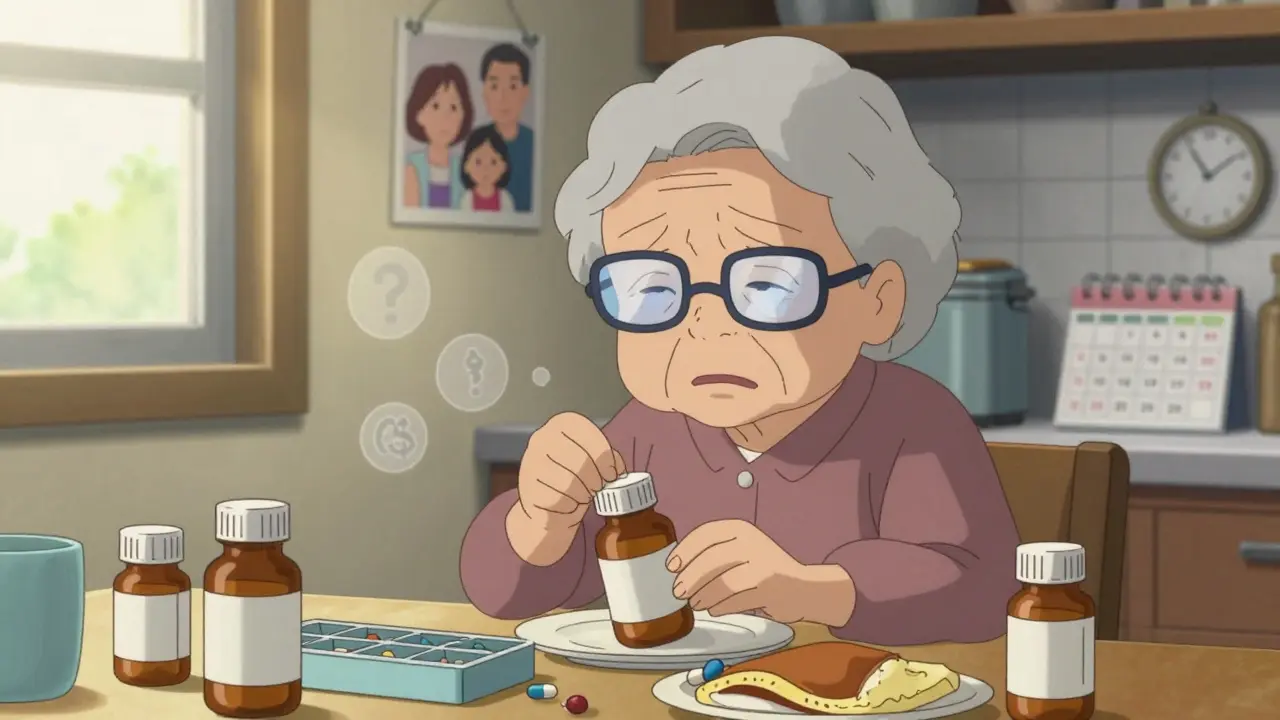
It’s not about willpower. It’s about complexity. Imagine waking up at 6 a.m. to swallow six pills. Then again at noon. Then again at 6 p.m. Each with different instructions: take with food, take on empty stomach, avoid grapefruit, don’t lie down for 30 minutes. Now add in a handful of over-the-counter pills for arthritis, sleep, or heartburn. Mix in declining vision, shaky hands, and a memory that forgets whether you already took your blood pressure pill. That’s the daily reality for millions.The CDC found that 3.4% of older adults skip doses because they can’t afford them. But that number jumps to 6 times higher for those who don’t have enough to eat. For some, choosing between insulin and groceries isn’t a hypothetical-it’s a daily decision. Women are more likely than men to skip pills due to cost. Black and Hispanic seniors face higher rates than White seniors. And it’s not just about money. A 78-year-old woman in Durban told me last month she stopped taking her cholesterol meds because she thought the dizziness was just part of getting older. Turns out, it was the medication. She didn’t know how to ask her doctor.
Polypharmacy: The Silent Killer
Taking five or more medications a week? That’s not unusual. In fact, 57% of women over 65 do it. But more pills don’t mean better health. They mean more side effects. More interactions. More confusion. One study found that 35% of older adults on multiple drugs have an adverse reaction each year-and nearly 3 out of 10 of those reactions land them in the hospital.Polypharmacy isn’t just about quantity. It’s about redundancy. A patient might be on three different drugs for high blood pressure. Or two antidepressants that do the same thing. Or painkillers that clash with heart meds. Doctors often add prescriptions without removing old ones. And when patients move between specialists-cardiologist, endocrinologist, neurologist-no one talks to each other. The result? A pillbox that looks like a pharmacy shelf.
It’s Not Just Forgetfulness-It’s System Failure
Most people assume older adults forget to take their meds. And yes, memory loss plays a role. But Brazilian research shows that memory issues account for only 6.9% of adherence problems. The real culprits are deeper.Social and family support is the biggest barrier-33.6% of cases. A senior living alone with no one to check in? They’re at high risk. No one to help open pill bottles? No one to remind them? No one to call the pharmacy when the refill is late? That’s not negligence. That’s isolation.
Education level is the second biggest factor-23.7%. Many older adults were never taught how to read a prescription label. They don’t know what “BID” means. They think if they feel better, they can stop the pill. They don’t realize that high blood pressure meds don’t cure-they manage. And if they can’t read the tiny print on the bottle? They skip it.
What Actually Works: Real Solutions for Real Lives
There’s no magic bullet. But there are proven, practical steps that make a difference.- Simplify the regimen. Can one pill replace three? Can a once-daily dose replace a morning/afternoon/evening schedule? Doctors need to review every medication at least once a year-not just add new ones. If a drug was prescribed five years ago for a condition that’s now under control, it should be stopped.
- Use pill organizers with alarms. Not just a weekly box. A smart dispenser that beeps, flashes, and calls a family member if a dose is missed. These aren’t luxury gadgets-they’re lifelines.
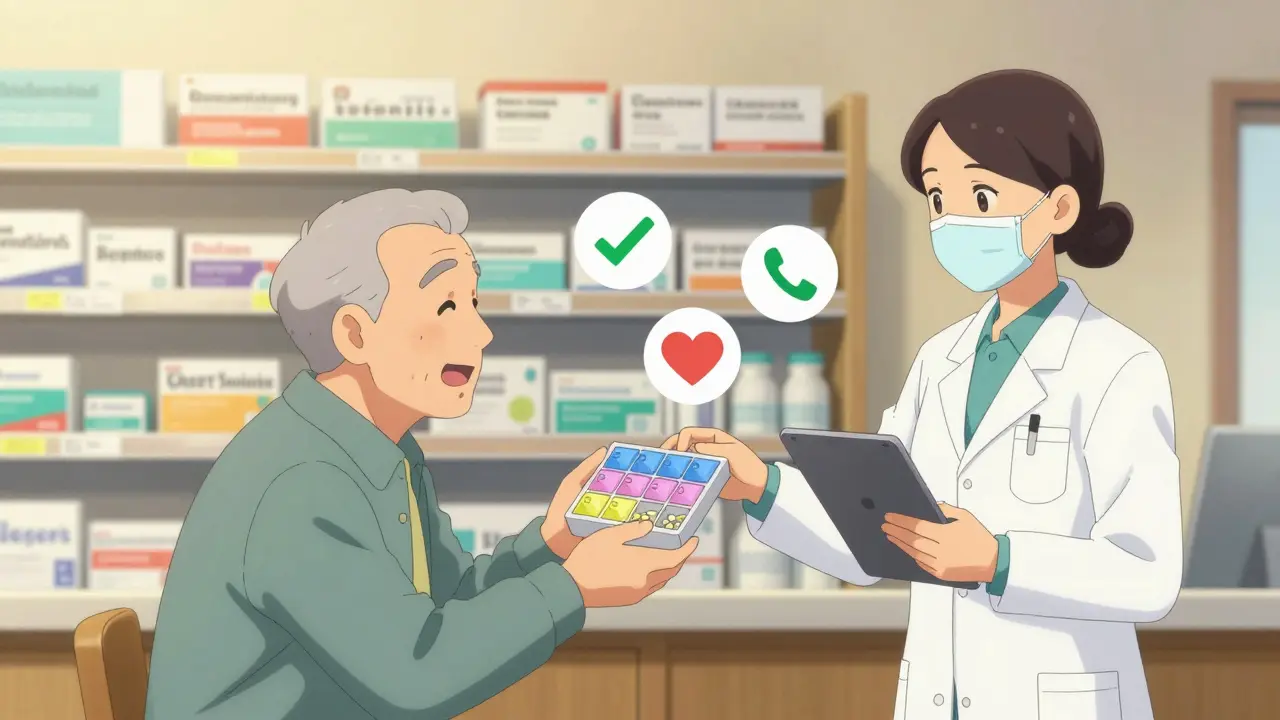
- Involve pharmacists. Pharmacists are the most underused resource. They can spot dangerous interactions, simplify schedules, and even deliver meds to your door. In countries where pharmacists are part of the care team, adherence rates jump by over 40%.
- Address cost head-on. If someone can’t afford their meds, no amount of education will fix it. Ask: Is there a generic? A patient assistance program? A mail-order option? Can one drug be switched to a lower-cost alternative? Medicare Part D helps-but many still pay hundreds out-of-pocket. Social workers and community health workers can connect seniors to aid programs.
- Train caregivers. Family members need to know how to help, not just how to nag. A simple 15-minute session with a nurse on how to read labels, check expiration dates, and recognize side effects can prevent a hospital visit.
Technology Can Help-But Don’t Rely on It Alone
Smartphone apps, automated reminders, and Bluetooth pill bottles sound great. But tech fails when seniors don’t use smartphones. Or when they’re not tech-savvy. Or when their children live 500 miles away.One 81-year-old man in Cape Town told me he uses a pillbox with alarms. But he doesn’t know how to reset it after a power outage. His daughter tried to teach him. He got frustrated. He stopped using it. So now he just keeps the pills in a jar. That’s not a tech problem. That’s a human problem.
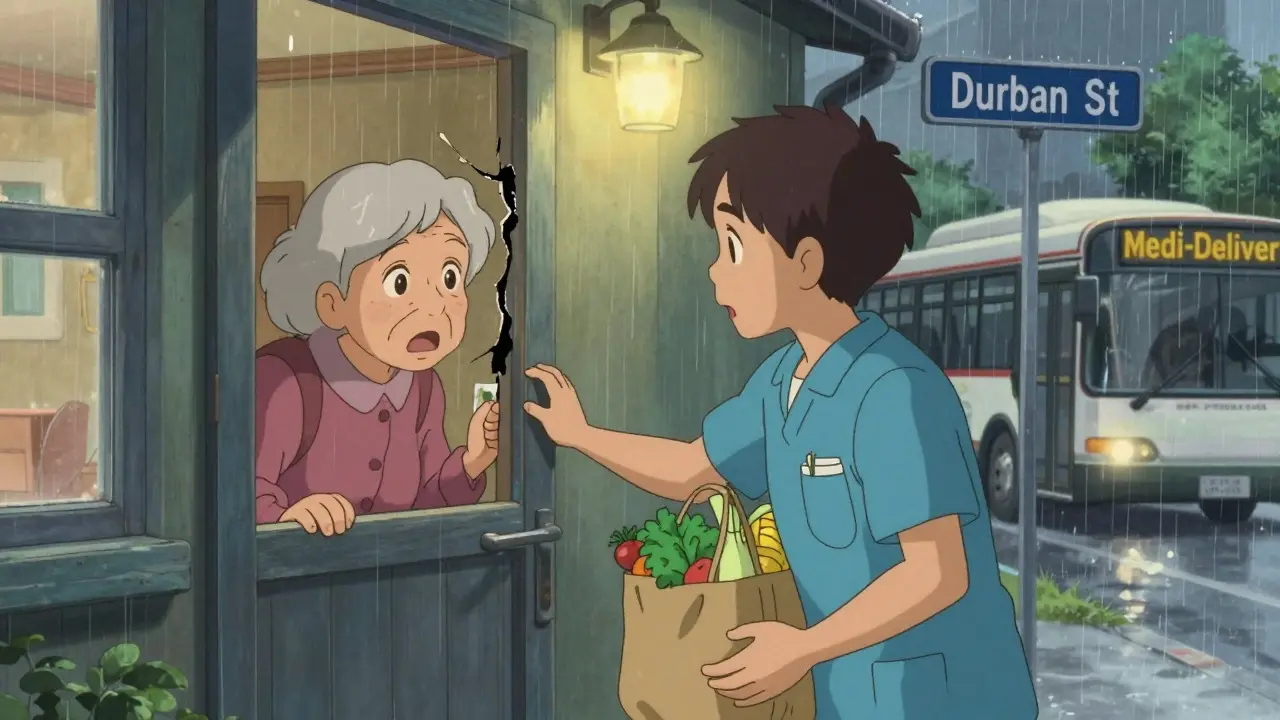
Technology works best when it’s simple, physical, and supported by people. A pillbox with a big button that beeps once a day. A phone call from a community nurse every Tuesday. A neighbor who checks in while delivering groceries.
What Needs to Change
We keep treating medication adherence like a personal failure. It’s not. It’s a system failure.Healthcare providers need to stop thinking of adherence as a patient’s job. It’s their job-to make it easy. To simplify. To communicate. To coordinate. To ask: “Are you able to take this?” instead of “Why aren’t you taking this?”
Policy needs to change too. Out-of-pocket costs for seniors should be capped. Generic drugs should be prioritized. Medication reviews should be a standard part of annual check-ups-not an afterthought. And we need more community health workers who speak the language, understand the culture, and show up at the door.
One nurse in Durban told me about an elderly woman who hadn’t taken her diabetes meds in six months. When she asked why, the woman said: “I don’t have sugar in my house anymore. Why do I need the pill?” That’s not ignorance. That’s logic. The solution wasn’t a lecture. It was a conversation-and a new prescription that matched her reality.
Final Thought
Medications don’t work if they’re not taken. That’s not a secret. But too often, we blame the patient instead of fixing the system. For older adults, taking pills isn’t just about health-it’s about dignity. About independence. About not being a burden.The answer isn’t more pills. It’s fewer pills. Better communication. More support. And a healthcare system that stops asking, “Why won’t you take it?” and starts asking, “How can we make it easier for you?”
Why do older adults stop taking their medications?
Older adults stop taking meds for many reasons-not because they’re careless. Cost is a big one: nearly 1 in 30 skip doses because they can’t afford them. Others don’t understand why they need the drug, think side effects are just aging, or get overwhelmed by too many pills at once. Some can’t open bottles or read labels due to vision or hand problems. And many live alone with no one to remind them or help manage their meds.
Is polypharmacy always harmful?
Not always-but it’s risky. Taking five or more medications increases the chance of dangerous drug interactions, side effects, and hospital visits. For older adults, even common drugs like sleep aids or painkillers can cause confusion, falls, or kidney damage. The key isn’t avoiding all multiple meds-it’s making sure every pill is necessary, reviewed regularly, and not just added on without removing something else.
Can technology like pill dispensers help?
Yes-but only if it fits the person. A smartphone app won’t help someone who doesn’t use a phone. A beeping pillbox might, if it’s simple and reliable. The best tech is paired with human support: a family member who checks in, a nurse who visits, or a community worker who helps reset the device. Tech is a tool, not a fix.
How can family members help with medication adherence?
Don’t just remind them to take pills. Help them understand why. Sit with them during a doctor visit. Ask the pharmacist to explain the meds in plain language. Help organize pills into a daily box. Check if they can afford them-maybe they’re skipping doses to buy food. Offer to call the pharmacy for refills. And listen. Sometimes, they stop taking meds because they’re scared of side effects and don’t know who to tell.
What should older adults do if they can’t afford their meds?
Ask your doctor or pharmacist: Is there a generic version? A lower-cost alternative? A patient assistance program? Many drug companies offer free or discounted meds to low-income seniors. Pharmacies often have $4 generic lists. Medicare Part D has a low-income subsidy-call 1-800-MEDICARE to check eligibility. Never stop taking a med without talking to your provider first.
Are there programs that deliver medication to seniors’ homes?
Yes. Many pharmacies offer home delivery, especially for those with mobility issues. Some community health centers and nonprofit groups deliver meds along with groceries. In South Africa, programs like the National Department of Health’s Primary Healthcare Clinics often help with transport and medication access. Ask your clinic, local church, or senior center-they may have connections.
Can a pharmacist really help with medication management?
Absolutely. Pharmacists are trained to spot dangerous interactions, simplify dosing schedules, and identify unnecessary meds. In many countries, pharmacists now do regular medication reviews with patients-especially seniors on multiple drugs. They can also help you apply for cost-saving programs and explain labels in plain language. Don’t wait for your doctor to refer you-ask your pharmacist directly.
Ariel Edmisten
February 8, 2026 AT 00:31Simple solution: fewer pills. If a doctor can't explain why you need all of them, they shouldn't be on the list. I've seen grandpa go from 12 pills a day to 4. His energy came back. No magic, just cleaning house.
Niel Amstrong Stein
February 9, 2026 AT 11:29Man, this hits different 😔
My abuela took her meds in a coffee mug because the bottle cap was too hard. She didn't know what 'BID' meant. We got her a big red pillbox with a bell. Now she rings it like a dinner bell. Funny, right? But it saved her.
Technology ain't the fix. People are. Just show up.
Amit Jain
February 10, 2026 AT 20:08Stop blaming the system. It's the elderly themselves. They don't want to be told what to do. They're stubborn. I've seen it. My uncle skipped his blood thinner because he 'felt fine.' Then he had a stroke. No one else is responsible but him.
Stop coddling. Give them the facts and move on.
Sarah B
February 11, 2026 AT 11:26Medicare should cover all meds for seniors period. No excuses. This country spends billions on wars but can't afford to keep old people alive. Pathetic.
Savannah Edwards
February 12, 2026 AT 05:39I work in home care and I can tell you the real issue isn't the pills-it's the loneliness. One woman I visited every Tuesday stopped taking her heart meds because she didn't think anyone cared if she lived or not. She told me that on the third week. We started talking. Not about meds. About her garden. Her late husband. Her cat. After three weeks of just listening, she asked me to help her refill her prescriptions. It wasn't the pillbox. It was the fact that someone showed up and didn't rush out. That's the cure. Not the tech. Not the pharmacy. Just someone who stays.
Gouris Patnaik
February 12, 2026 AT 15:26Western medicine is a pyramid scheme. Pill after pill after pill. They sell you a solution, then create the problem it 'fixes.' You take a drug for blood pressure, it gives you dizziness, so you take a drug for dizziness, then it messes with your kidneys, so now you need another. It's not healthcare. It's a business model. And old people are the perfect market. They're easy to scare. They're easy to control. Wake up.
Heather Burrows
February 14, 2026 AT 08:26I'm not against helping seniors. But why do we assume they need help at all? Some of them are perfectly capable. Maybe they just don't want to take pills. Maybe they're tired of being treated like children. Why not respect their autonomy? Why not let them choose to live with risk? We're so obsessed with controlling outcomes that we forget they're still people.
Ritu Singh
February 15, 2026 AT 16:38As someone from India, I've seen both sides. In rural villages, grandmothers walk five kilometers to the clinic for a single pill because they know it's their only chance. But here in the U.S., we have pharmacies on every corner, and yet people are skipping doses because they can't afford $40 for a 30-day supply. This isn't about access. It's about dignity. We need to treat medication as a human right, not a privilege. Pharmacists should be frontline care providers-not just dispensers. And yes, we must train them to speak in plain language, not medical jargon. A simple conversation, with eye contact, can change everything.
Mark Harris
February 16, 2026 AT 23:33Just had a call with my mom’s pharmacist. He said they’ve started a new program-free delivery with a 10-minute chat. 'We ask how they slept. If they ate. If they need help opening anything.' That’s it. No sales pitch. No pressure. Just human connection. Adherence went up 52% in three months. It’s not rocket science. It’s kindness.
Ariel Edmisten
February 17, 2026 AT 05:49That’s exactly right. My dad’s pharmacist calls him every Friday. Not to remind him. Just to check in. Dad says it’s the highlight of his week. He takes his meds now because he doesn’t want to disappoint someone who actually cares.
That’s the secret.