
Medication Red Flags: When to Seek Emergency Care
 Aug, 25 2026
Medication Red Flag Checker
Answer the questions below based on your current condition. This tool helps you triage potential medication reactions.
It is easy to dismiss a new symptom as just a side effect. You start a new antibiotic for a sinus infection and feel a bit nauseous. You tweak your blood pressure medication and feel lightheaded. Most of the time, these are minor issues that pass. But sometimes, a medication reaction is not just an inconvenience-it is a medical emergency waiting to happen. Knowing the difference between a manageable side effect and a life-threatening red flag can save your life.
Adverse drug reactions (ADRs) are unintended, harmful responses to medications. According to the U.S. Food and Drug Administration (FDA), these range from mild annoyances like a runny nose to severe events like heart attacks or liver damage. Shockingly, ADRs are the fourth leading cause of death in the United States, responsible for over 106,000 fatalities annually. The problem? Many people wait too long to seek help. If you recognize these specific emergency care signals early, you can prevent severe complications and potentially save a life.
The Vital Signs That Demand Immediate Action
Your body gives you objective clues when something is wrong. While feelings of "not being right" are valid, vital signs provide hard data. If you have a home monitor, check these numbers. If they fall outside normal ranges, do not guess-act.
- Temperature: At or above 102°F (38.9°C). This could indicate a serious infection or drug fever.
- Breathing: More than 22 breaths per minute, or any difficulty breathing, wheezing, or noisy respiration.
- Pulse Rate: Below 50 beats per minute (bradycardia) or above 110 beats per minute (tachycardia).
- Oxygen Levels: Pulse oximetry below 94% on room air.
- Blood Pressure: Systolic (top number) below 90 mmHg or above 180 mmHg; diastolic (bottom number) below 60 mmHg or above 120 mmHg.
Context matters here. A systolic reading of 185 mmHg without symptoms might be managed with urgent care same-day. But if that high reading comes with a severe headache, slurred speech, chest pain, or weakness on one side of the body, it is a hypertensive emergency. Call 911 immediately. Similarly, low blood pressure combined with dizziness and fainting suggests your heart isn't pumping enough blood to your brain. These are not "wait and see" situations.
Anaphylaxis: The Fast-Moving Threat
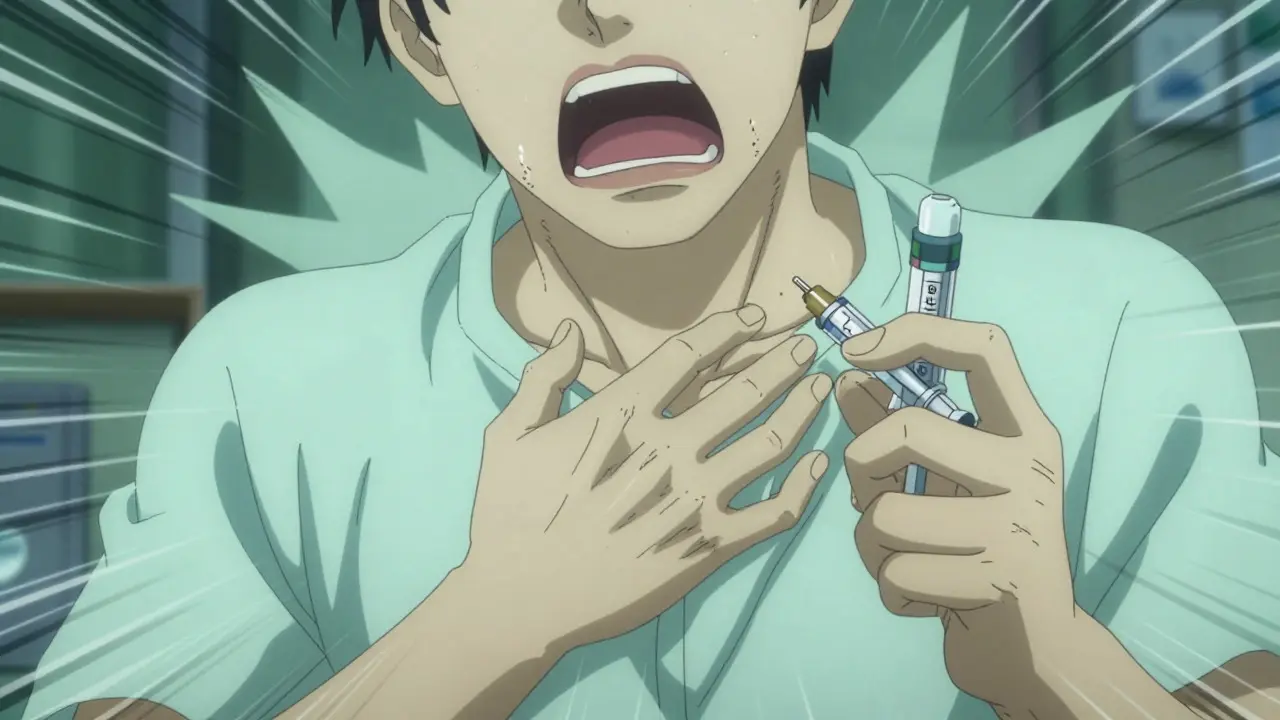
Allergic reactions are among the most common reasons for medication emergencies, but they are also the most misunderstood. Anaphylaxis is a severe, systemic allergic reaction that can kill within minutes. It is not just a rash. It is a whole-body response.
Dr. Jane Smith, Chief of Emergency Medicine at Massachusetts General Hospital, notes that the most dangerous medication reactions are those that mimic other conditions. For example, 35% of anaphylaxis cases are initially misdiagnosed as asthma attacks or anxiety episodes. This delay costs precious time. Here are the red flags for anaphylaxis that require immediate epinephrine administration and a 911 call:
- Swelling of the lips, tongue, or throat.
- Difficulty swallowing or speaking.
- Noisy or difficult breathing (stridor).
- Cyanosis (blue or gray tint to lips or tongue).
- Widespread hives or rash across the body.
- Nausea, vomiting, or diarrhea that starts suddenly.
- Sense of impending doom, collapse, or loss of consciousness.
If you have a known allergy, keep an epinephrine auto-injector nearby. In a 2024 survey by the American Academy of Allergy, 89% of survivors credited immediate self-administration of epinephrine with preventing fatal outcomes. Do not rely on antihistamines alone for severe reactions; they work too slowly.
Skin Reactions: Beyond the Rash
Not all skin changes are harmless. While a mild itch or small patch of hives might be monitored, certain skin reactions signal severe internal damage. Stevens-Johnson Syndrome (SJS) and Toxic Epidermal Necrolysis (TEN) are rare but critical conditions often triggered by antibiotics, sulfa drugs, or anti-seizure medications.
SJS and TEN manifest as painful blistering of the skin and mucous membranes (mouth, eyes, genitals). The skin may peel off in sheets. If you notice target-like lesions (bull's-eye spots), widespread blistering, or sores in your mouth that make eating or drinking painful, seek emergency care. These conditions progress rapidly and can lead to sepsis or organ failure if untreated. Unlike simple hives, SJS/TEN often feels like a sunburn that hurts more than it looks.
Drug Interactions and Polypharmacy Risks
You are not just reacting to one drug; you are reacting to the combination of everything in your system. Approximately 90% of adverse drug reactions are not immune-mediated allergies but rather pharmacokinetic interactions or dose-related toxicities. The risk skyrockets with polypharmacy-the use of multiple medications.
Patients taking five or more medications daily face a 300% increased risk of severe ADRs compared to those on a single medication. This is particularly relevant for older adults, with 45% of Americans aged 65+ taking five or more meds. Two common interaction traps include:
- Blood Thinners and NSAIDs: Taking warfarin with ibuprofen or naproxen increases bleeding risk by approximately 50%. Watch for unusual bruising, black stools, or pink urine.
- Anticoagulants and Antibiotics: Certain antibiotics like ciprofloxacin can elevate INR levels (blood thinning factor) to dangerous degrees within 24-48 hours, creating stroke or hemorrhage risks.
Don't forget supplements. Herbal remedies like St. John's Wort can dangerously interact with prescription antidepressants and birth control pills. Over 15,000 documented drug-drug interactions exist, with about 700 considered clinically significant. Always tell your pharmacist every pill, powder, and drop you take.
Building Your Personal Safety Plan
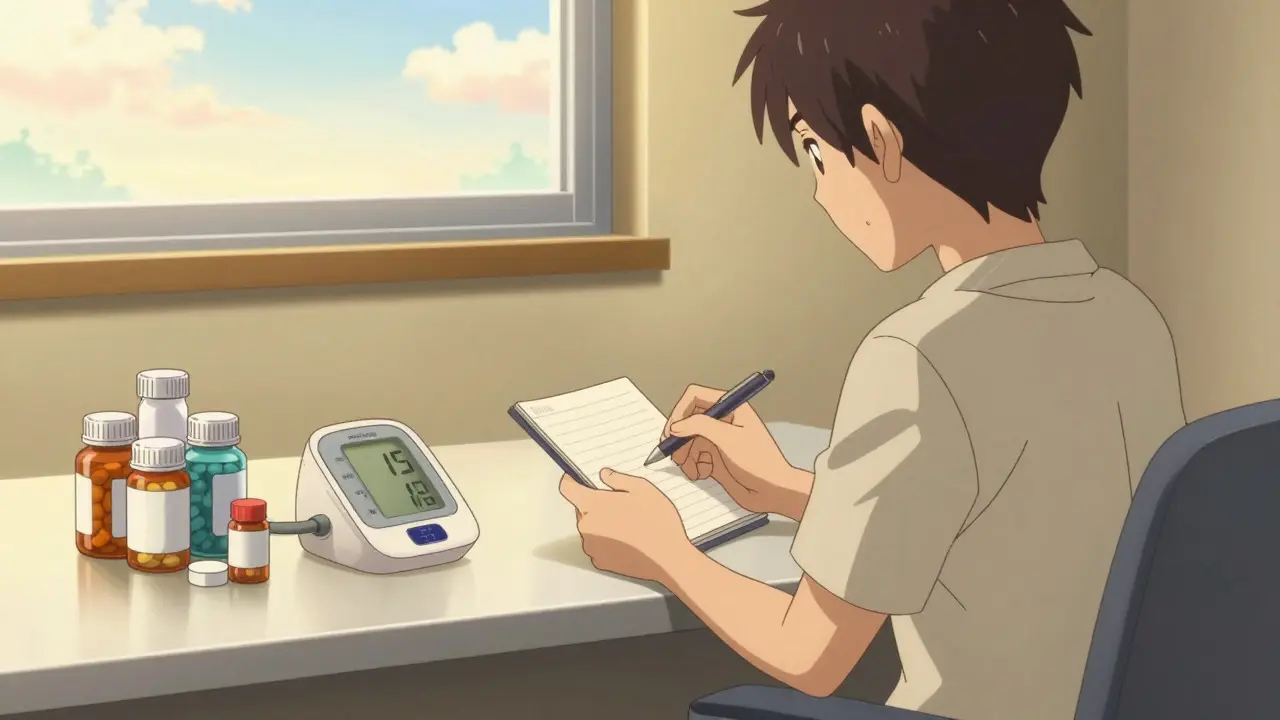
Knowing the general rules is good, but having a personalized plan is better. A 2023 study in the Journal of the American Medical Association found that only 42% of patients receive specific instructions about when to seek emergency care for side effects. Don't leave it to chance. Create your own safety net.
Start by listing all your current medications. Next, identify your "baseline" symptoms. If you usually have mild nausea with Metformin, know that this is expected. But if the nausea turns into persistent vomiting with dehydration signs (dry mouth, no urination), that is a red flag. Write down specific "watch for" symptoms for each new med. Include the timeline: severe reactions often occur within 72 hours of starting a new medication or adjusting dosage. Keep this list in your phone or wallet.
Finally, know your escalation path. Who do you call first? Your doctor? Your pharmacist? Or 911? Having this decision tree ready removes panic in the moment. Pharmacists are excellent resources for this; they can review your entire medication profile and flag potential interactions before they become emergencies.
| Symptom Cluster | Urgent Care (Same Day) | Emergency Room (Immediate/911) |
|---|---|---|
| Skin Reaction | Mild localized rash, itching without breathing issues | Widespread blistering, peeling skin, mouth sores, swelling of face/throat |
| Blood Pressure | Systolic >180 mmHg without neurological symptoms | Systolic >180 mmHg with headache, slurred speech, chest pain, or vision changes |
| Bleeding | Minor nosebleeds, small bruises | Black/tarry stools, vomiting blood, continuous heavy bleeding, head injury while on blood thinners |
| Gastrointestinal | Mild nausea, occasional loose stool | Persistent vomiting, inability to keep fluids down, severe abdominal pain radiating to back |
| Respiratory | Mild cough, slight congestion | Wheezing, stridor, shortness of breath at rest, blue lips |
Frequently Asked Questions
How quickly do medication emergencies usually appear?
Most severe reactions occur within the first 72 hours of starting a new medication or changing the dose. However, some idiosyncratic reactions can appear weeks later. If you feel significantly worse after a change, contact your provider immediately.
Is a mild rash always safe to ignore?
Not necessarily. A mild, localized rash may be monitored. However, if the rash spreads, becomes painful, blisters, or involves the eyes or mouth, seek care promptly. These can be early signs of Stevens-Johnson Syndrome.
Should I stop my medication if I suspect a side effect?
Do not stop essential medications (like heart or seizure meds) without consulting a doctor. For non-critical meds, stopping may be appropriate if a severe reaction is suspected. Bring the medication bottle to the ER or urgent care so clinicians know exactly what you took.
What role do herbal supplements play in drug interactions?
Herbal supplements are metabolized by the same liver enzymes as many prescription drugs. Supplements like St. John's Wort, garlic, and ginkgo biloba can alter drug levels, increasing toxicity or reducing effectiveness. Always disclose supplement use to your healthcare team.
How can I prepare for a medication emergency at home?
Keep a written list of all meds and dosages. Have an epinephrine auto-injector if you have known allergies. Know your local ER location and phone number. Consider keeping a basic home health kit with a blood pressure cuff and thermometer for quick checks.