
New Antidepressants: Emerging Treatments with Fewer Side Effects
 Feb, 4 2026
Why Traditional Antidepressants Fall Short
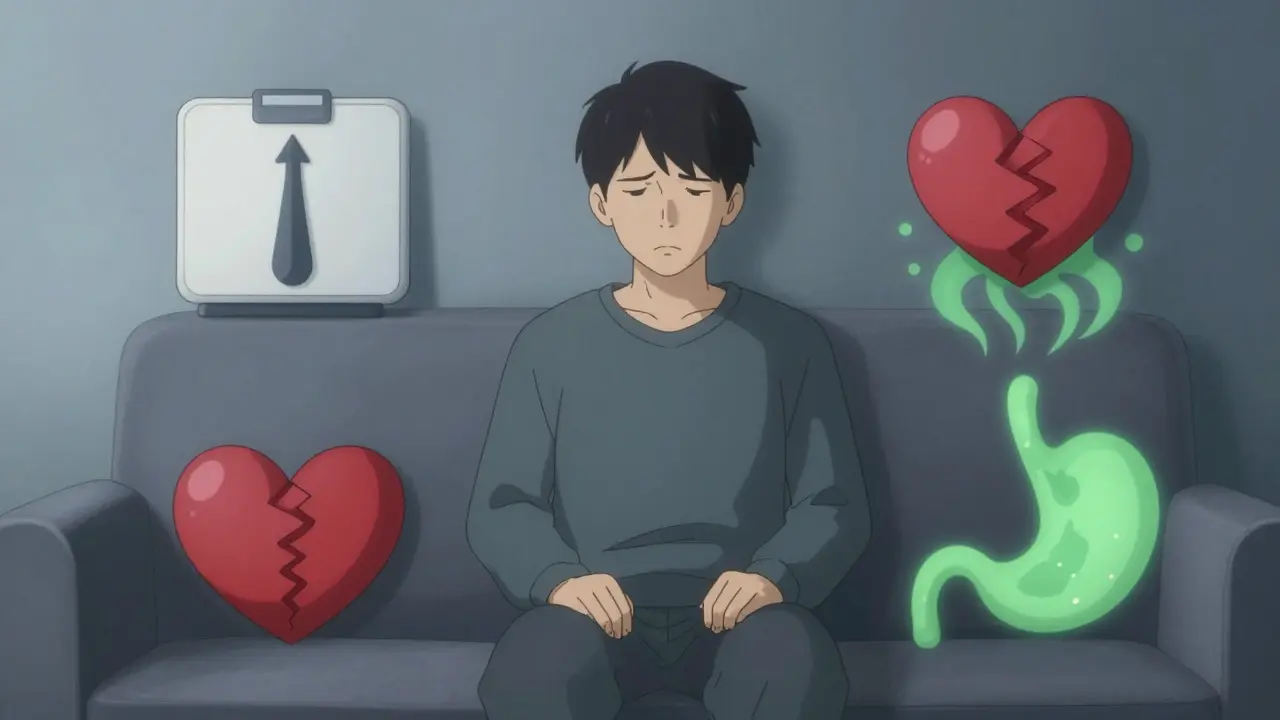
Traditional antidepressants like sertraline and escitalopram have been the go-to treatment for depression for decades. But they often come with serious side effects. Sexual dysfunction affects 30-70% of users, weight gain of 10-15% over six months, and gastrointestinal issues in 35-50% of patients. This has led many people to stop taking their medication, worsening their condition. The good news? New antidepressants are changing the story. Here’s what’s emerging in 2025.
How New Antidepressants Work Differently
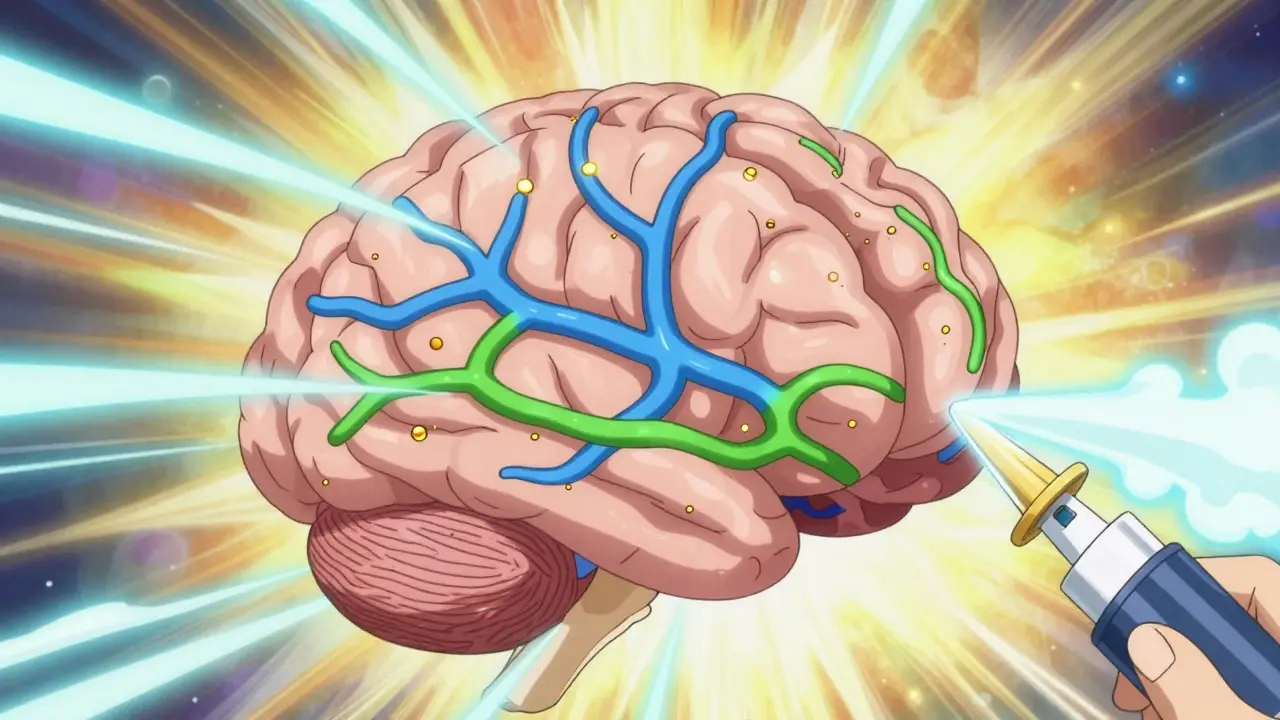
Newer antidepressants target different brain pathways. Instead of just serotonin, they focus on glutamate, GABA, or multiple receptors. For example, SPRAVATO is a nasal spray containing esketamine, an NMDA receptor antagonist. It works within hours to reset neural circuits. Zuranolone modulates GABA-A receptors as a neurosteroid. Auvelity combines dextromethorphan and bupropion to influence glutamate and dopamine. These mechanisms lead to faster relief and fewer side effects. The FDA approved Exxua in September 2023 as the first new chemical entity for depression in over a decade. This marks a significant shift from traditional approaches.
Key New Antidepressants Explained
SPRAVATO (esketamine) is a nasal spray approved in 2019. It works within 24-48 hours for treatment-resistant depression. However, 45-55% of users experience transient dissociation. It requires clinic visits with 2-hour monitoring due to safety risks. Cost is around $880 per dose. Zuranolone (Zurzuvae) was approved in August 2023. It's a 14-day course for postpartum depression and major depressive disorder. It works in 1-2 days but causes dizziness in 25% and somnolence in 20% of users. A 14-day course costs $9,450. Auvelity (dextromethorphan/bupropion) was approved in 2022. It combines two drugs to modulate glutamate and dopamine. It takes 4-5 days to work, with nausea and headache as common side effects. Monthly cost is $1,200. Exxua (gepirone) is a serotonin receptor agonist approved in 2023. It has only 2-3% sexual dysfunction rates versus 30-50% for SSRIs. It works in about a week. Cost is $1,500 per month. Psilocybin is still investigational but shows promise for treatment-resistant depression with effects lasting up to six months after a single dose.
Side Effect and Cost Comparison
| Medication | Class | Onset of Action | Common Side Effects | Cost (Monthly) |
|---|---|---|---|---|
| SPRAVATO (esketamine) | NMDA antagonist | 24-48 hours | Dizziness, dissociation | $880 per dose |
| Zuranolone | Neurosteroid modulator | 1-2 days | Dizziness, somnolence | $9,450 for 14-day course |
| Auvelity | Multi-receptor targeting | 4-5 days | Nausea, headache | $1,200 |
| Exxua | Serotonin receptor agonist | 1 week | Mild headache | $1,500 |
| Traditional SSRIs (e.g., sertraline) | SSRI | 4-6 weeks | Sexual dysfunction, weight gain | $4-$30 |
Choosing the Right Medication for Your Needs
Not all new antidepressants work the same for everyone. Your health history matters. If you have heart issues, avoid SPRAVATO due to blood pressure risks. If weight gain is a concern, Exxua has minimal impact. Insurance coverage is a big hurdle-SPRAVATO requires prior authorization in 92% of commercial plans. Zuranolone's 14-day course simplifies treatment but requires strict adherence to dosing with food. Access is another issue: only 1,243 certified clinics nationwide administer SPRAVATO as of October 2025. Always discuss your specific risks with your doctor. The National Institute of Mental Health's 'Choosing an Antidepressant' tool (updated September 2025) can help guide your decision.

Expert Insights and Future Directions
Dr. Dervla Kelly, Consultant Psychiatrist at King's College Hospital, says: 'Glutamate-targeted medications present unique advantages with shorter treatment durations, reducing cumulative side effect burden. This greatly improves the risk-benefit profile of depression treatment.' However, Professor Hamish McAllister-Williams cautions: 'We must remain vigilant about cardiovascular parameters. Some antidepressants like amitriptyline increase blood pressure significantly compared to placebo.' Dr. Alison Cave, former FDA Deputy Center Director, emphasizes: 'The most significant advancement is personalized treatment selection based on individual risk factors-for patients with obesity or heart problems, side effect profile differences are clinically crucial.' Looking ahead, NIH grants include $2.4 million for developing a genetic test to predict antidepressant side effects with 85% accuracy. This could revolutionize how we match patients to the right medication.
Frequently Asked Questions
How do new antidepressants differ from traditional SSRIs?
Traditional SSRIs work by increasing serotonin levels, which can take 4-6 weeks to work and often cause sexual dysfunction (30-70% of users), weight gain, and GI issues. New antidepressants like SPRAVATO and Zuranolone target different brain pathways-glutamate or GABA receptors-leading to faster relief (hours to days) and significantly fewer side effects. For example, Exxua has only 2-3% sexual dysfunction rates versus 30-50% for SSRIs.
Are these new antidepressants covered by insurance?
Coverage varies widely. SPRAVATO requires prior authorization in 92% of commercial plans. Zuranolone's $9,450 14-day course often has high out-of-pocket costs. Auvelity and Exxua are more commonly covered but still require step therapy. Traditional SSRIs like fluoxetine cost as little as $4 for 30 tablets and are usually fully covered. Always check with your insurer before starting treatment.
How quickly do new antidepressants work?
Traditional antidepressants take 4-8 weeks to show effects. Newer options are much faster: SPRAVATO works in 24-48 hours, Zuranolone in 1-2 days, Auvelity in 4-5 days, and Exxua in about a week. This rapid action is especially valuable for treatment-resistant depression where waiting weeks isn't an option.
What are the biggest side effects of SPRAVATO?
SPRAVATO causes transient dissociation in 45-55% of users-feelings of detachment from reality. It also leads to dizziness in 30% of cases and can increase blood pressure. Due to these risks, it requires administration in certified clinics with 2-hour post-dose monitoring. These side effects are why it's typically reserved for treatment-resistant depression when other options have failed.
Can these new antidepressants help with postpartum depression?
Yes. Zuranolone is specifically approved for postpartum depression and shows a 70% response rate in Phase 3 trials. It's administered as a 14-day course, which is ideal for new mothers who need quick relief without long-term medication. Traditional antidepressants often take weeks to work and can cause side effects that complicate breastfeeding or newborn care.
Andre Shaw
February 5, 2026 AT 07:05Traditional antidepressants aren't all bad-SSRIs have been a lifeline for millions. But yeah, the new stuff is cool. SPRAVATO working in hours? Sure, but dissociation risks are no joke. I've seen people get so spaced out they can't drive. Maybe we need better safety protocols before rolling this out everywhere. Also, cost? $880 per dose? That's insane. Insurance won't cover it for most. So unless you're rich, forget it. But hey, maybe that's why we need universal healthcare. Just saying. Wait, let's think: the FDA approved Exxua in September 2023 as the first new chemical entity for depression in over a decade. This marks a significant shift from traditional approaches. But the real issue is accessibility. For example, only 1,243 certified clinics nationwide administer SPRAVATO as of October 2025. And the cost? It's astronomical. Most people can't afford it. This isn't progress if only the wealthy get access. We need policy changes to fix this. Otherwise, these 'breakthroughs' are just for the privileged few. It's a shame because depression is a widespread issue that needs better solutions. We should be pushing for affordable treatments, not just new ones that cost a fortune. Seriously, it's time to rethink how we approach mental health care. This isn't just about drugs; it's about systemic change. If we don't address this, we're failing the very people we're trying to help.
Dr. Sara Harowitz
February 6, 2026 AT 18:42You're absolutely right about the costs! But SPRAVATO is a lifesaver for treatment-resistant depression! It's not about the money-it's about saving lives! The FDA wouldn't approve it otherwise! We need to stop being naysayers and embrace progress! This is America-innovation is our strength!
Kieran Griffiths
February 7, 2026 AT 05:41I agree that the new options are promising. However, we need to consider access issues. Many patients can't afford these treatments, and insurance coverage is spotty. It's great that we have alternatives, but we need to make them accessible. Maybe we can push for more generic versions or subsidies.
Brendan Ferguson
February 8, 2026 AT 14:21I understand the point about saving lives, but affordability is a real barrier. Let's not forget that traditional SSRIs are still effective for many. Maybe the focus should be on improving access to both old and new treatments. It's about balance.
jan civil
February 8, 2026 AT 19:47Check your insurance plan before starting treatment.
Jennifer Aronson
February 10, 2026 AT 18:07Access is indeed a major issue. We need systemic changes to ensure all patients can benefit from these advances. It's not just about the drugs but the entire healthcare infrastructure.
Kate Gile
February 11, 2026 AT 19:37We should push for better insurance policies. Everyone deserves access to effective treatment. Let's work together to make healthcare affordable!
Gregory Rodriguez
February 12, 2026 AT 07:25Oh sure, 'systemic changes'-because that's exactly what's happening right now. Sarcasm aside, the reality is that unless we address pricing, these 'breakthroughs' are just for the wealthy. It's like a joke-'new antidepressants' that only the rich can afford. What a world.
Elliot Alejo
February 14, 2026 AT 03:32The point about cost being a barrier is valid. Maybe we need government intervention to lower prices. This shouldn't be a luxury item; it's healthcare.
Bella Cullen
February 15, 2026 AT 14:13Meds aren't great.
Sam Salameh
February 16, 2026 AT 12:12America needs to fix this. We have the best healthcare system-wait, no, actually we're falling behind. Let's fix it!
Cole Streeper
February 17, 2026 AT 07:56This is all a pharmaceutical company plot. They're making drugs expensive to keep people dependent. The FDA is in cahoots with them. It's all a scheme to control us.
Dina Santorelli
February 18, 2026 AT 03:00Conspiracy theories aside, the real issue is that doctors don't have enough time to discuss options properly. Patients are left in the dark. It's all a mess.
divya shetty
February 20, 2026 AT 02:33Such baseless claims. The FDA approval process is rigorous. These medications are safe and effective when used properly. Stop spreading misinformation.
Lana Younis
February 22, 2026 AT 00:22Yup, docs are overworked. Need better training on new meds. Also, cultural factors matter-some communities distrust pharma. More outreach needed. But honestly, the system's a mess.