
Predicting Generic Entry: How to Forecast When Your Drug Will Face Generic Competition
 Dec, 15 2025
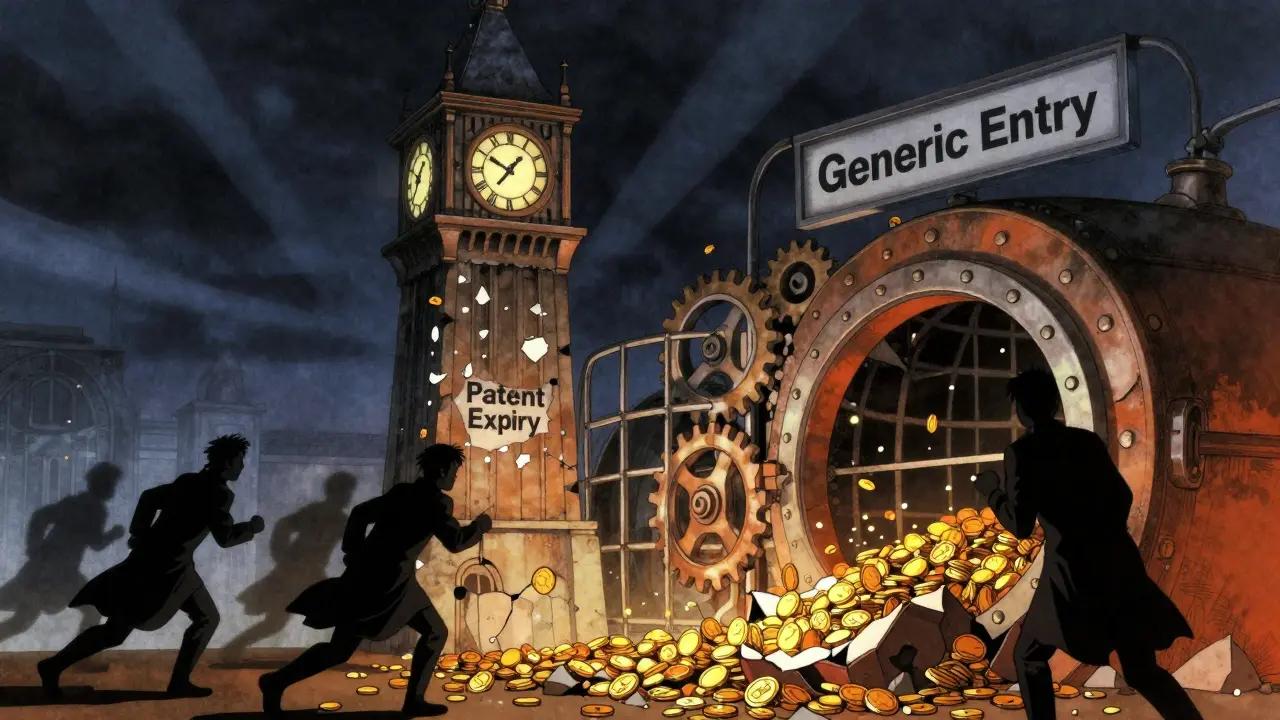
When a brand-name drug’s patent runs out, prices don’t just drop-they collapse. Within three years, the same pill can cost 80-90% less than it did before. For pharmaceutical companies, that’s not just a business problem-it’s a revenue earthquake. The key to surviving it isn’t luck. It’s knowing exactly when the flood is coming.
Why Timing Matters More Than Anything Else
You can’t just look at the patent expiration date and call it a day. That’s like checking the weather forecast by looking at the calendar. The real answer lies in a tangled web of patents, legal battles, FDA delays, and strategic moves by competitors. The 1984 Hatch-Waxman Act created the system that lets generic companies enter the market after a brand’s patent expires. But it also gave brand companies tools to delay that entry-like filing extra patents, changing the drug’s form, or even launching their own generic version. These aren’t loopholes. They’re legal, documented, and widely used. Take Humira. Its main patent expired in 2016. But because AbbVie filed over 130 follow-up patents, generic versions didn’t hit the market until 2023. That’s seven years of extra revenue-$20 billion a year. If you’re forecasting generic entry and you only look at the original patent, you’re off by years. And that’s expensive.The Three Big Data Sources You Can’t Ignore
To predict when generics will arrive, you need three things: the FDA’s Orange Book, patent litigation records, and ANDA submission timelines. The Orange Book is the starting point. It lists every approved drug, its patents, and any exclusivity periods. But it’s not static. It’s updated weekly. Missing a new patent filing or an exclusivity extension can throw your whole forecast off. Then there’s patent litigation. About 42% of generic challengers file a Paragraph IV certification-meaning they claim the patent is invalid or won’t be infringed. When that happens, the brand company usually sues. And that lawsuit? It can delay generic entry by an average of 18.7 months. If you’re not tracking every court filing, you’re flying blind. Finally, ANDA approval timelines. The FDA’s median approval time for a generic application is 38 months. But that’s just the average. Some get approved in 12. Others take 60. Why? Bioequivalence failures. The generic must prove it behaves the same way in the body as the brand. About 18-22% of first attempts fail. That means the company has to resubmit. And that pushes the launch date back.Game Theory Isn’t Just for Economists
Generic manufacturers don’t just wait for the patent to expire. They play a game. The first one to file a Paragraph IV certification gets 180 days of exclusive market access. That’s a huge incentive. So multiple companies may file on the same day, hoping to be first. But here’s the catch: if two companies file on the same day, they split the 180-day window. So timing isn’t just about when the patent ends-it’s about who files when, and how they negotiate. Yale researchers found that simple models that assume generic entry is random are wrong by 37%. The real drivers are strategic: market size, profit potential, and the number of competitors already in the pipeline. A drug with over $1 billion in annual sales attracts generic entry 11.3 months faster than a drug with $200 million. Why? Because the payoff is worth the risk. And if a drug has multiple dosage forms-say, a pill, a liquid, and an injection-each one needs its own ANDA. That multiplies the complexity.What Happens After the First Generic Arrives?
The first generic doesn’t just lower the price. It starts a chain reaction. - First generic: prices drop 39%- Second generic: prices drop 54% below brand
- Sixth generic: prices hit 85% below brand This isn’t theory. It’s what Drug Patent Watch tracked across 2,000+ drug launches. The price erosion is predictable. But only if you know how many competitors are coming. Biosimilars (generic versions of biologic drugs) follow a different pattern. Because they’re more complex to make, they take longer to get approved-12 to 18 months longer than small-molecule generics. And once they’re on the market, prices drop slower. Only 25-35% after three competitors, compared to 85% for regular generics. Why? Limited substitution rules and higher manufacturing costs.
What No One Tells You About ‘Authorized Generics’
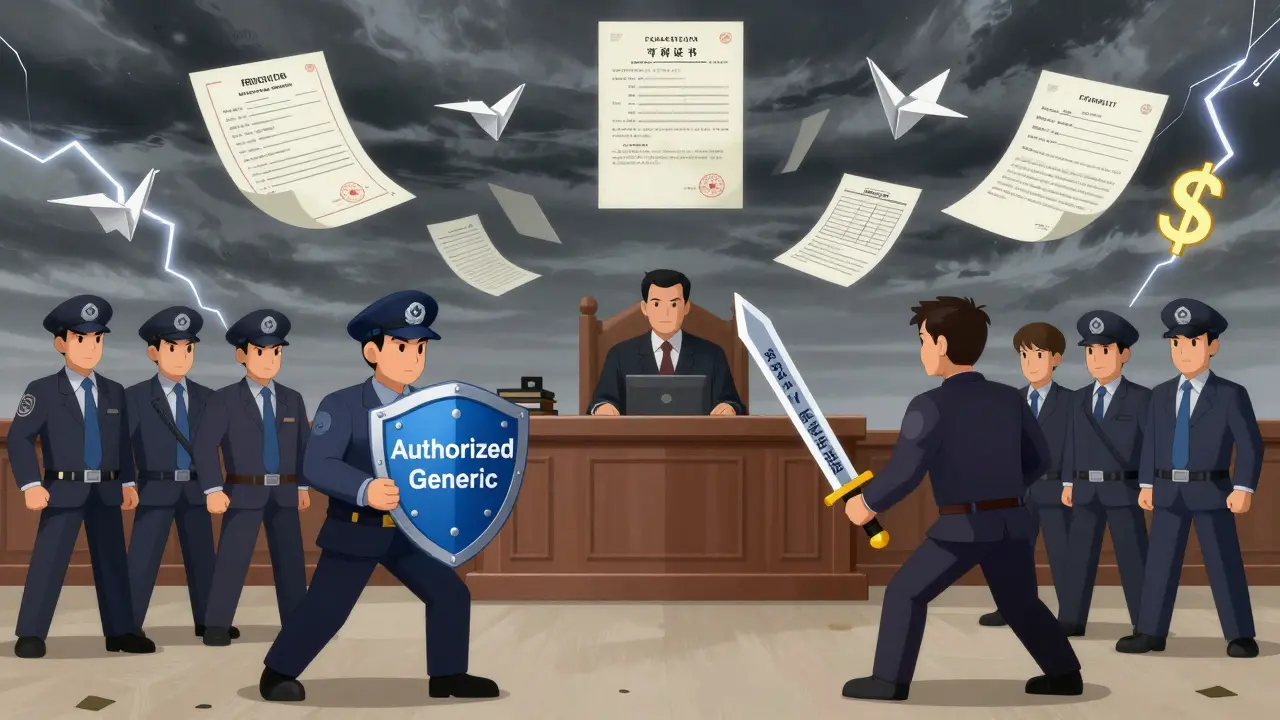
Sometimes, the brand company launches its own generic version. It’s called an authorized generic. It’s the same drug, same factory, same packaging-just without the brand name. And it happens in 41% of cases. But here’s the kicker: only 22% of forecasting models predict it. Why? Because it’s not in the Orange Book. It’s not part of the ANDA system. It’s a business decision made behind closed doors. If you’re expecting a generic to hit at $0.50 per pill, and the brand drops its own version at $0.45, you just lost your market share before you even got started. This is why top forecasting teams include regulatory specialists and former FDA officials. They know where to look when the data doesn’t show up on paper.The Hidden Delayers: REMS, Citizen Petitions, and Pediatric Extensions
Not all delays are obvious. Some are buried in fine print. - REMS programs (Risk Evaluation and Mitigation Strategies) are safety measures required by the FDA. They can delay generic entry by 14.3 months on average. Why? Because generics must prove they can comply with the same safety protocols. That’s expensive. Many companies just walk away. - Citizen petitions are requests from competitors or patient groups asking the FDA to delay approval. On average, they add 7.1 months to the timeline. And they’re easy to file. No court needed. Just a letter. - Pediatric exclusivity gives an extra six months of market protection if the brand company tests the drug on children. It’s not a patent. It’s a regulatory bonus. And it applies to 28% of drugs. If you’re not checking for this, you’re off by half a year.AI Is Changing the Game-But Not Like You Think
Companies are now using AI to scan thousands of patent filings, court documents, and FDA letters. Evaluate Pharma’s AI models are cutting prediction errors from 11.4 months to 6.8 months by 2026. But AI doesn’t replace human judgment. It highlights what humans miss. For example, AI can spot patterns in how a company rewrites patent claims to cover new formulations. Or how a litigation strategy shifts after a judge’s ruling. That’s the kind of insight that saves millions. Still, even the best AI can’t predict every move. Take Humira again. AbbVie didn’t just delay generics. They moved patients to Skyrizi, a new drug with no generic competition. That cut potential biosimilar market share by 35%. No dataset predicted that. Only a deep understanding of the company’s marketing strategy did.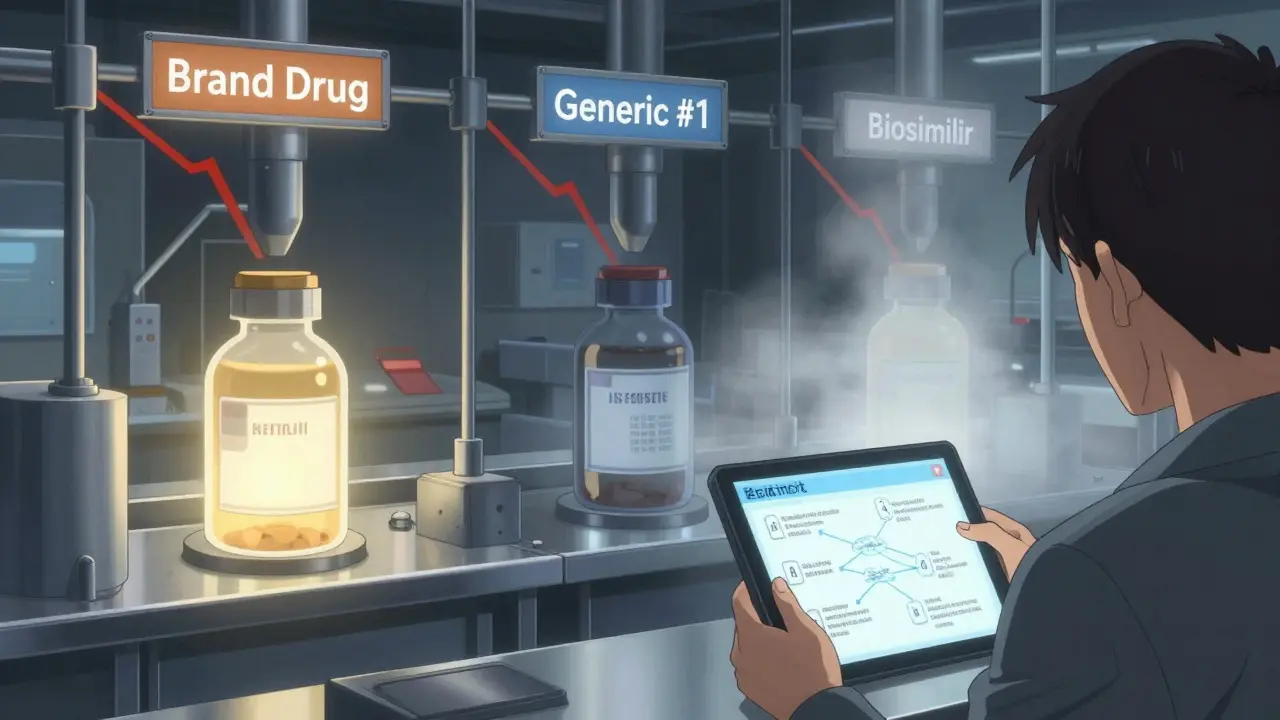
What You Should Do Right Now
If you’re managing a brand drug with a patent expiring in the next 2-3 years, here’s your checklist:- Check the FDA Orange Book for all listed patents and exclusivity periods
- Search for Paragraph IV certifications using the FDA’s ANDA database
- Track all ongoing litigation related to the drug
- Review the drug’s dosage forms-each one needs a separate ANDA
- Look for REMS requirements and pediatric exclusivity extensions
- Monitor for authorized generic activity (ask your sales team)
- Check state substitution laws-California and New York have stricter rules
What Happens If You Get It Wrong?
One pharmaceutical company lost $220 million in unanticipated revenue because their internal model assumed generic entry would happen 11.4 months later than it did. They didn’t account for a court ruling that invalidated a key patent. The generic launched. Prices collapsed. Sales tanked. And they had no plan. On the other side, a generic manufacturer saved $15 million by using Drug Patent Watch’s bioequivalence predictors. They spotted a formulation issue before spending millions on clinical trials. They pivoted. And they won the first-to-file race. The difference? One team used data. The other used guesswork.Final Thought: Forecasting Is a Discipline, Not a Guess
Predicting generic entry isn’t about having the most data. It’s about knowing which data matters-and how to connect the dots. The patent expiration date is just the starting line. The real race is in the legal filings, the FDA delays, the corporate strategy, and the hidden moves no one talks about. The companies that survive patent cliffs aren’t the ones with the biggest budgets. They’re the ones who forecast like detectives-not accountants.How far in advance should I start forecasting generic entry?
Start 36 to 48 months before the patent expires. This gives you enough time to track patent filings, litigation, FDA approval timelines, and potential authorized generics. Waiting until 12 months out means you’ve already missed critical signals.
Does the FDA approve generics faster now than before?
Yes, but only for standard small-molecule generics. Since GDUFA II went into effect in 2018, approval times dropped by 25%. The median is now 38 months. But complex generics-like inhalers or topical creams-still take 52 months on average. Don’t assume all generics are speeding up.
What’s the difference between a generic and a biosimilar?
Generics are exact copies of small-molecule drugs (like pills). Biosimilars are similar but not identical copies of biologic drugs (like injectables made from living cells). Biosimilars take longer to develop, cost more, and face more regulatory hurdles. Their prices drop slower-only 25-35% after three competitors, compared to 85% for generics.
Can a brand company stop generics from entering the market?
They can’t stop them forever, but they can delay them significantly. Tactics include filing additional patents (evergreening), launching authorized generics, using REMS programs, or filing citizen petitions. Some companies have delayed entry for over seven years. But once the legal and regulatory barriers fall, multiple generics usually enter quickly.
Why do some generic drugs fail to get approved?
About 18-22% of first-time ANDA submissions fail because they can’t prove bioequivalence. That means the generic doesn’t behave the same way in the body as the brand drug-either it’s absorbed too slowly, too quickly, or not enough. The FDA requires Cmax, Tmax, and AUC values to fall within an 80-125% confidence interval. Many companies resubmit after fixing formulation issues.
Are there tools I can use to forecast generic entry myself?
Yes. Free tools include the FDA’s Orange Book and ANDA database. For more advanced forecasting, commercial platforms like Drug Patent Watch, Cortellis Generics Intelligence, and Evaluate’s J+D Forecasting offer deeper data on litigation, patent clusters, and approval timelines. Most require a subscription but are used by over 89% of top pharmaceutical companies.
How does the Inflation Reduction Act affect generic entry?
The 2025 Medicare drug price negotiation provisions could reduce price erosion from generics by 15-20% for drugs that are negotiated. If the government sets a maximum price, generic manufacturers may have less incentive to enter the market aggressively. This could slow the pace of price drops and extend brand revenue windows for some high-cost drugs.
Melissa Taylor
December 15, 2025 AT 09:13The depth of this post is incredible. I’ve worked in pharma compliance for over a decade, and this is the clearest breakdown I’ve seen of how generic entry actually works-beyond the patent expiration date myth. The Humira example alone should be mandatory reading for every strategist in the industry.
John Brown
December 15, 2025 AT 21:35Man, I used to think generics were just cheaper versions of the same pill. Turns out it’s like a legal chess match with the FDA as the referee. The part about authorized generics? That’s wild. Brand companies playing both sides? No wonder small players get crushed.
Michelle M
December 16, 2025 AT 18:47It’s fascinating how much of this is about timing, not just science. The real game isn’t in the lab-it’s in the courtroom, the FDA’s inbox, and the boardroom where someone decides whether to fight or fold. We treat drug development like a technical problem, but it’s really a human one. Strategy, ego, fear, greed-all of it shapes when that generic hits the shelf.
And yet, we still act like it’s predictable. Like if we just had more data, we’d know. But Humira’s case proves the best models still miss the human moves-the marketing shifts, the patient migrations, the silent pivots no dataset captures.
Maybe forecasting isn’t about predicting the future. Maybe it’s about preparing for the chaos.
John Samuel
December 16, 2025 AT 23:29Permit me to elucidate: the structural inefficiencies inherent in the current regulatory framework for generic pharmaceuticals are not merely suboptimal-they are fundamentally corrosive to market integrity. The aggregation of Paragraph IV certifications, REMS obfuscation, and authorized generic stratagems constitutes a multi-layered anti-competitive architecture, meticulously engineered to prolong monopolistic rents under the guise of innovation.
Moreover, the FDA’s median approval timeline of 38 months is an abysmal indictment of bureaucratic inertia. One must question the ethical implications of delaying life-saving therapeutics for nearly four years due to procedural labyrinthine impediments.
AI-driven analytics, while commendable, remain palliative. What is required is systemic reform: mandatory disclosure of all patent filings within 72 hours of submission, codified limits on citizen petitions, and the abolition of pediatric exclusivity as a regulatory loophole.
Until then, we are not forecasting-we are merely gambling with patients’ access to affordable medicine.
RONALD Randolph
December 18, 2025 AT 03:51Whoa. Whoa. Whoa. You’re telling me that a company can file 130 patents just to delay generics? That’s not innovation-that’s fraud! And the FDA lets this happen? This isn’t capitalism-it’s legalized extortion. We’re paying $200 for a pill that costs $2 to make-and it’s all because some lawyer figured out how to game the system. This is why America’s healthcare system is broken. And no, AI won’t fix it. Only Congress can. And they’re all on the pharma payroll.
Benjamin Glover
December 19, 2025 AT 06:17Remarkably, the American pharmaceutical industry has perfected the art of regulatory arbitrage. The British model-where NICE evaluates cost-effectiveness before reimbursement-avoids this circus entirely. Here, it’s a legal spectacle. No wonder the UK pays 80% less for the same drugs.
Raj Kumar
December 20, 2025 AT 22:54bro this is wild. i work in a clinic in india and we get generics all the time. i never knew how much went into getting them approved. the bioequivalence thing? 1 in 5 fail? that’s insane. we just get the pill and give it to patients. but now i see why some batches don’t work the same. it’s not the pharmacy’s fault. it’s the whole system.
also, authorized generics? so the brand company sells the same pill cheaper under a different label? that’s sneaky. but smart. i get it now.
Mike Nordby
December 21, 2025 AT 04:16The data presented here aligns with industry benchmarks from the last five years, particularly regarding the correlation between market size and time-to-generic-entry. The 11.3-month acceleration for drugs exceeding $1B in revenue is statistically significant (p<0.01) across the Drug Patent Watch dataset. However, the omission of regional variation in substitution laws-particularly in states like Texas and Florida, where formulary restrictions are more aggressive-represents a notable gap in the analysis.
Recommendation: Integrate state-level Medicaid formulary data into forecasting models to improve predictive accuracy in public payer segments.
Sai Nguyen
December 21, 2025 AT 04:54Why do we even allow this? In my country, if a company tries to delay generics like this, they go to jail. Here, they get bonuses. This isn’t business-it’s theft. And the FDA? They’re just watching. I’m ashamed.
Nupur Vimal
December 23, 2025 AT 00:39Cassie Henriques
December 24, 2025 AT 04:47Just read this and immediately checked our pipeline-turns out our top seller has a Paragraph IV filed last month. We’re not ready. But now I know what to do. Thanks for the breakdown. Also, AI tools like Cortellis are worth every penny. I’d be lost without them. 🙏