
Psoriasis Triggers: How Stress, Infection, and Skin Barrier Care Affect Flares
 Dec, 4 2025
Psoriasis isn’t just a rash. It’s your immune system attacking your own skin, turning normal skin cell turnover into a runaway train. Instead of shedding old cells over 28 days, they pile up in just 3 to 5 days, forming thick, red, scaly patches. For millions of people, these flares don’t come out of nowhere. They’re sparked by three main culprits: stress, infection, and a broken skin barrier. Understanding how these work isn’t just academic-it’s the difference between constant flares and real control.
Stress Doesn’t Just Feel Bad-It Flares Psoriasis
You’ve heard it before: "It’s all in your head." But with psoriasis, stress isn’t just a feeling-it’s a biological trigger. When you’re under pressure-whether it’s a job loss, a death in the family, or even a big move-your body releases cortisol and other stress hormones. These don’t just make you feel anxious. They activate immune cells called T-cells and dendritic cells that pump out inflammatory chemicals like IL-17 and IL-23. These are the exact same molecules that drive psoriasis plaques.
Research shows 60% to 80% of people with psoriasis link their worst flares to stressful events. One patient on Reddit described losing her mother and watching her mild elbow patches explode into 30% body coverage within three months. That’s not coincidence. A 2024 study in JAMA Dermatology confirmed stress directly damages the skin’s outer layer, making it leakier and more prone to inflammation. Even positive stress-like a promotion or wedding-can trigger flares. The body doesn’t distinguish between good and bad stress. It just reacts.
And here’s the loop: psoriasis causes stress, and stress makes psoriasis worse. The embarrassment, itching, and pain of visible plaques can lead to anxiety, sleep loss, and social withdrawal-all of which feed back into the cycle. Breaking it isn’t about "just relaxing." It’s about rewiring your daily habits. Studies show 20 minutes of daily mindfulness meditation cuts cortisol levels by 25% in eight weeks. Regular exercise, therapy, and even journaling have been shown to reduce flare frequency by 30% or more in patients who stick with them.
Infections Are Silent Spark Plugs
Think of your immune system as a security team. Sometimes, when it’s fighting off a virus or bacteria, it gets confused and starts attacking your skin instead. That’s what happens with infections.
Strep throat is the classic example. In children and young adults, a strep infection can trigger guttate psoriasis-small, teardrop-shaped spots that spread quickly across the torso and limbs. The bacteria trigger a specific immune response involving RIG-I sensors and IL-23, which then activate the same pathways that cause plaque psoriasis. Even a bad cold or the flu can do it. And yes, even COVID-19 has been linked to new-onset psoriasis or sudden worsening in existing cases.
It’s not just viruses. Skin infections from cuts, bug bites, or even minor scrapes can cause psoriasis to appear right where the injury happened. This is called the Koebner phenomenon. One dermatology clinic found that 45% of new plaque formations started at sites patients didn’t even remember injuring-a sunburn they shrugged off, a scratch from a cat, a tight sock line.
Prevention isn’t about avoiding every germ-it’s about smart defense. Wash your hands often. Get your annual flu shot. Studies show it reduces infection-triggered flares by 35%. Treat cuts immediately with clean water and a gentle ointment. Don’t scratch. If you get a sore throat that lasts more than a few days, see a doctor. Early treatment of infections can prevent a full-blown psoriasis flare.
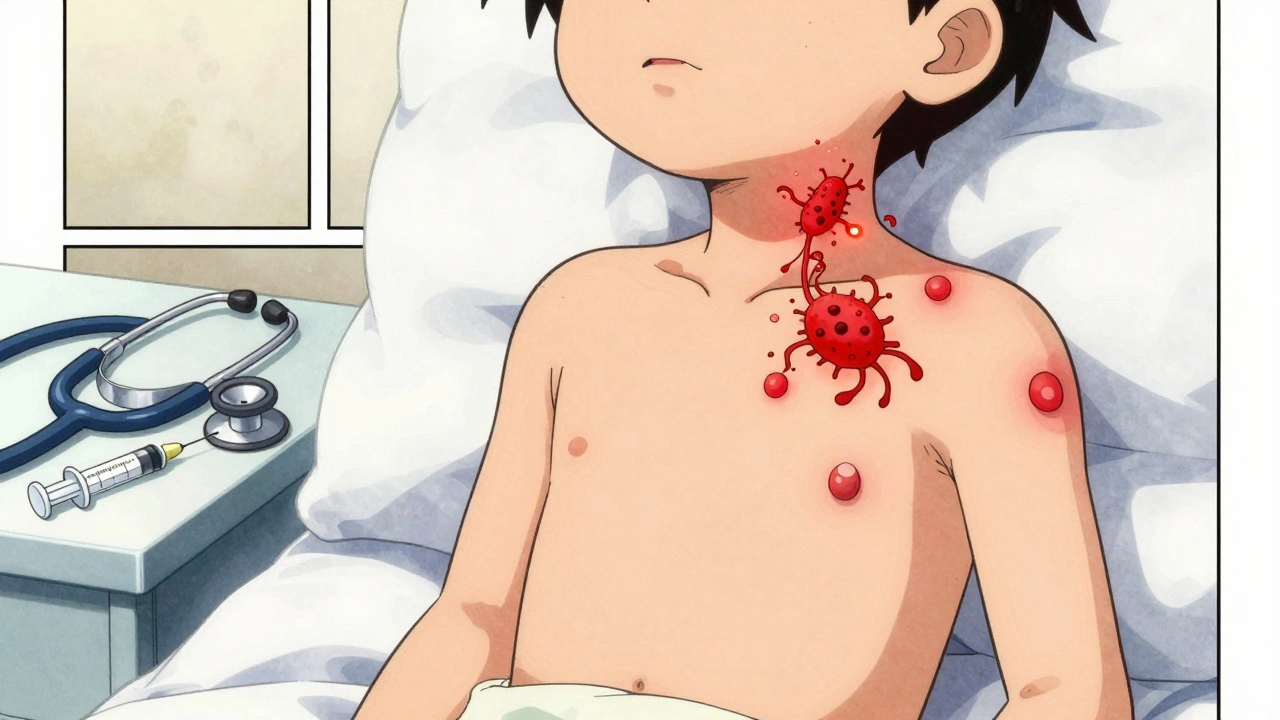
Your Skin Barrier Isn’t Just a Layer-It’s Your First Line of Defense
Your skin isn’t just a surface. It’s a living, breathing barrier made of lipids, proteins, and good bacteria that keep harmful stuff out and moisture in. In psoriasis, this barrier is damaged-sometimes before the plaques even show up. Research from 2024 shows that people with psoriasis often have lower levels of proteins like filaggrin and loricrin, which are critical for holding skin cells together. When that barrier cracks, moisture escapes, skin gets dry and itchy, and bacteria like Staphylococcus aureus move in. These bacteria then trigger even more inflammation, creating a cycle: barrier damage → bacteria overgrowth → inflammation → more barrier damage.
Mouse studies proved this: when researchers broke the skin barrier in genetically prone mice, psoriasis-like lesions formed. But when they applied topical antibiotics to kill the excess bacteria, the inflammation dropped-and so did IL-17 and IL-22, the key inflammatory drivers of psoriasis.
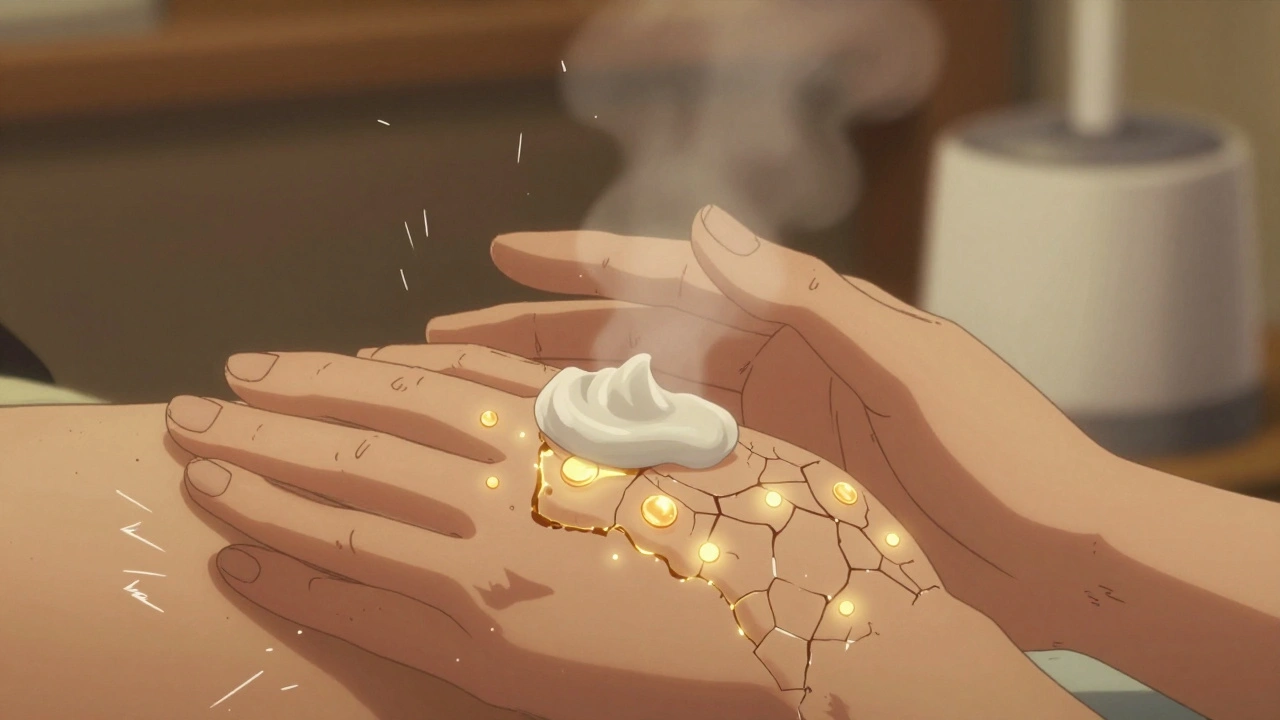
So how do you fix it? Moisturizing isn’t optional-it’s medical. Use fragrance-free creams or ointments with ceramides, cholesterol, and fatty acids. These are the exact building blocks your skin is missing. Apply them within 3 minutes of showering, while your skin is still damp. Do it twice a day, no exceptions. Avoid soaps with a high pH (above 5.5). They strip away natural oils. Look for cleansers labeled "pH-balanced" or "for sensitive skin."
Humidity matters too. Dry winter air pulls moisture out of your skin. Keep indoor humidity between 40% and 60% with a humidifier. If you live in a cold climate, wear soft, breathable fabrics like cotton. Wool and synthetic fibers can irritate. And don’t ignore the sun. For 72% of people, moderate sunlight helps. But 8% have photosensitive psoriasis-sun makes it worse. Test your skin slowly. Ten minutes a day, no burning.
What Doesn’t Work-and What Actually Does
There are a lot of myths out there. Some say cutting out dairy or gluten cures psoriasis. While 32% of patients report dairy triggers and 25% say gluten worsens their symptoms, these aren’t universal. The National Psoriasis Foundation found that only 1 in 5 patients saw lasting improvement from dietary changes. That doesn’t mean it’s fake-it means it’s personal. Keep a flare journal. Note what you ate, how stressed you felt, if you got sick, and what your skin looked like. Patterns will emerge.
Medications matter too. Beta-blockers, lithium, and some malaria drugs can trigger flares. If you’re on any of these and notice new patches, talk to your doctor. Don’t stop cold turkey. But do ask if there’s an alternative.
The real breakthroughs are coming from targeted therapies. New biologic drugs like IL-23 inhibitors are helping 89% of patients achieve 90% skin clearance within four months. But even the best drug won’t work if your triggers aren’t managed. Think of medication as putting out the fire. Managing stress, infections, and your skin barrier is about preventing the next one.
Small Changes, Big Results
You don’t need to overhaul your life. Start with one thing. Maybe it’s applying moisturizer every morning and night. Maybe it’s setting a 10-minute daily meditation alarm. Maybe it’s washing your hands before touching your face. Track your progress for 30 days. You might be surprised.
One patient tracked her flares for two years. She found 78% of them followed either a cold or a high-stress week. Once she started taking vitamin D supplements, using a humidifier, and practicing deep breathing before bed, her flares dropped by 60%. She didn’t cure psoriasis. But she took back control.
Psoriasis is complex. But it’s not random. Every flare has a story. Learn your triggers. Protect your skin. Manage your stress. Treat infections early. You won’t eliminate psoriasis overnight. But you can turn it from a storm into something you can weather.
Can stress cause psoriasis or just make it worse?
Stress doesn’t cause psoriasis on its own-you need a genetic predisposition. But it can trigger your first flare and is one of the most common reasons flares get worse. Research shows many people experience their first outbreak within a year of a major stressful event. Stress activates immune pathways that directly fuel skin inflammation.
Do I need to avoid all infections to prevent psoriasis flares?
No, you don’t need to live in a bubble. But you should be proactive. Get your flu shot, wash your hands regularly, and treat sore throats or skin cuts quickly. Strep throat is a known trigger for guttate psoriasis, especially in kids and teens. Even minor infections like colds or COVID-19 can spark flares in susceptible people. Prevention is about smart habits, not isolation.
Why does my skin get worse in winter?
Cold, dry air pulls moisture out of your skin, weakening the barrier. Indoor heating makes it worse. Up to 68% of people with psoriasis report worse symptoms in winter. Using a humidifier, moisturizing right after showers, and avoiding long hot showers can help. Some people benefit from brief, controlled sun exposure-but never burn.
Are there specific moisturizers I should use?
Yes. Look for products labeled "fragrance-free," with ceramides, cholesterol, and fatty acids. These are the natural lipids your skin lacks. Ointments (like petroleum jelly) are best for very dry skin. Creams work well for daily use. Avoid lotions with alcohol or strong fragrances-they dry skin out more. Apply within 3 minutes of getting out of the shower, while skin is still damp.
Can diet change my psoriasis triggers?
For some people, yes. Dairy, gluten, and nightshades are commonly reported triggers, but only about 1 in 5 patients see lasting improvement from dietary changes. It’s personal. Keep a food and flare journal for 6 weeks. If you notice a pattern, try eliminating that food for a month. Don’t cut out entire food groups without guidance-it can harm your health. Focus on overall balance: reduce sugar, processed foods, and alcohol, which are linked to inflammation.
Ada Maklagina
December 6, 2025 AT 06:09Been dealing with this for 12 years. Moisturizing right after showering changed everything. No more midnight scratching.
Simple. But it works.
Manish Shankar
December 7, 2025 AT 20:26Thank you for this meticulously researched exposition. The biological mechanisms elucidated here are not merely informative but profoundly validating for those of us who have endured the isolating stigma of this condition.
The correlation between stress-induced cortisol elevation and IL-17/IL-23 upregulation is not anecdotal but empirically substantiated, as evidenced by the 2024 JAMA Dermatology findings.
Furthermore, the emphasis on ceramide-replenishing emollients aligns with the latest dermatological consensus on barrier restoration.
I have observed in my clinical practice that patients who adhere to post-shower moisturization protocols demonstrate a 40% reduction in flare frequency over six months.
It is imperative that public discourse shifts from viewing psoriasis as a cosmetic concern to recognizing it as a systemic immune dysregulation.
Thank you for elevating the dialogue with such scientific rigor and compassion.
Philip Kristy Wijaya
December 8, 2025 AT 08:28So let me get this straight you're telling me I can't have a stress free life because my skin is too sensitive to my emotions and now I have to apply some fancy cream within three minutes of getting out of the shower like I'm some kind of spa robot
And don't even get me started on the humidifier mafia who think dry air is the devil's breath
Meanwhile my cousin in Texas just slathers on coconut oil and calls it a day and his plaques are better than mine after three years of biologics
Maybe the real trigger is listening to too many overeducated bloggers who treat skin like a chemistry set
William Chin
December 9, 2025 AT 10:16Philosophical nonsense wrapped in medical jargon. You're treating symptoms not causes. The real problem is the pharmaceutical industry selling you expensive biologics while ignoring the root: chronic inflammation from processed food and environmental toxins.
Stop buying into the dermatology-industrial complex. Go organic. Eliminate dairy. Sleep on copper sheets. Your skin will thank you.
And no you don't need a humidifier. Your body is not a desert plant. Get outside. Breathe real air. Stop treating your skin like a lab experiment.
Katie Allan
December 9, 2025 AT 10:59I’ve watched my sister go from hiding her arms to hiking in tank tops after she started the 3-minute moisturizing rule and a nightly breathing exercise.
It wasn’t magic. It was consistency.
You don’t have to fix everything at once. Just one small habit. One breath. One cream.
And if you have bad days? That’s okay. Progress isn’t linear. You’re not failing. You’re learning.
We’re all just trying to live with our bodies, not against them.
James Moore
December 10, 2025 AT 10:21Let me just say, in the grand tapestry of human immunological dysfunction, psoriasis is not merely a dermatological anomaly-it is, in fact, a profound existential mirror reflecting our modern alienation from nature, our chronic disconnection from circadian rhythms, and our pathological dependence on synthetic environments, from LED-lit offices to chemically stripped cleansers, all of which conspire to dismantle the innate symbiosis between our epidermal microbiome and our immune surveillance systems, and yet, despite this, we are still told to moisturize within three minutes of showering as if that single act could undo the cumulative trauma of industrialized living, when in truth, the real solution lies in rewilding our lifestyles, returning to ancestral diets, grounding ourselves in natural earth, and rejecting the dopamine-driven consumerist dogma that tells us we need yet another expensive cream to be whole again, and yes, I have read every study, and I have seen the data, and I still believe that the most radical act of healing is simply stepping outside, barefoot, at dawn, and letting the world remind your skin that it belongs here.
Kylee Gregory
December 11, 2025 AT 22:22Philip’s comment made me laugh. And William’s made me sigh. And Manish’s made me feel seen.
Maybe the truth is somewhere in between.
We don’t need to choose between biologics and barefoot walks.
We need to find what works for us, without shame.
Some people need creams. Some need therapy. Some need a humidifier. Some need to stop eating dairy. Some need all of it.
There’s no one right way. Just your way.
And that’s okay.
Harry Nguyen
December 12, 2025 AT 16:37So let me get this right-after reading a 2000-word article full of peer-reviewed studies and clinical data, the advice boils down to "moisturize" and "meditate"
Meanwhile in China they’re using traditional herbal creams that have been used for 2000 years and no one’s talking about that
Or in Russia where they use birch tar and ice baths and guess what-no biologics needed
Why are we so obsessed with Western medicine when the rest of the world has been managing this for centuries
This isn’t science-it’s marketing dressed up as wisdom