
Risks Associated with Any Medication or Dietary Supplement
 Mar, 19 2026
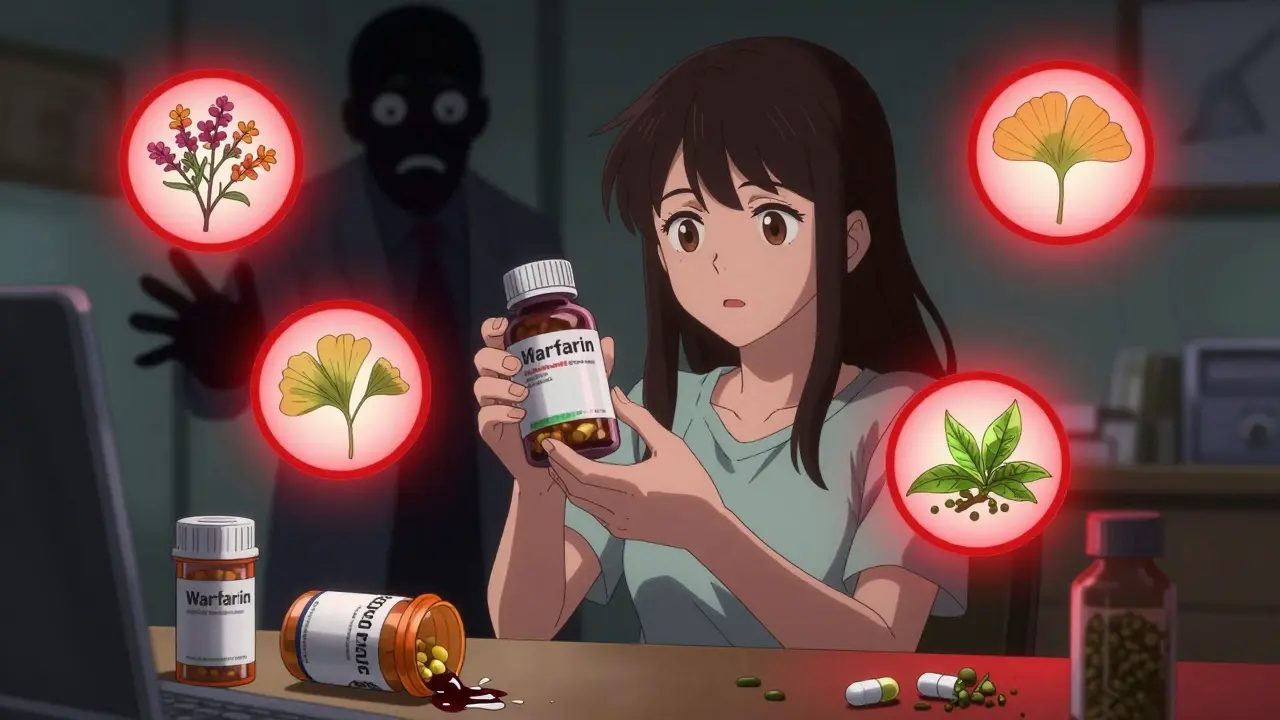
People take medications and dietary supplements every day to feel better, manage conditions, or boost energy. But few realize that medication and supplement risks aren’t just possible-they’re common, and often deadly. What you think is harmless-like a daily multivitamin or a herbal tea-could be quietly sabotaging your health, especially if you’re on prescription drugs. The truth is, supplements aren’t regulated like drugs. They don’t need to prove they’re safe before hitting store shelves. And that’s where the danger begins.
Supplements Aren’t Always Safe Just Because They’re Natural
The word "natural" doesn’t mean safe. It’s one of the biggest myths in health. Ginkgo biloba, St. John’s wort, and green tea extract are all plant-based, yet they’ve caused liver damage, dangerous bleeding, and life-threatening drug interactions. In fact, herbal products make up 38% of all supplement-related adverse events reported to the FDA-even though they only account for 19% of the market. Why? Because plants contain powerful chemicals that behave like drugs in your body. And unlike pharmaceuticals, no one checks their purity, dosage, or interactions before you buy them.
Take St. John’s wort. It’s marketed for mood support. But it can slash the effectiveness of birth control pills by 13-15%, leading to unintended pregnancies. It can drop cyclosporine levels by half in transplant patients, risking organ rejection. And when taken with antidepressants like sertraline, it can trigger serotonin syndrome-a condition that causes confusion, seizures, and sometimes death. A 45-year-old man reported exactly this to the FDA in 2021 after combining the two. He survived, but only because he went to the ER in time.
Drug Interactions Are Silent Killers
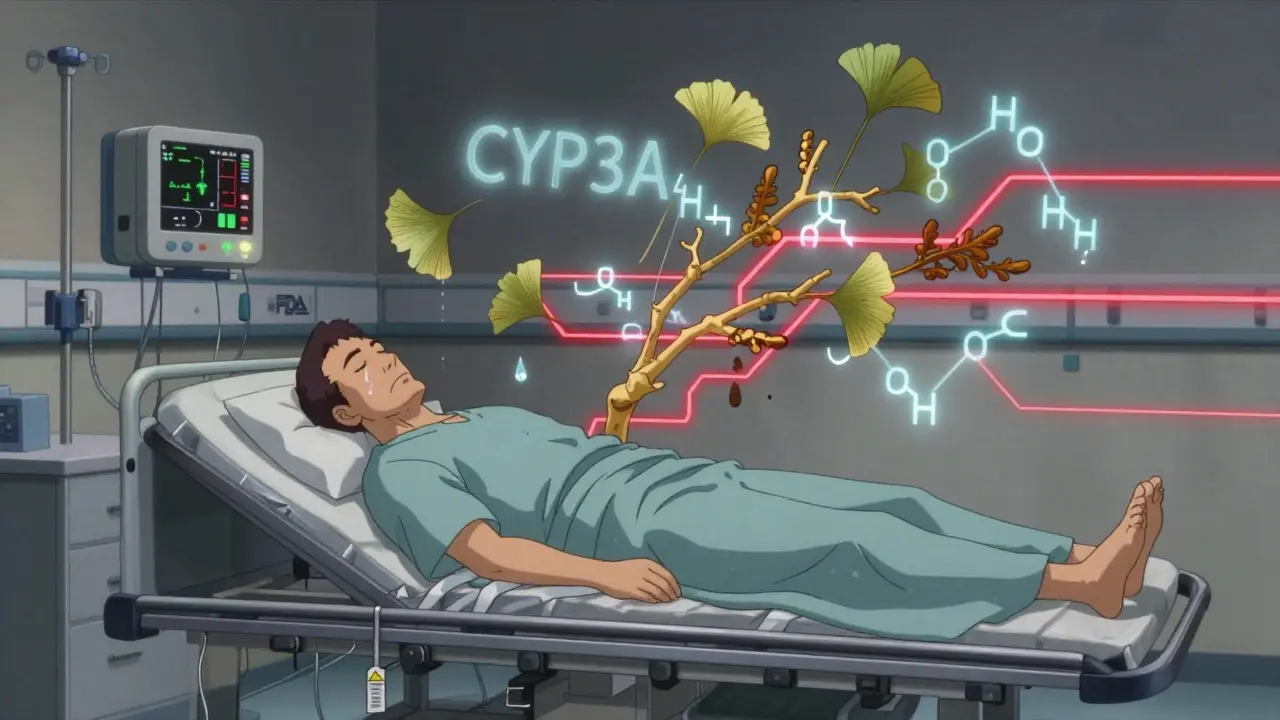
Your body processes medications through enzymes, especially the CYP3A4 system. Many supplements interfere with this system, either by speeding up drug breakdown or slowing it down. That means your medicine might not work-or it might build up to toxic levels.
Asian ginseng boosts CYP3A4 activity. That’s bad news if you’re taking statins, blood pressure meds, or chemotherapy drugs. Your body clears them too fast, so they lose their effect. On the flip side, goldenseal can block CYP3A4, causing drugs like cyclosporine or certain antidepressants to pile up in your bloodstream. One wrong combination can land you in the hospital.
Then there are the bleeding risks. Ginkgo biloba, garlic, and fish oil all thin the blood. If you’re on warfarin or aspirin, adding one of these can increase bleeding time by 20-30%. A 68-year-old woman was hospitalized in 2022 after taking ginkgo with daily aspirin. She lost so much blood she needed a transfusion. She didn’t tell her doctor she was taking the supplement. She thought it was "just a natural way to improve memory."
Vitamins Can Be Toxic Too
Vitamin A, D, and E are often seen as harmless. But they’re fat-soluble, meaning your body stores them. Too much, over time, becomes poison.
Chronic vitamin A toxicity happens with daily doses over 10,000 IU. Symptoms? Peeling skin, blurry vision, liver damage, and increased pressure inside your skull. Acute toxicity-over 300,000 IU in one go-can cause vomiting, dizziness, and even coma. A 2023 case study in the Journal of Emergency Medicine described a 52-year-old man who took 50,000 IU daily for "immune support." He ended up with liver failure.
Vitamin D is even more dangerous because it raises calcium levels. Too much can lead to kidney stones, heart rhythm problems, and bone fractures. A 2020 study found that elderly people taking monthly doses over 300,000 IU had a 15-20% higher risk of falling and breaking bones. That’s the opposite of what they were trying to prevent.
Vitamin E at doses above 400 IU per day increases the risk of hemorrhagic stroke by 10%. The Australian Prescriber flagged this years ago. Yet multivitamins still include 400 IU or more. People don’t realize they’re stacking it-taking a multivitamin, a separate vitamin E capsule, and a fish oil pill that also contains vitamin E.
Supplements Can Ruin Cancer Treatment
If you’re undergoing chemotherapy or radiation, supplements can interfere with treatment in ways you can’t predict. Antioxidants like vitamins C and E may protect cancer cells from the damage meant to kill them. Studies show they can reduce chemotherapy effectiveness by 25-30% in some regimens. Radiation oncologists at Memorial Sloan Kettering have seen patients develop severe skin burns during treatment after taking vitamin E supplements. One patient had to pause radiation for three weeks because her skin wouldn’t heal.
The American Cancer Society doesn’t just warn about this-they demand action. They advise cancer patients to avoid ALL supplements unless their oncologist approves them. Why? Because 40% of common supplements interact with chemo drugs. And most patients don’t even tell their doctors they’re taking them.
Who’s at Risk? Everyone Who Doesn’t Talk to Their Doctor
Half of American adults take dietary supplements. Only one in three tells their doctor. That’s a recipe for disaster. The most dangerous interactions happen when people assume their provider already knows what they’re taking. They think, "It’s just a supplement," or "My doctor didn’t ask." But your doctor needs to know everything.
High-risk groups include:
- People on blood thinners (warfarin, aspirin, clopidogrel)
- Cancer patients undergoing chemo or radiation
- Transplant recipients on immunosuppressants
- People with heart conditions on beta-blockers or calcium channel blockers
- Older adults taking multiple prescriptions
- Women on birth control pills
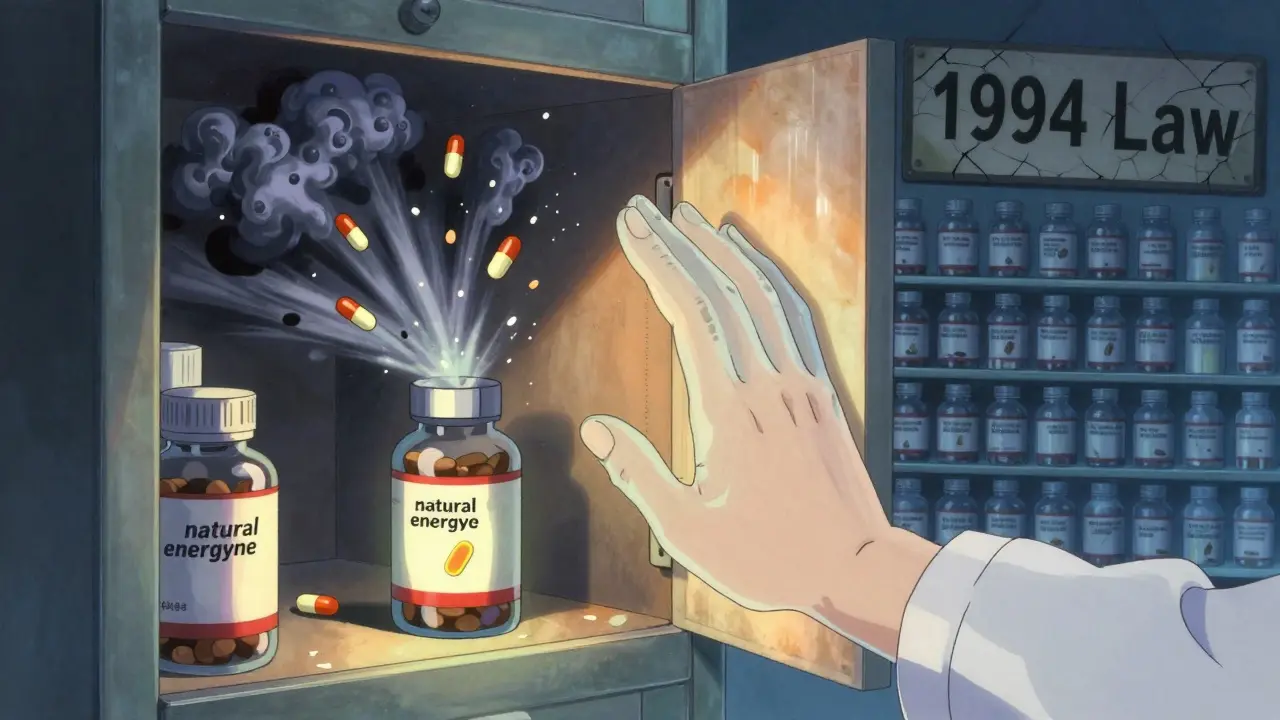
And it’s not just pills. Products sold online are the worst offenders. Nearly half of all adverse event reports come from supplements bought on Amazon, eBay, or shady websites. These products often contain hidden ingredients-like synthetic stimulants or unlisted steroids-that aren’t on the label. In 2022, the FDA found a popular "energy booster" that contained a banned stimulant linked to heart attacks.
How to Protect Yourself
You don’t have to give up supplements. But you do need to be smart.
- Talk to your doctor before starting anything. Even if it’s "just" a vitamin. Bring a list of everything you take-prescriptions, supplements, herbal teas, even over-the-counter pain relievers.
- Use the NIH’s My Dietary Supplement and Medicine Record. It’s free, easy to use, and has been adopted by over 1,200 clinics. You can print it or keep it on your phone.
- Avoid high-risk supplements if you’re on meds. St. John’s wort, ginkgo, garlic, goldenseal, bitter orange, and yohimbe are on the FDA’s 2023 Advisory List. Skip them unless your provider says it’s safe.
- Check for third-party testing. Look for seals from USP, NSF, or ConsumerLab. These organizations test for purity and accurate labeling.
- Stop immediately if you feel strange. Unexplained bruising, racing heartbeat, dark urine, or severe dizziness? Stop the supplement and call your doctor. Don’t wait.
- Report adverse events. Use the FDA’s MedWatch Online system. Even one report helps track dangerous products.
The Bigger Problem: Broken Regulation
The Dietary Supplement Health and Education Act of 1994 lets companies sell supplements without proving they’re safe. The FDA can only act after harm is done. Since 1994, they’ve banned just 12 ingredients. Meanwhile, 85,000+ products are on the market. The FDA received over 18,000 adverse event reports in 2022-but experts say that’s just 1% of the real number. Most people never report anything.
The 2022 Dietary Supplement Listing Act would have required manufacturers to notify the FDA before selling new products. It didn’t pass. So right now, if a company invents a new herbal blend tomorrow, it can be sold to millions the next day-with no safety review. That’s not oversight. That’s luck.
The FDA is trying. They’ve launched an AI system to scan social media for signs of trouble. In a pilot test, it caught 87% of potential safety signals from 1.2 million posts. That’s promising. But until the law changes, you’re the last line of defense.
What You Should Do Today
Check your medicine cabinet. Look at every supplement bottle. Now ask yourself:
- Do I know what’s in it?
- Have I told my doctor about it?
- Could it be interacting with my prescription?
- Did I buy it from a trusted source?
If you answered "no" to any of those, take action. Don’t wait for a crisis. Talk to your provider. Update your list. Stop what’s risky. Your health isn’t worth gambling on.
Can dietary supplements really cause liver damage?
Yes. The NIH’s LiverTox database now lists 45 supplement ingredients linked to liver injury. Green tea extract is the most common, responsible for 22% of reported cases. Other culprits include weight-loss supplements with green tea, aloe vera, kava, and black cohosh. Symptoms include yellowing skin, dark urine, nausea, and abdominal pain. If you suspect liver damage, stop the supplement and get tested immediately.
Why don’t supplement labels list all the ingredients?
Because the FDA doesn’t require full disclosure for ingredients that are "proprietary blends." A label might say "Energy Blend: 500 mg" without saying what’s inside. That’s how companies sneak in banned stimulants like DMAA or synephrine. Always look for third-party tested products with clear, single-ingredient lists.
Is it safe to take supplements during surgery?
No. Many supplements, especially ginkgo, garlic, fish oil, and vitamin E, increase bleeding risk during surgery. The American Society of Anesthesiologists recommends stopping all supplements at least two weeks before any procedure. Always tell your anesthesiologist what you take-even if you think it’s "just a vitamin."
Do multivitamins have risks?
Yes. While they’re often seen as harmless, multivitamins can contain high doses of vitamin A, D, and E-especially in formulas marketed for "energy" or "immunity." Taking a multivitamin plus a separate vitamin D or E supplement can push you into toxic ranges. The NIH recommends most adults get nutrients from food, not pills, unless they have a diagnosed deficiency.
What should I do if I think a supplement is making me sick?
Stop taking it immediately. Contact your healthcare provider and describe your symptoms. Then report it to the FDA using MedWatch Online. Your report helps others avoid the same danger. Don’t assume it’s "just a coincidence." Many serious reactions are reported too late to prevent harm.