
Seborrheic Dermatitis: How Medicated Shampoos Control Scalp Flaking
 Jan, 20 2026
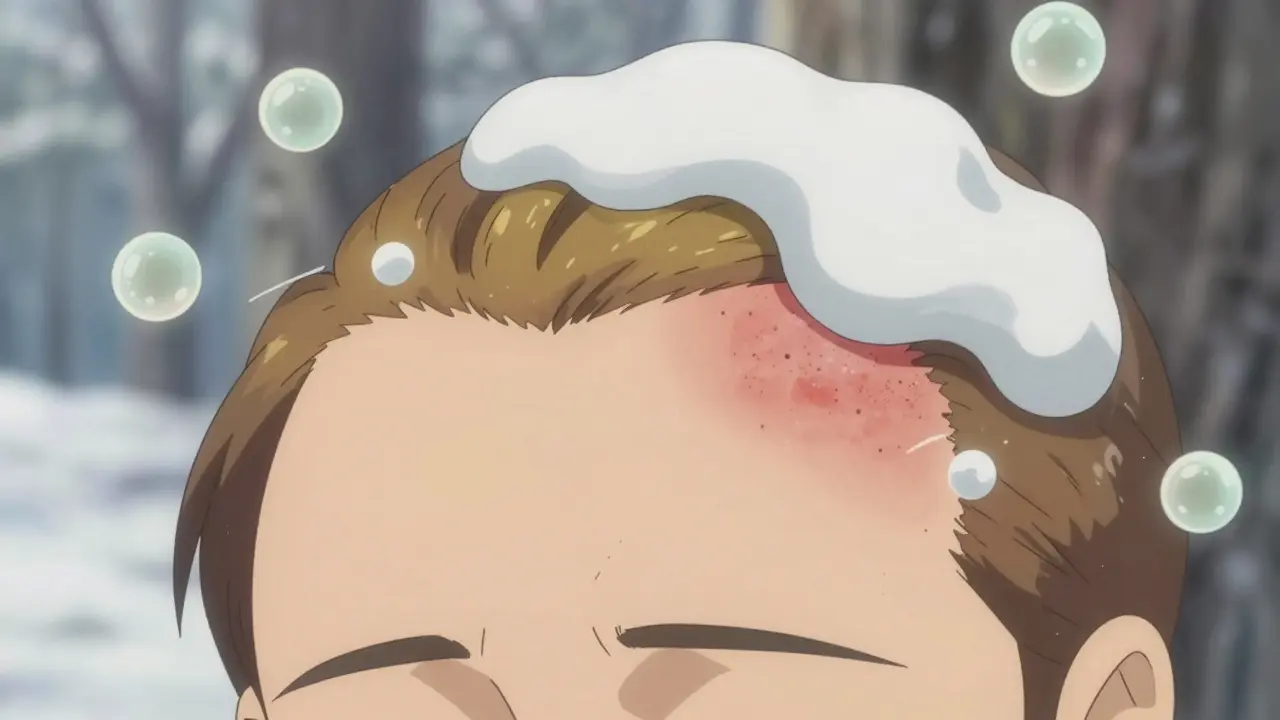
Flakes on your shoulders, an itchy scalp that won’t quit, and greasy patches behind your ears - if this sounds familiar, you’re not alone. About half of all adults deal with seborrheic dermatitis at some point in their lives. It’s not dirty hair. It’s not a fungal infection you caught from someone else. And it’s not something you can just wash away. This is a chronic skin condition driven by your own body’s biology - and the good news is, it’s manageable.
What’s Really Going On Under Your Scalp?
Seborrheic dermatitis isn’t just dandruff. Dandruff is the mild version of it. The real issue starts with a yeast called Malassezia a naturally occurring fungus on human skin that feeds on oils. Normally, it hangs out harmlessly. But when your skin makes too much oil - or when your immune system reacts unusually - this yeast overgrows. It breaks down oils into irritating fatty acids, which triggers inflammation. That’s what causes the redness, itching, and those stubborn white or yellow scales.The condition loves oily areas: scalp, eyebrows, sides of the nose, behind the ears, and the chest. It’s worse in winter. Cold, dry air strips moisture from your skin, making it more sensitive. Stress, fatigue, and hormonal shifts can also flip the switch. People with Parkinson’s disease are 4 to 5 times more likely to develop it. That’s not a coincidence - it points to a neurological link.
And here’s the thing: it doesn’t go away. Not permanently. Even if your scalp looks clear after a few weeks, the yeast is still there. Stop treating it, and within two to four weeks, the flakes come back. That’s why treatment isn’t about a quick fix. It’s about long-term control.
Medicated Shampoos: The First Line of Defense
If you’ve tried regular shampoo and nothing changed, it’s time to switch. Over-the-counter medicated shampoos are the most effective starting point. They don’t just clean - they fight the yeast and calm the inflammation at the same time.Here are the five most proven ingredients, and what they do:
- Ketoconazole (2%): A powerful antifungal that slashes Malassezia yeast. Works well for moderate to severe flaking. Brands like Nizoral are widely available.
- Zinc Pyrithione (1-2%): Gentle enough for daily use. Reduces yeast and soothes irritation. Good for mild cases or maintenance.
- Selenium Sulfide (2.5%): Slows skin cell turnover and kills yeast. Can cause temporary hair discoloration in some people, especially with light hair.
- Cool Tar (0.5-5%): Slows down the rapid shedding of skin cells. Smells strong, but works. Many users report long-lasting relief when used twice a week.
- Salicylic Acid (1.8-3%): A keratolytic - it breaks down and removes dead skin flakes. Great for loosening thick scales before other treatments.
How you use them matters more than which one you pick. Don’t just lather and rinse. Apply the shampoo to your scalp, massage it in, and leave it on for at least five minutes. Ten is better. Let the active ingredients work. Then rinse. Do this every other day for the first two weeks - or daily if your scalp is very flaky.
Once your scalp clears up, drop down to once or twice a week. That’s your maintenance phase. Skipping it? The flakes return.
What If One Shampoo Stops Working?
It happens. A lot. About 45% of people need to try two or three different shampoos before they find one that sticks. Why? Because the yeast can adapt. What worked last month might not work now.The trick? Rotate. Use ketoconazole on Monday, zinc pyrithione on Thursday, and a tar-based shampoo on Sunday. This prevents resistance and keeps the yeast off balance. The National Eczema Society recommends alternating tar shampoos with ketoconazole for best results. Some people swear by Dermax - a non-tar option - for daily use when flare-ups are mild.
Don’t get discouraged if your scalp gets worse before it gets better. In the first week or two, you might notice more flaking. That’s your skin shedding the built-up scales. It’s not the treatment failing - it’s working.
What About Hydrocortisone Cream?
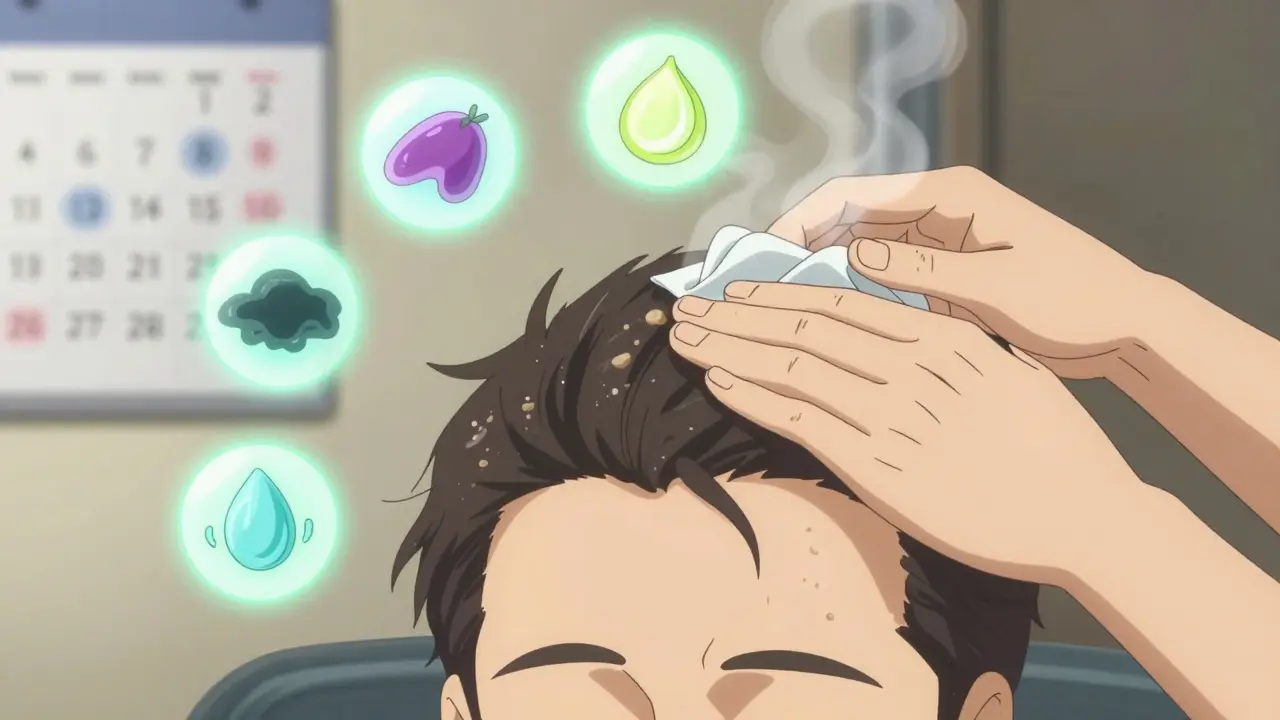
If your scalp is red, swollen, or burning, a low-dose hydrocortisone cream (0.5% or 1%) can help calm the inflammation fast. You can buy it without a prescription. Apply a thin layer to the affected areas - not just your scalp, but also your eyebrows or the sides of your nose if they’re irritated.But here’s the catch: don’t use it every day. Long-term steroid use on the face or scalp can thin the skin. Use it only for short flare-ups - two to three days max - then go back to your medicated shampoo.
For beard area flare-ups, shaving can help. Studies show about 37% of men get clear skin just by shaving off the hair and applying antifungal cream to the skin underneath.
Common Mistakes People Make
Most people give up too soon. They use the shampoo once, see no change, and toss it. But this isn’t a one-time fix. It’s a lifestyle adjustment.Here are the top three mistakes:
- Rinsing too fast. Five minutes isn’t long enough? Try ten. Let the shampoo sit like a mask.
- Using too much conditioner. Heavy conditioners can trap oil and feed the yeast. Use lightweight, oil-free formulas. Apply only to the ends - never the scalp.
- Stopping treatment too early. When the flakes disappear, you’re not cured. You’re just in remission. Keep using the shampoo once or twice a week.
Also, avoid harsh hair products. Gels, sprays, and waxes with alcohol or fragrance can irritate your skin. Stick to simple, fragrance-free styling options.
What Doesn’t Work
You’ve probably heard: “Try apple cider vinegar.” “Use tea tree oil.” “Go gluten-free.”There’s no solid evidence these help. Tea tree oil might irritate your scalp more. Vinegar doesn’t kill Malassezia yeast. And going gluten-free won’t touch this condition unless you have celiac disease - which is rare.
Don’t waste money on miracle cures. Stick with the science-backed options: ketoconazole, zinc pyrithione, coal tar, selenium sulfide, salicylic acid. These have been tested in clinical trials for decades.
When to See a Dermatologist
If you’ve tried three different shampoos for six weeks and nothing changed, it’s time to see a specialist. You might need a prescription-strength shampoo, a topical antifungal cream, or even a short course of oral antifungals.Also, see a doctor if you notice:
- Crusting, oozing, or pus - signs of infection
- Painful, thick scales that bleed when you scratch
- Flaking spreading to your face, chest, or other areas
These could mean a different condition - like psoriasis or eczema - that needs a different approach.
Living With It
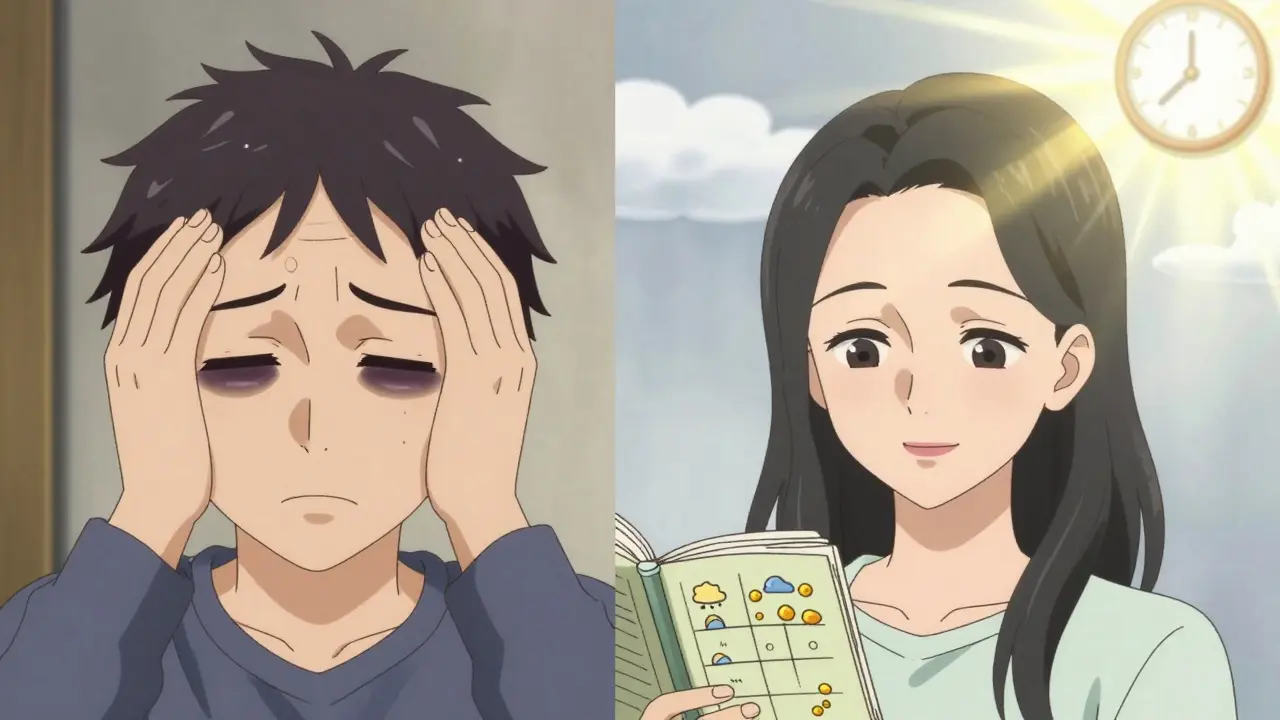
Seborrheic dermatitis isn’t pretty, but it doesn’t define you. You can still have great hair, a clear scalp, and confidence. It just takes consistency.Keep a small journal: note what shampoo you used, how your scalp felt, and what else was going on - stress levels, weather, sleep. You’ll start to see patterns. Maybe your flare-ups always happen after a bad night’s sleep. Or maybe they get worse when the wind blows.
And remember: this isn’t your fault. You didn’t cause it. You can’t catch it. You’re not dirty. It’s biology. And with the right routine, you can keep it under control - for months, even years.
Is seborrheic dermatitis the same as dandruff?
Dandruff is a mild form of seborrheic dermatitis. Both cause flaking on the scalp, but seborrheic dermatitis also includes redness, greasy scales, and can affect areas beyond the scalp - like the eyebrows, nose, and chest. Dandruff usually doesn’t cause itching or inflammation.
Can I use medicated shampoo every day?
Yes, during the first few weeks to control symptoms. Once your scalp clears up, switch to once or twice a week for maintenance. Daily use long-term can dry out your hair and scalp, especially with coal tar or selenium sulfide.
Why does my scalp get worse in winter?
Cold, dry air strips moisture from your skin, making it more sensitive and prone to inflammation. Reduced sunlight also plays a role - UV light helps suppress Malassezia yeast. That’s why 65% of people report worse symptoms in winter.
Will stress make my seborrheic dermatitis worse?
Yes. Stress triggers immune system changes that make your skin more reactive to Malassezia yeast. About 60% of people notice flare-ups during high-stress periods - exams, job changes, or sleep loss.
Can I use natural remedies like coconut oil or aloe vera?
Coconut oil can feed the yeast and make flaking worse. Aloe vera might soothe itching, but it won’t reduce yeast or stop scaling. Stick to proven medicated shampoos. Natural remedies are not substitutes for medical treatment.
How long before I see results?
Most people notice less flaking within 1-2 weeks. Full control usually takes 4-8 weeks. If you don’t see improvement after six weeks of consistent use, try a different shampoo or see a dermatologist.
Does diet affect seborrheic dermatitis?
There’s no strong evidence that specific foods cause or cure it. But heavy alcohol use and obesity are linked to worse symptoms. Focus on a balanced diet - not fad diets - to support overall skin health.
Can children get seborrheic dermatitis?
Yes - it’s called cradle cap in babies. It usually clears up on its own by 6-12 months. Gently massage baby oil or mineral oil onto the scalp, then brush off flakes with a soft brush. Wash with a mild baby shampoo. Don’t use medicated shampoos on infants unless directed by a doctor.
If you’ve tried everything and still struggle, don’t blame yourself. This condition is stubborn - but not unbeatable. With the right shampoo, the right routine, and patience, you can take back control of your scalp. The flakes don’t have to be part of your daily life.
Brenda King
January 21, 2026 AT 01:55Finally, someone explained this without making me feel like a gross human for having dandruff 😊
Used ketoconazole for 3 weeks and my scalp hasn't felt this calm in years. Just don't rinse too fast - that 10-minute rule is legit.
Keith Helm
January 21, 2026 AT 04:41It is imperative to note that the Malassezia yeast is a commensal organism, not a pathogen, in healthy individuals. The dysregulation of the host immune response is the primary etiological factor.
Chiraghuddin Qureshi
January 21, 2026 AT 11:24Bro this is gold 🙌
Used coal tar shampoo in Delhi monsoon - felt like my scalp was breathing again. India needs more of this kind of info. No more random ayurvedic oils, please 😅
Lauren Wall
January 22, 2026 AT 12:35You’re not supposed to use conditioner on your scalp. I can’t believe people still do this.
Kenji Gaerlan
January 22, 2026 AT 13:07why do these shampoos smell like death? i used nizoral once and my whole apartment smelled like a chemistry lab gone wrong 🤢
Oren Prettyman
January 22, 2026 AT 16:01While the article presents a clinically sound framework for managing seborrheic dermatitis, it fundamentally neglects the epistemological implications of conflating symptom suppression with therapeutic cure. The persistent presence of Malassezia, as noted, does not equate to pathological activity - the reductionist pharmacological paradigm promoted herein risks pathologizing normal human microbiome dynamics. Furthermore, the recommendation to rotate antifungals presumes a binary model of microbial resistance, ignoring the complex ecological interplay of cutaneous microbiota. This is not medicine; it is chemical containment.
Tatiana Bandurina
January 23, 2026 AT 19:54Did you mention that stress causes flare-ups? Interesting. I wonder how many people are just using this as an excuse to avoid dealing with their emotional issues.
Also, why is everyone so quick to trust over-the-counter products? The FDA doesn’t regulate these the same way as prescriptions. You’re just gambling with your skin.
Philip House
January 24, 2026 AT 09:36Look, the real issue here isn’t the yeast or the shampoo - it’s the modern world. We’re over-sanitized, under-sunlighted, and constantly stressed. Our skin evolved to handle dirt, sun, and seasonal shifts. Now we live in climate-controlled boxes with LED lights and chemical-laden products. No wonder our scalps are screaming.
Also, if you’re not eating wild-caught salmon and walking barefoot on grass, you’re already behind. This isn’t a scalp problem - it’s a civilization problem.
Ryan Riesterer
January 25, 2026 AT 00:09Per the 2021 JID meta-analysis, topical azoles demonstrate 78% efficacy in reducing Malassezia density at 4 weeks. The rotational protocol described aligns with the resistance mitigation protocols outlined in the European Dermatology Forum guidelines. However, compliance remains suboptimal in >60% of self-managed cases. The five-minute application window is non-negotiable - bioavailability drops exponentially beyond 90 seconds of contact time.
Akriti Jain
January 25, 2026 AT 00:29They don’t want you to know this but all these shampoos are just Big Pharma’s way to keep you hooked 💸
They made up the ‘yeast overgrowth’ thing because they can’t patent sunlight 😏
Just go outside for 20 mins a day. No shampoo needed. They’ll never tell you that.
Mike P
January 26, 2026 AT 01:21Man I’ve been dealing with this since college. Tried everything - even that weird tea tree oil thing everyone swears on. Spoiler: it burned like hell.
Then I found Nizoral. Left it on for 10 mins while I scrolled TikTok. Did it twice a week. Boom. No flakes for 8 months.
Now I just use zinc pyrithione once a week like a boss. Don’t overthink it. Science works. Stop chasing ‘natural’ crap.