
St. John’s Wort and SSRIs: The Hidden Danger of Serotonin Syndrome
 Mar, 20 2026
Serotonin Syndrome Risk Calculator
Medication Interaction Risk Assessment
This tool helps you understand your risk of serotonin syndrome when combining medications. Based on data from FDA reports and medical studies.
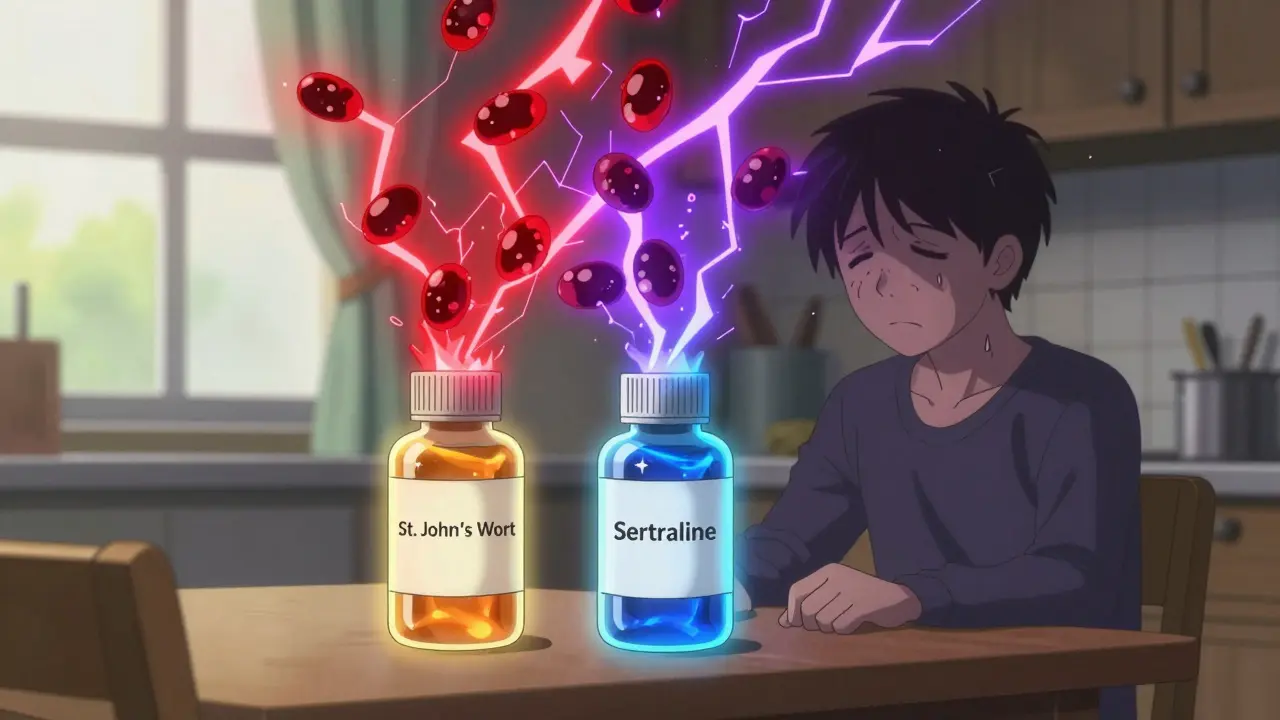
Many people turn to St. John’s Wort because they want a natural way to manage mild depression. It’s available without a prescription, sold in health stores, and marketed as safe - even gentle. But here’s the truth: when you mix it with common antidepressants like sertraline, escitalopram, or fluoxetine, you’re playing with fire. The risk isn’t theoretical. It’s real, documented, and sometimes deadly. This isn’t about side effects you can ignore. This is about serotonin syndrome - a medical emergency that can turn a routine day into a life-or-death situation.
What Exactly Is St. John’s Wort?
St. John’s Wort is a flowering herb native to Europe and Asia, traditionally used for mood support and now sold as a dietary supplement in the U.S. and parts of Europe. Its active ingredient, hyperforin, is believed to affect brain chemicals like serotonin, dopamine, and norepinephrine. In countries like Germany, it was once prescribed like a drug for depression. Today, in the U.S., it’s treated like a vitamin - no FDA approval needed, no rigorous testing before sale. That’s why you’ll find it on shelves next to vitamin D and fish oil.
Most supplements contain 0.3% hypericin and are taken at 300 mg three times daily - 900 mg total. People think this is harmless because it’s "natural." But natural doesn’t mean safe. The same compound that helps lift mood also triggers powerful chemical changes in your body - changes that clash dangerously with prescription antidepressants.
How SSRIs Work - And Why They Clash
SSRIs - selective serotonin reuptake inhibitors - are the most commonly prescribed antidepressants in the U.S. Drugs like sertraline (Zoloft), escitalopram (Lexapro), and fluoxetine (Prozac) work by blocking the reabsorption of serotonin in the brain. More serotonin stays available, which helps improve mood over time.
Now imagine St. John’s Wort doing the same thing - but also boosting serotonin release and inhibiting its breakdown. The result? Your brain gets flooded. Not a little extra. Not a gentle nudge. A dangerous overload. That’s serotonin syndrome.
Serotonin Syndrome: What It Is and How Fast It Hits
Serotonin syndrome isn’t a vague feeling of being "off." It’s a clinical condition with clear, measurable signs. According to the Hunter Serotonin Toxicity Criteria, you need at least three of these symptoms:
- Agitation or confusion
- Shivering or sweating
- Tremors or muscle twitching
- Fast heart rate or high blood pressure
- Diarrhea
- High body temperature (over 106°F)
- Muscle rigidity or loss of coordination
Onset can be as quick as 24 hours after combining the two. In one documented case, a 42-year-old woman started taking St. John’s Wort while on sertraline. Three days later, she was rushed to the ER with a fever of 107°F, seizures, and muscle breakdown. She survived - but barely. This isn’t rare. Between 2018 and 2023, the FDA issued 12 safety alerts about St. John’s Wort interactions. Most involved SSRIs.

Which SSRIs Are Riskiest?
Not all SSRIs are created equal when mixed with St. John’s Wort. The risk depends on how your body breaks them down.
SSRIs metabolized by the CYP2C19 enzyme - like sertraline and escitalopram - are broken down faster when St. John’s Wort is present. But here’s the twist: even though the body clears them quicker, the herbal supplement itself adds more serotonin. So you get a double hit - more drug effect, more serotonin buildup. That’s why studies show 9 out of 17 severe serotonin syndrome cases involved sertraline.
Paroxetine (Paxil), though metabolized differently (CYP2D6), is also high-risk. One 1998 case report described a patient who developed confusion, tremors, and high blood pressure after combining paroxetine with St. John’s Wort. The symptoms mimicked sedative overdose. That’s how sneaky this interaction is.
Fluoxetine (Prozac) lingers in the body for weeks. If you stop it and switch to St. John’s Wort, you’re still carrying active drug in your system. The same goes for stopping St. John’s Wort - it can take over a week to fully clear. That’s why experts say: don’t just switch. Wait. Give your system time.
Other Dangerous Interactions You Might Not Know
St. John’s Wort doesn’t just mess with antidepressants. It interferes with a long list of medications:
- Hormonal birth control: It cuts effectiveness by 30-50%. There are documented cases of unplanned pregnancies in women using both.
- Warfarin: Reduces blood-thinning effect by 25-35%. That means clots - not bleeding - become the risk.
- Cyclosporine and tacrolimus: Used after organ transplants. St. John’s Wort can drop levels by 60%, risking organ rejection.
- Seizure medications like carbamazepine: Less drug in your blood = higher chance of seizures.
- HIV drugs like indinavir: A 57% drop in concentration can lead to treatment failure and drug resistance.
All of this happens because hyperforin in St. John’s Wort turns on your liver’s drug-processing system - CYP3A4 and P-glycoprotein - like a switch. Within 72 hours, your body starts flushing out other drugs faster than it should.
Why People Don’t Tell Their Doctors
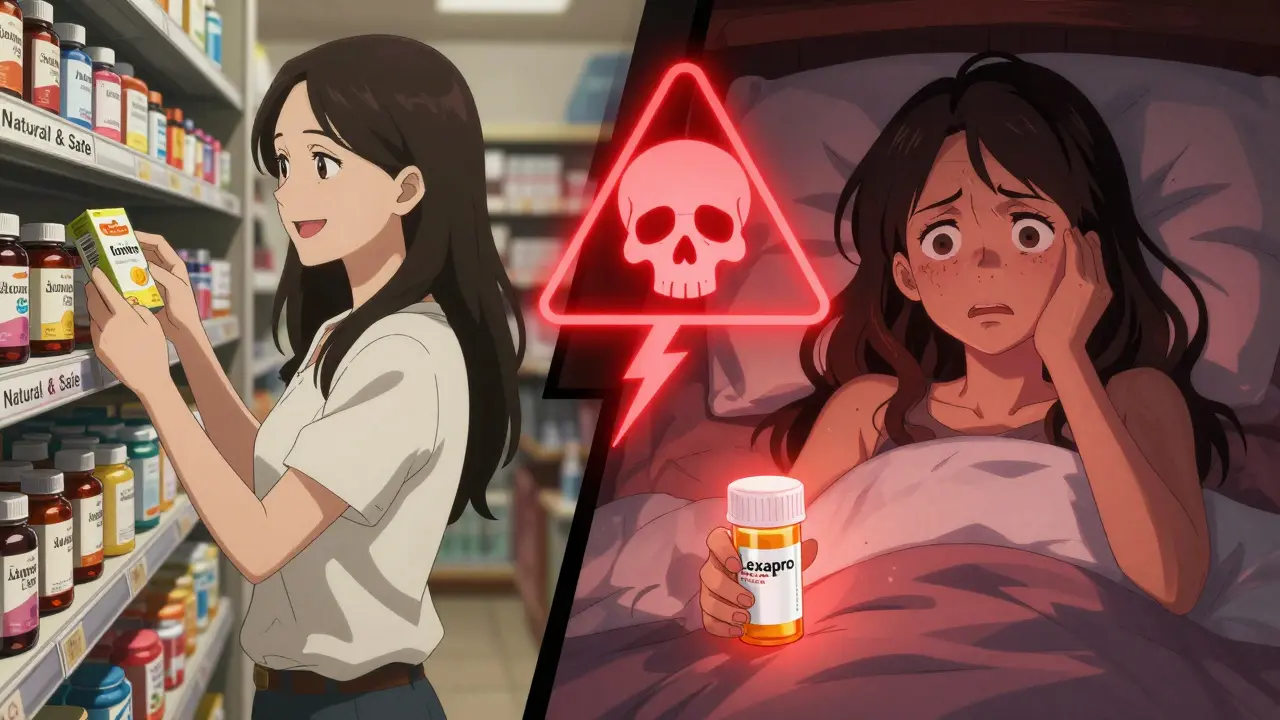
A 2021 study in JAMA Internal Medicine found that only 32.7% of people who take herbal supplements tell their doctors. Why? They think it’s "just a herb." They don’t see it as medicine. They’re afraid of being judged. Or they assume their doctor doesn’t care.
That’s a deadly assumption. Doctors can’t protect you if they don’t know what you’re taking. If you’re on an SSRI and considering St. John’s Wort - or already using it - your doctor needs to know. Not next week. Not when you feel "okay." Now.
What Should You Do?
Here’s the bottom line:
- Don’t combine St. John’s Wort with any SSRI. Not even for a few days.
- If you’re switching from an SSRI to St. John’s Wort, wait at least two weeks after stopping the SSRI before starting the herb.
- If you’re switching from St. John’s Wort to an SSRI, wait at least two weeks after stopping the herb before starting the drug.
- Always tell your doctor - even if you think it’s "harmless."
- If you experience symptoms like high fever, muscle stiffness, confusion, or rapid heartbeat while using either, go to the ER immediately.
The American Psychiatric Association and the European Medicines Agency both say: contraindicated. That’s medical speak for "don’t do it."
The Bigger Picture
St. John’s Wort sales in the U.S. hit $156 million in 2022. Over 12% of American adults used it. But regulation? None. The FDA doesn’t test it for safety or purity. Two bottles from different brands can have wildly different amounts of hyperforin. One might work. Another might poison you.
Canada banned over-the-counter sales in 2023 after 17 serotonin syndrome cases. The FDA is now pushing for warning labels. But until then, the burden is on you.
There’s no evidence that St. John’s Wort is safer than SSRIs. It’s just less regulated. And that’s the real danger.
Can I take St. John’s Wort if I’m not on an SSRI?
It’s possible - but still risky. St. John’s Wort interacts with many medications, including birth control, blood thinners, and transplant drugs. Even if you’re not on an antidepressant, you might be on something else that could become dangerous. Always talk to your doctor before starting it.
How long does St. John’s Wort stay in your system?
It can take up to two weeks for St. John’s Wort to fully leave your body, especially if you’ve been taking it regularly. That’s why experts recommend a two-week washout period before starting or restarting any medication that interacts with it.
Are there any safe herbal alternatives to St. John’s Wort for depression?
There’s no proven herbal alternative with the same level of evidence as SSRIs. Omega-3 fatty acids, vitamin D, and exercise have shown mild mood benefits in studies - but none are replacements for medical treatment. If your depression is affecting your life, talk to a mental health professional. Natural doesn’t mean effective - and it doesn’t mean safe.
Can serotonin syndrome be fatal?
Yes. In severe cases, serotonin syndrome can cause body temperatures above 106°F, muscle breakdown (rhabdomyolysis), kidney failure, and death. It’s rare - but it happens. And it often occurs when people assume herbal supplements are harmless.
Why isn’t St. John’s Wort banned if it’s so dangerous?
In the U.S., dietary supplements like St. John’s Wort aren’t regulated like drugs. The FDA can’t ban them unless they prove harm after they’re already on the market. That’s why warnings come after people get sick - not before. Other countries, like Canada and Germany, have stricter rules. The U.S. system prioritizes access over safety.
trudale hampton
March 21, 2026 AT 11:37Man, I had no idea St. John’s Wort could mess with birth control like that. My sister was on the pill and took it for anxiety - ended up pregnant by accident. She didn’t even think to mention it to her OB. Scary how something so "natural" can sneak up on you.
Shaun Wakashige
March 22, 2026 AT 02:34lol just don’t mix em lmao
Natali Shevchenko
March 23, 2026 AT 04:13It’s wild how we treat herbs like they’re innocent, like they don’t have pharmacokinetics. We’ll read the label on a pill and know exactly what’s in it, but slap a "natural remedy" sticker on a bottle and suddenly we’re all, "eh, it’s just plants." But plants are chemistry. Hyperforin isn’t a tea leaf - it’s a potent CYP3A4 inducer. And our liver doesn’t care if you call it "herbal" or "pharmaceutical." It just metabolizes. The system’s broken because we’ve outsourced responsibility to marketing, not science.
Johny Prayogi
March 23, 2026 AT 18:18STOP THIS NOW. 🚨 I’ve seen two friends in the ER over this. One was on Lexapro, started SJW for "less side effects." 36 hours later - fever, shaking, heart rate 140. They thought it was "just anxiety." Spoiler: it wasn’t. If you’re on an SSRI and thinking about this stuff - just don’t. Your brain isn’t a lab experiment. And if you’re already doing it? Tell your doctor TODAY. No excuses.
Allison Priole
March 25, 2026 AT 06:09i never thought about how sjw affects other meds like warfarin or cyclosporine… i mean, i knew it was strong but like… 60% drop in transplant drugs?? that’s insane. my cousin had a kidney transplant and was taking it for mood - no one told her. she almost lost the organ. i’m telling all my friends now. we gotta stop treating herbs like vitamins. they’re not. they’re powerful. and we’re not trained to handle them like that. ps: i spelled everything wrong on purpose lol
Casey Tenney
March 25, 2026 AT 23:43This is why America is dying. Supplements aren’t regulated because we’re too lazy to be responsible. You want safety? Then regulate it like a drug. Or ban it. But don’t pretend ignorance is a virtue.
Chris Dwyer
March 27, 2026 AT 02:30Hey - if you’re considering SJW, please just talk to your doctor first. I get it, you’re tired of meds, you want something gentler. But there are safer paths: therapy, sunlight, movement, sleep hygiene. You don’t need to risk your life for a placebo effect. You’re worth more than a bottle from a gas station shelf. I’ve been there. I switched. And I’m alive because I listened. You can too.
Thomas Jensen
March 27, 2026 AT 23:54They’re hiding this on purpose. The pharmaceutical companies don’t want you to know you can replace SSRIs with a $12 herb. That’s why the FDA lets it slide. It’s a profit play. They’d rather you stay on $500/month prescriptions than take a plant. And don’t get me started on the FDA - they’re bought and paid for. Look at the timeline: 12 safety alerts? That’s just what got reported. There’s thousands more. Wake up.
shannon kozee
March 29, 2026 AT 19:58Two-week washout period is non-negotiable. I’m a pharmacist. I’ve seen this go wrong too many times. If you’re switching, wait. No exceptions. And if you’re on anything else - thyroid meds, statins, anticonvulsants - check interactions. SJW doesn’t discriminate.
Solomon Kindie
March 31, 2026 AT 08:56so like hyperforin induces cyp3a4 right so it flushes out other drugs but also increases serotonin so its a double whammy but like why do people think its safe because its plant based its not like plants are safe like poison ivy is a plant and also arsenic is natural