
Travel Storage: Keeping Medications Safe on the Go Guide 2026
 Mar, 27 2026
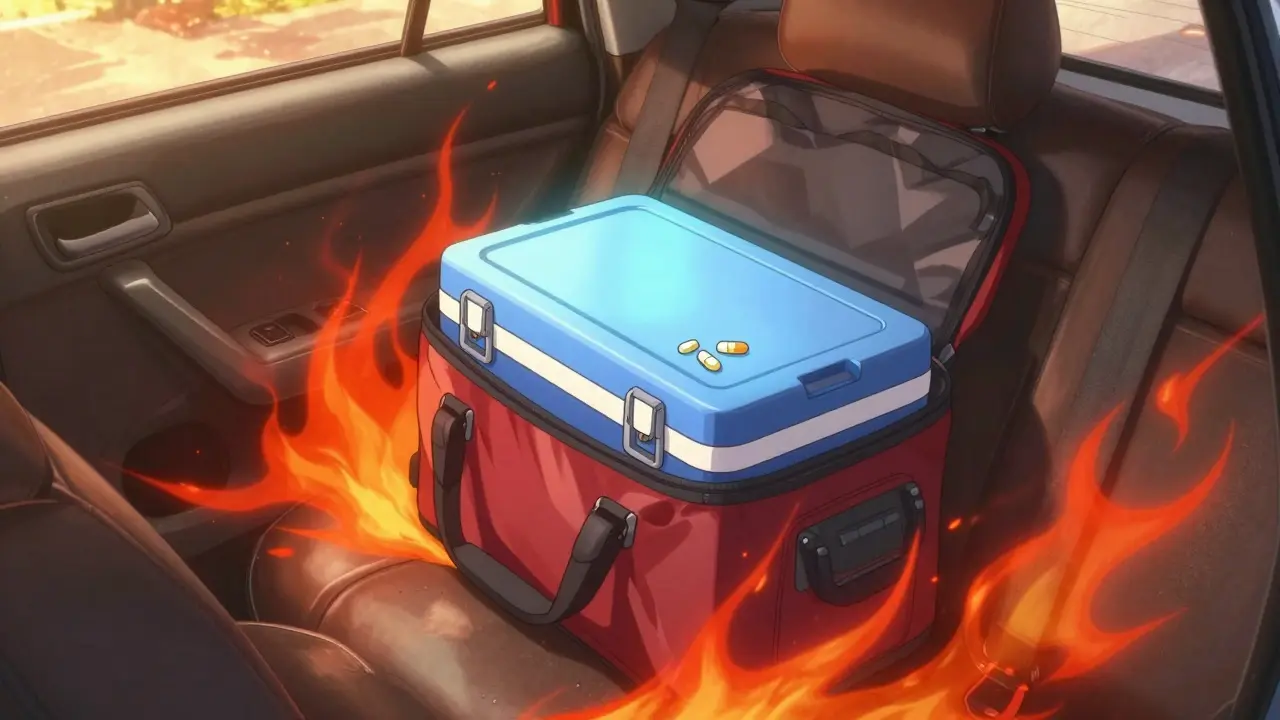
Picture this: You've been driving through scorching heat for hours, and your bag is sitting in the trunk. You arrive at your destination, open the container, and realize your life-saving medication has melted into something unrecognizable. It sounds dramatic, but thousands of travelers face real risks when they ignore proper Travel Medication Storage. In 2026, keeping your drugs effective isn't just about packing them safely; it's about understanding how heat, pressure, and security scanners affect their chemistry.
You don't need a pharmacy degree to handle this right, but you do need to know the specific numbers. Most medicines aren't built to survive the extremes of travel conditions. While you might think putting your pills in a Tupperware box saves space, swapping containers can actually create legal problems at customs. By following the latest guidelines from major health agencies, you can ensure your treatment stays effective from takeoff to touchdown.
Key Safety Protocols for Your Trip
- Maintain temperatures between 68°F and 77°F (20-25°C) for 87% of medications to prevent chemical degradation.
- Always keep pharmaceutical products in their original pharmacy containers to satisfy customs and security checks.
- Cold-chain biologics like insulin require validated portable coolers, not standard ice packs.
- Liquid medicines exceed the 3-1-1 rule limit if declared properly with medical documentation.
- Check expiration dates two weeks before departure to allow time for emergency refills.
The Heat Factor: Protecting Efficacy
When we talk about storing medicine, temperature is the biggest enemy. Research shows that 87.3% of pharmaceuticals need to stay within a narrow window of 68-77°F to work correctly. That's room temperature for us, but "room temperature" varies wildly when you're in a checked luggage hold or a car glove box. On a sunny day, the interior of a vehicle can climb to 158°F in minutes. Exposure to temperatures above 86°F for just two hours can reduce the efficacy of certain drugs by over 37%.
If you travel with insulin or other injectable biologics, the rules tighten significantly. These products often need refrigeration between 36-46°F (2-8°C). Standard coolers often fail because ice melts too fast or gets too cold, freezing the medication. For instance, every 1°C deviation above 8°C causes a roughly 1.7% potency loss per hour for some insulin types. You need specialized gear like phase-change material coolers that maintain stability for up to 72 hours without direct contact with ice.
Digital temperature loggers are now widely available and cheap. Consider using one to track the internal environment of your carry-on. This small device tells you if your meds have seen dangerous spikes while you were sleeping or stuck in traffic.
Packing Strategy: Bottles vs. Organizers
A common habit for seniors and busy families is transferring pills to weekly plastic organizers. This feels convenient until you hit international borders. Authorities in 92 different countries may deny entry to unlabelled substances. They won't ask who made the organizer; they need to see the National Drug Code (NDC) printed on the original vial.
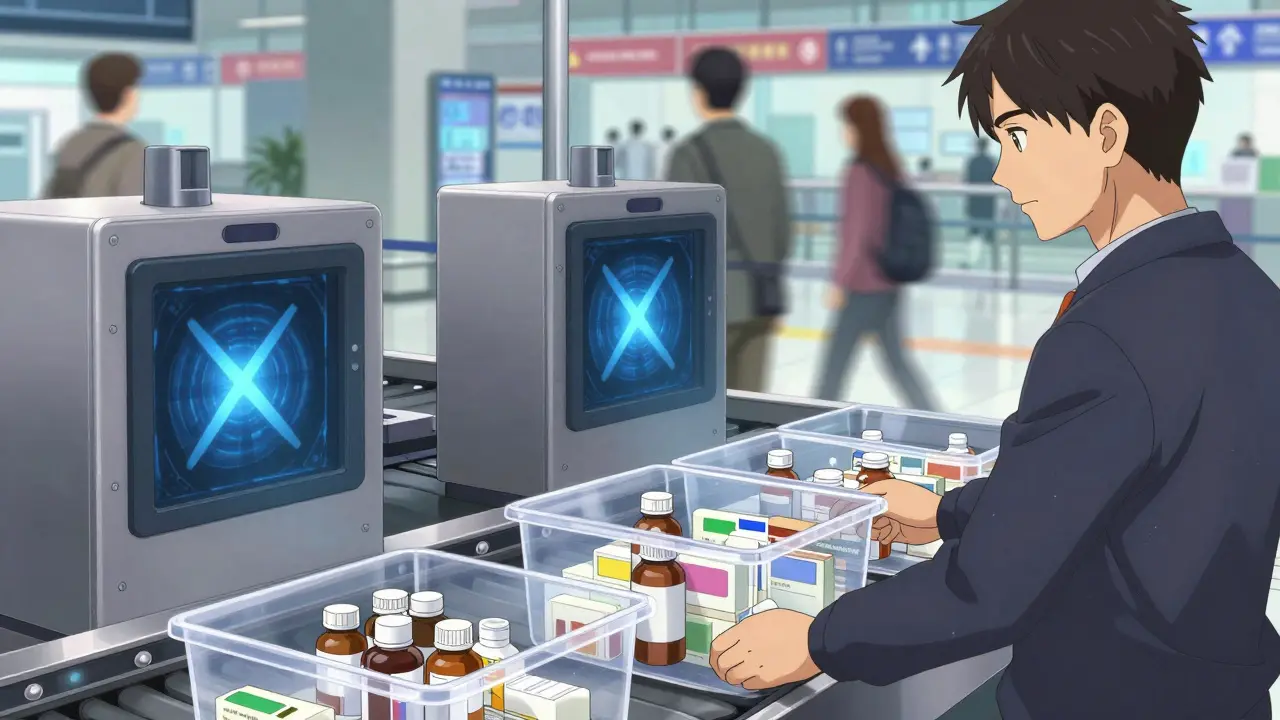
Your original pharmacy label proves three things: the drug is legitimate, it belongs to you, and the dosage is prescribed. TSA officers scan hundreds of bags daily. If they see loose powders or unknown pills in a zip-lock bag, they can detain you for secondary screening. This delays you by an average of 23 minutes per inspection. Keep the labels intact, even if they make your bag messier. The peace of mind is worth the extra bulk.
Navigating Airport Security (TSA and FAA)
Flying adds another layer of complexity regarding liquid restrictions. Generally, you are limited to 3.4 ounces (100ml) per container. However, medically necessary liquids get an exception under current TSA protocols. You can bring larger quantities of eye drops, liquid antibiotics, or syrups if you declare them at the checkpoint. Place these items in a separate bin during scanning, not buried in your toiletry kit.
Batteries for electronic pumps also draw attention. Devices like insulin pumps require the battery to remain installed in the unit. Remove backup batteries from power banks and keep them in carry-on luggage, never checked bags. Lithium batteries exceeding 100 watt-hours require special authorization. Always consult the FAA Special Authorization Form specifications before packing any complex medical gadgetry.
International Border Crossings and Documentation
Traveling outside your home country brings stricter laws. Even common painkillers like codeine can be considered illegal narcotics in jurisdictions like Thailand or Singapore. Before leaving Durban or anywhere else, verify the import status of your meds. Some destinations ban pseudoephedrine entirely.
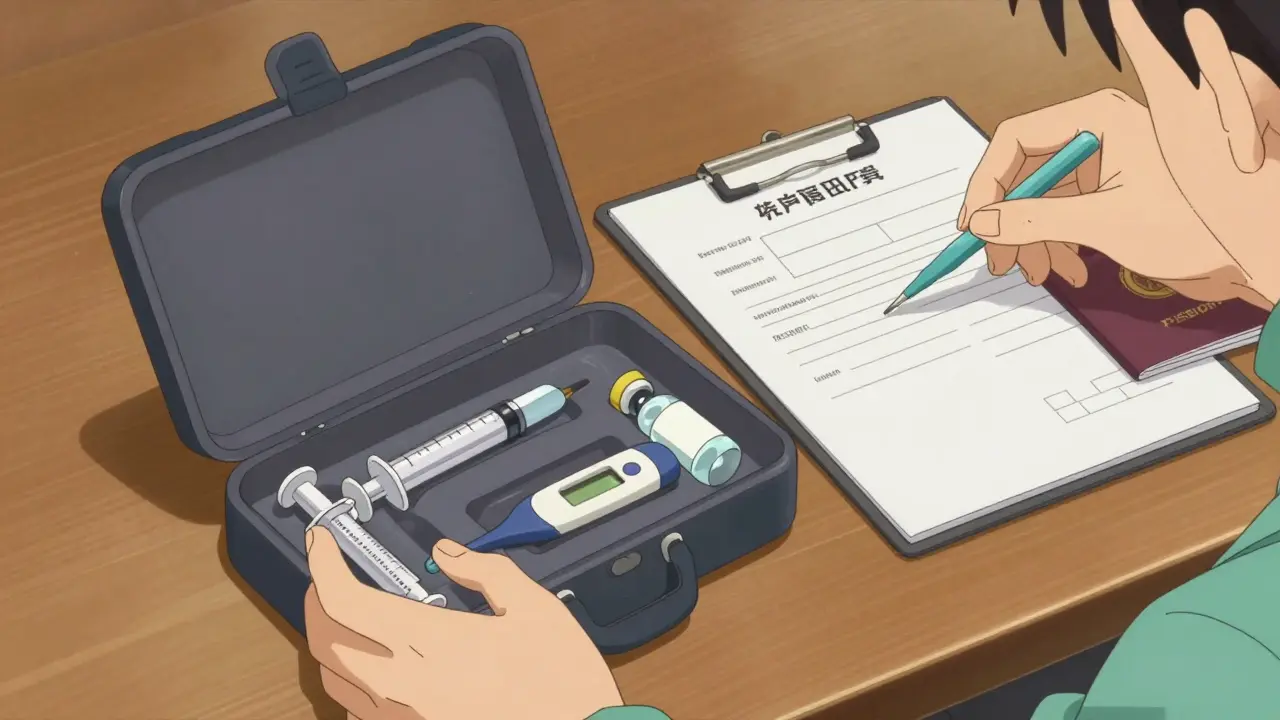
A doctor's letter on official letterhead solves most issues. This document should list your generic medication names, brand names, dosages, and why you need them. About 78% of travelers report smoother processing when presenting this proof. It helps customs officers distinguish between legitimate therapy and smuggling. Carry two copies: one in your hand luggage and one saved digitally on your phone.
Data suggests that 41% of travelers face medication issues abroad. Most stem from lost luggage or temperature shocks. Never pack essential medicine in checked suitcases. If the airline loses your bag, you lose your supply. Split your stash: keep enough for the trip duration plus three extra days in your carry-on, and ship backups separately if possible.
Safety Nets: What to Do When Things Fail
Despite best efforts, accidents happen. If your cooler melts mid-trip, inspect the medication immediately. If the texture looks clumpy or the color changed, discard it. Injecting a degraded protein can cause severe allergic reactions. If you cannot find a replacement locally, visit a pharmacy clinic or hospital immediately rather than risking a makeshift solution.
For medications that expired or became compromised, proper disposal is vital. Do not flush them into the toilet or throw them in public trash bins in tourist areas. Many hotels and pharmacies have take-back programs. Returning unused medication to a professional ensures it doesn't fall into unsafe hands or harm the environment.
Can I bring liquid medication in my carry-on?
Yes, TSA allows medically necessary liquids in quantities larger than 3.4 ounces. You must declare them at security checkpoints and inform the officer before screening begins.
Should I put my pills in a pill organizer for flights?
Avoid it for international travel. Unlabeled containers can be flagged as suspicious contraband by customs agents. Only use organizers within your own country and keep original boxes accessible.
Is it safe to leave medication in a hotel room fridge?
Generally yes, but place them on a shelf, not the door. Door compartments fluctuate too much. If traveling with temperature-sensitive biologics, use a validated insulated cooler instead of a shared appliance.
What temperature range is safest for most drugs?
Most stable medicines require 20-25°C (68-77°F). Refrigerated items need 2-8°C. Avoid extremes; exposure above 30°C can permanently damage the drug structure.
How far in advance should I refill prescriptions before travel?
Contact your doctor or pharmacist 14 days before your trip. Insurance plans often allow early refills of 5 days for holidays. Verify this policy to ensure continuous coverage.
Kameron Hacker
March 27, 2026 AT 22:13It is unacceptable that travelers ignore thermal stability thresholds. Most people fail to understand chemical degradation rates under heat stress. You must prioritize integrity over convenience during transit. Security officers will confiscate unlabeled substances without hesitation. Customs agents operate under strict jurisdictional mandates regarding controlled substances. Deviation from original packaging invites unnecessary scrutiny and detention. Compliance ensures continuity of care throughout the journey. Negligence here results in compromised health outcomes upon arrival. Always verify temperature logs before boarding any aircraft. Ignorance is not a valid defense against regulatory enforcement.
Poppy Jackson
March 29, 2026 AT 14:58i totally agree with the strict approach here!!!
Jeannette Kwiatkowski Kwiatkowski
March 30, 2026 AT 17:28The average traveler lacks basic pharmacological literacy. They pack biologics in standard lunch boxes like childrens toys. Insulin requires precise phase change materials to maintain potency. Standard ice packs freeze proteins into useless aggregates instantly. You lose therapeutic efficacy faster than you realize while driving. Airport scanners detect anomalies that require secondary inspection procedures. Declaring liquids saves time compared to confiscation risks later on. Many jurisdictions criminalize unregistered pharmaceutical imports entirely. Your legal status depends on documented prescription authenticity alone. Pharmacies abroad cannot refill complex regimens without prior authorization. Lost luggage scenarios leave patients vulnerable without immediate supply access. Temperature excursions above thirty degrees cause molecular breakdown rapidly. Digital loggers provide objective evidence for customs disputes effectively. Never trust hotel fridges due to fluctuating door temperatures. Shared appliances introduce contamination risks alongside thermal instability issues. Verify every local law before entering foreign borders specifically.
Jordan Marx
March 31, 2026 AT 07:06We need to talk about pharmacokinetic variance during high altitude flight. Cabin pressure changes affect liquid suspension viscosity significantly. Bioavailability drops when exposure exceeds critical thermal limits briefly. Carry-on validation tools help track ambient conditions accurately. Phase shift cooling systems outperform gel packs by design specifications.
Rohan Kumar
April 1, 2026 AT 12:44they put microchips in the insulin pens to track your movement patterns 😈✈️🛃
Sabrina Herciu
April 3, 2026 AT 11:57It is vital to check expiration dates well in advance!!! Insurance policies often grant early refills for scheduled trips!!! Documentation prevents delays at security checkpoints efficiently!!! Original labels prove ownership and dosage legitimacy completely!!! Do not risk health safety margins ever!!!
Austin Oguche
April 5, 2026 AT 09:56That is a very helpful reminder for international guests traveling frequently. Different countries enforce distinct import regulations regarding narcotics specifically. A doctor note resolves almost all bureaucratic hurdles encountered. Thank you for emphasizing the importance of paperwork preparation.
Sarah Klingenberg
April 5, 2026 AT 11:11:) Just keep everything cool and dry please :) Dont let the sun hit the bag :) It gets hot real fast :) :)
walker texaxsranger
April 7, 2026 AT 07:54sunlight tracks the package coordinates anyway via satellite signals embedded in plastic casings
Eva Maes
April 7, 2026 AT 17:25Melting medication looks like grotesque sludge ruining your entire medical regimen. Chemical necrosis occurs silently until administration triggers anaphylaxis unexpectedly. One degraded dose can cause catastrophic systemic failure internally. Visual inspection fails to detect molecular bond rupture invisibly. Professional disposal prevents environmental toxicity downstream too.
Debra Brigman
April 8, 2026 AT 19:12The existential fragility of our biological existence hangs on pill bottles. We trust synthetic compounds to preserve organic function continuously. When those vessels fail we face mortality starkly again.
tyler lamarre
April 9, 2026 AT 13:23Another guide written by bureaucrats who never fly commercially themselves. They think customs officers read labels in three languages simultaneously. Reality shows you get profiled regardless of documentation presented.
Tony Yorke
April 10, 2026 AT 20:00Stay positive despite the bureaucracy. Focus on preparation instead of fear. Safety is always achievable.
Rachael Hammond
April 11, 2026 AT 20:57I always forget to check the fridge temps becuase im lazy sometimes. The article said door compartments fluctuate too much which makes sense. Maybe buy a small cooler box if you travel often ther e is room in bags. Hope everyone stays safe out there on th road :)
Shawn Sauve
April 13, 2026 AT 15:39Boundaries matter when storing meds around food items. Keep separate zones to avoid cross-contamination risks entirely. :)