
Traveling With Diabetes: The Ultimate Packing Guide for Insulin, CGM Sensors, and Supplies
 Dec, 1 2025
Why Packing Right Matters More Than You Think
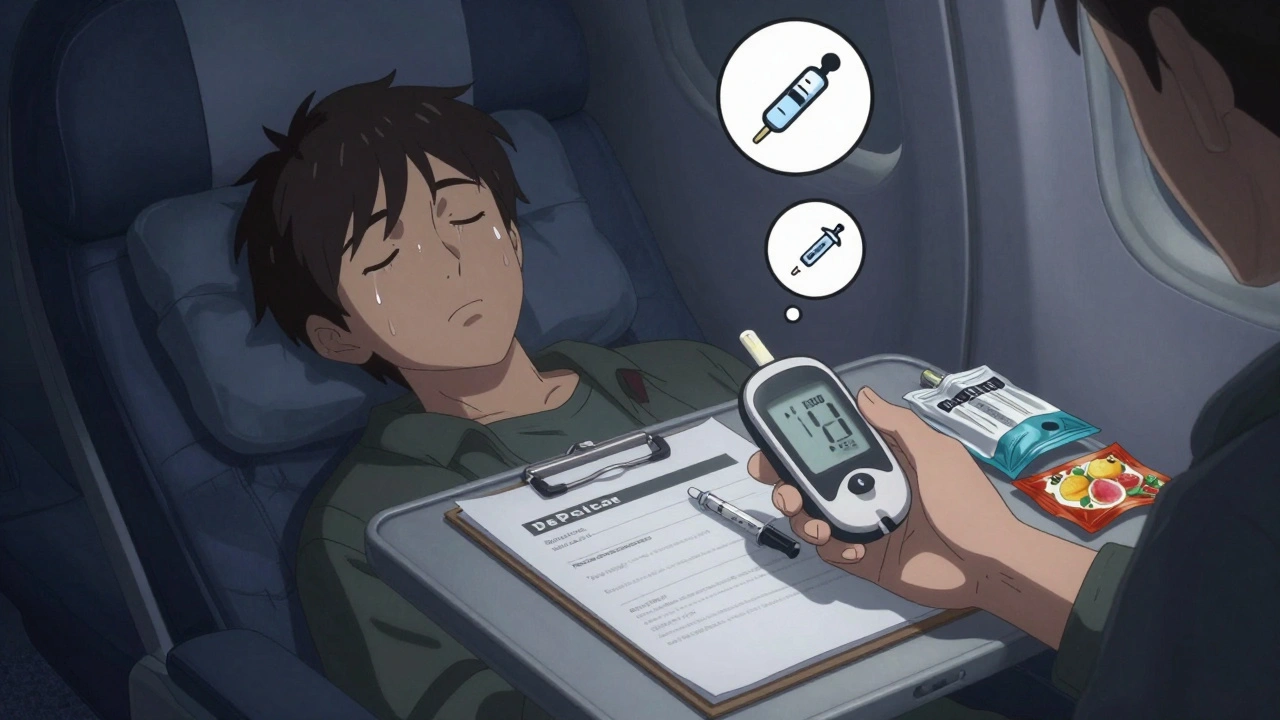
Imagine this: you’re on a flight to Bali, the sun is setting over the ocean, and your blood sugar drops to 62 mg/dL. You reach for your glucose tabs-but they’re in your checked bag. And your insulin? Left in the cargo hold where it froze overnight. This isn’t a horror story. It’s what happens when people underestimate how fragile diabetes management is when you’re away from home.
Traveling with diabetes isn’t about being extra careful. It’s about being prepared for the unexpected. Whether you’re flying across the country or hiking in the Andes, your supplies need to be with you-always-and in perfect working condition. The American Diabetes Association says insulin must never go in checked luggage. Why? Because baggage compartments can drop below freezing or spike past 86°F. Either way, your insulin becomes useless. And if your CGM sensor fails mid-flight? You’re flying blind.
Insulin: Don’t Just Pack It-Protect It
You’ll need at least double the amount you think you’ll use. If you’re gone for five days, pack ten days’ worth. Why? Delays happen. Flights get canceled. You might end up stuck in an airport for 12 hours. And if your pump breaks? You need backup.
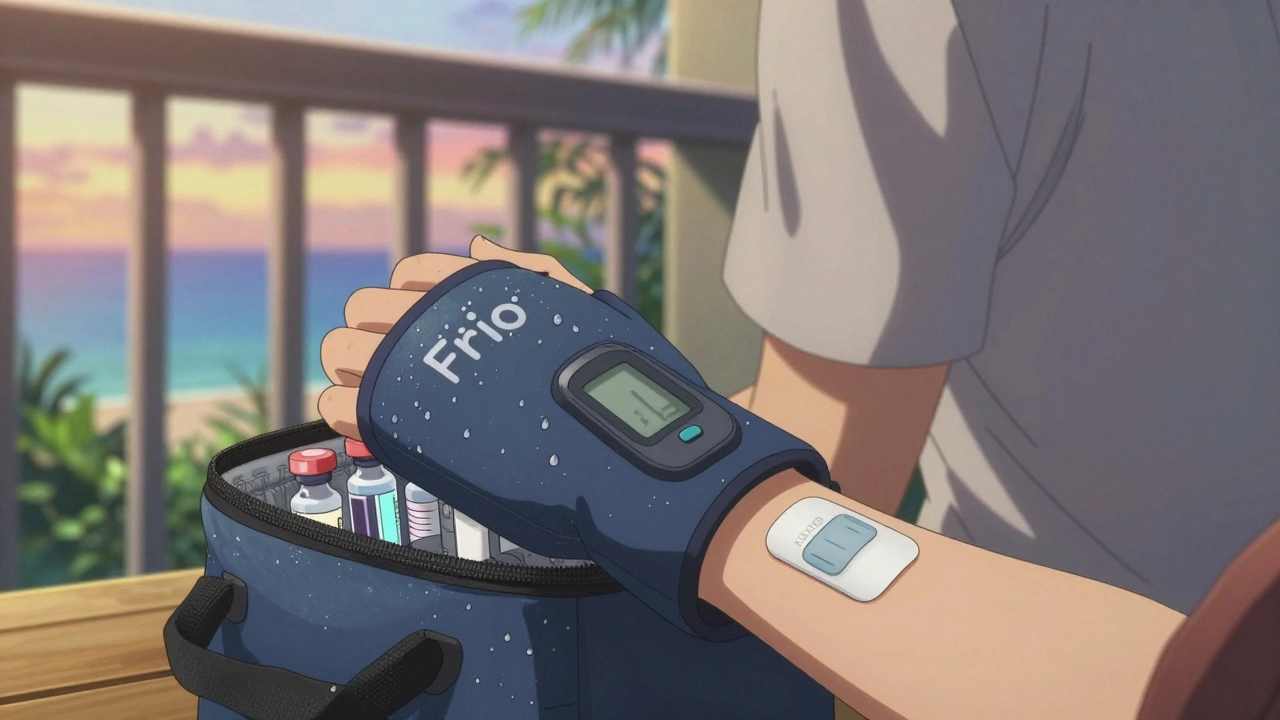
Use a Frio Insulin Cooling Sleeve. It’s not fancy. It’s just a reusable gel pack that cools insulin for up to 45 hours without ice. No batteries. No electricity. Just soak it in water, shake it, and slip your insulin vials or pens inside. It works in 100°F heat. Many travelers swear by it. Cottage Health’s 2022 survey found 73% of users called it “essential.”
If you’re flying to a country that uses U-40 or U-80 insulin (like parts of Asia or Africa), don’t buy insulin there. Stick with U-100. Mixing concentrations can cause dangerous overdoses. Always bring your own. Even if you think you’ll find it-don’t risk it.
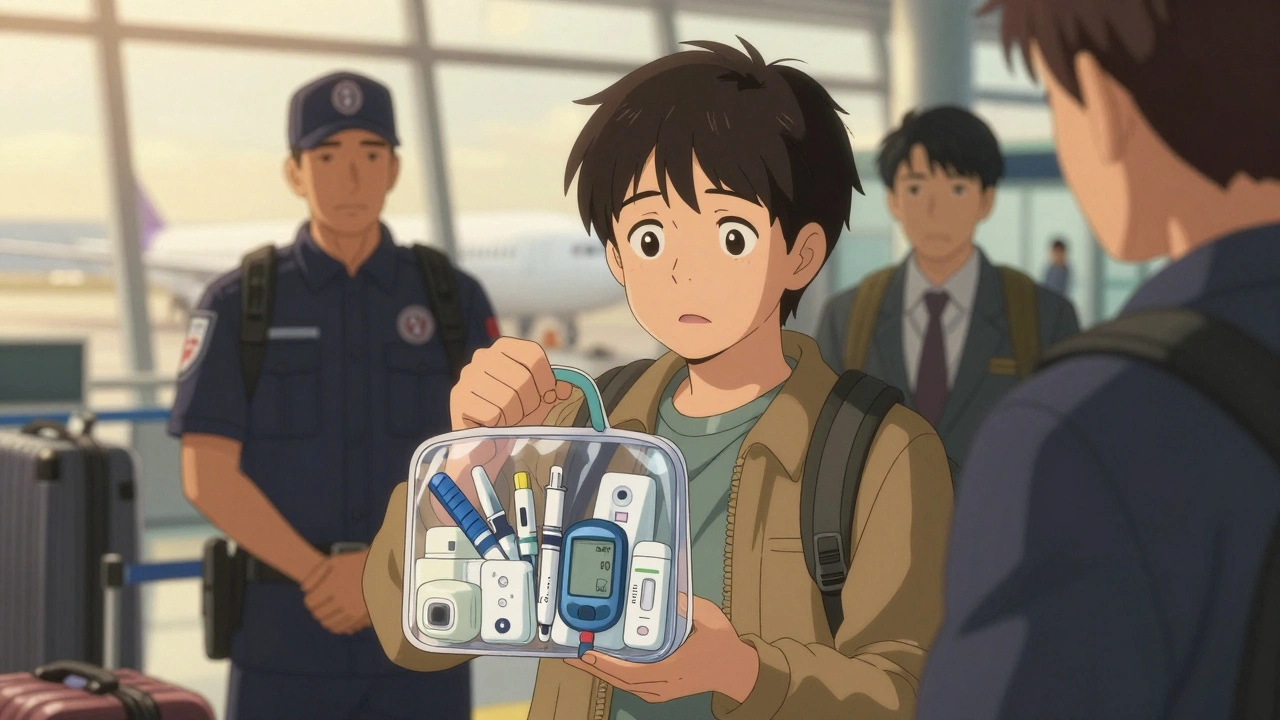
And yes, you can bring insulin through TSA. All of it. Liquids, vials, pens-they’re all allowed in carry-on. But you must declare them. Keep them in a clear, sealable bag. It cuts your security time by almost half.
CGM Sensors and Transmitters: Bring Extras, Always
Continuous Glucose Monitors (CGMs) like Dexcom or FreeStyle Libre are lifesavers. But they’re not indestructible. Sensors can fall off during swimming, sweating, or even a rough security scan. Transmitters can die. Batteries drain. That’s why you need at least three sensors for a week-long trip. For two weeks? Pack five.
Use Skin Grip CLEAR tape. It’s thin, waterproof, and holds sensors down even during showers or beach days. One Reddit user, @TravelingT1D, wore a Dexcom sensor for 14 days straight on a surf trip in Indonesia-thanks to this tape.
Don’t forget the transmitter backup. Dexcom sells them separately. If your main one stops working, you can swap it out in seconds. No waiting. No panic.
And always verify your CGM readings against a fingerstick before you leave. If your meter says 120 and your CGM says 180? Something’s off. Calibrate it. Fix it. Don’t fly with unreliable data.
Pump Users: Have a Backup Plan
If you use an insulin pump-Tandem, Insulet, Medtronic-pack extra reservoirs and infusion sets. At least two or three. You never know when tubing will kink, the battery dies, or the pump glitches. One user on Reddit lost his pump during a layover in Dubai. He had no backup syringes. He ended up in the ER.
Most pump manufacturers offer free loaner programs if you lose or break yours overseas. Call them before you leave. Get the paperwork. Know the number to call in case of emergency. Save it in your phone and print a copy.
Also pack insulin vials and syringes. Even if you’ve never used them. You might need to switch to injections overnight. Don’t wait until you’re stranded to learn how.
Testing Supplies: More Than You Think
Test strips. Lancets. Batteries. Glucose meters. These aren’t optional. Pack 50% more than you expect to use. If you test five times a day for seven days? Pack 50 strips. And don’t forget spare batteries. Some meters use AAA, others CR2032. Bring both.
Store your meter in your carry-on. Checked luggage gets tossed around. Your meter could break. Or worse-get wet.
And here’s a tip: write your insulin-to-carb ratio and correction factor on a sticky note and stick it on your meter. If you pass out or get confused, someone else can help you. That’s the kind of detail that saves lives.
Snacks and Low Treats: Ditch the Tablets
Glucose tablets? They’re bulky. Messy. Taste like chalk. And if you’re running through an airport, you don’t have time to unwrap one.
Try Pure Organic Fruit Leathers. They’re thin, lightweight, and pack a punch-15 grams of carbs in one 0.5-ounce strip. No wrappers to lose. No crumbs. No fuss. Diabetech.info’s 2023 survey found travelers using these had 37% fewer lows during travel.
Also pack peanut butter packets, nuts, or cheese sticks. Protein slows sugar spikes. Good for long flights or when you’re stuck waiting.
Never rely on airport food. It’s unpredictable. Always bring your own.
Documentation: The One Thing Everyone Forgets
You need a letter from your doctor. Not a note. A full letter. On letterhead. Include:
- Your diagnosis (Type 1 or Type 2)
- Your insulin regimen
- Your CGM model and settings
- Your insulin-to-carb ratio and correction factor
- Emergency contacts
- Any allergies or complications
Dr. Anne Peters, a leading diabetes specialist, says this is the single most overlooked item. And she’s right. TSA agents don’t know your medical history. A doctor’s letter clears up confusion fast.
Print two copies. One in your wallet. One in your carry-on bag. Also carry a TSA Disability Notification Card. It’s free. You can download it from diabetes.org. It says: “I have diabetes. I need to carry medical supplies.” It cuts screening time by 42%, according to Dr. Peters’ survey.
Traveling Across Time Zones: Adjust Smartly
Time zone changes mess with your insulin schedule. Crossing three time zones? You’ll need to adjust your basal rates and meal insulin.
Plan ahead. Use your pump’s time zone feature if it has one. If not, write out a new schedule. For example: if you usually take 10 units at 8 AM, but you’re flying from New York to London (5-hour jump), you might need to delay your dose until 1 PM your new time. Don’t guess. Talk to your endo before you leave.
And never skip a dose because you’re “too tired.” Low blood sugar is worse than jet lag.
What to Pack: The Minimalist Checklist
Here’s what you need in your carry-on:
- Double the insulin you’ll need
- Frio sleeve or other cooling device
- 3+ CGM sensors
- 1 backup CGM transmitter
- Skin Grip CLEAR tape
- 50+ test strips
- Extra lancets and batteries
- 2+ insulin pump reservoirs
- 3+ infusion sets
- Insulin vials and syringes (even if you never use them)
- Fruit leathers or other fast carbs
- Protein snacks (peanut butter, cheese, nuts)
- Doctor’s letter
- TSA Disability Notification Card
- Glucose meter (with backup battery)
Put everything in a dedicated travel bag. Sugar Medical’s insulated bag (around $40) is popular. It has compartments for everything. No digging. No panic.
What to Leave Behind
Don’t pack these in your carry-on:
- Insulin in checked luggage (it freezes or overheats)
- Extra supplies you don’t need (you’re not opening a pharmacy)
- Glucose tablets (they’re outdated)
- Unlabeled containers (always keep meds in original packaging)
And never, ever leave your supplies in a hot car. Even for 10 minutes. Insulin degrades fast in heat.
What to Do If Something Goes Wrong
Lost your CGM? Use your meter. No insulin? Call your pump company’s emergency line. They’ll ship you a loaner. No snacks? Ask for fruit at the airport. Most places will help.
Emergency? Show your doctor’s letter. TSA and airline staff are trained to assist. You’re not asking for special treatment. You’re asking for basic safety.
And if you’re traveling internationally? Research local diabetes resources before you go. Some countries don’t stock U-100 insulin. Others have strict rules on carrying syringes. Know the rules. Call the embassy if you’re unsure.
Final Tip: Practice Before You Go
Take a weekend trip. Pack everything. Test your cooling sleeve. Try using your backup syringes. See how long it takes to change a sensor. Make mistakes now, not in Tokyo or Paris.
Most travelers get better after three or four trips. First-timers often forget snacks. Or bring too little insulin. Or don’t test before boarding. Don’t be that person.
Traveling with diabetes isn’t about giving up adventures. It’s about planning so you don’t have to give up your peace of mind.
Rebecca M.
December 2, 2025 AT 12:08Turns out ‘essential’ doesn’t mean ‘unbreakable’.
Lynn Steiner
December 4, 2025 AT 10:31Roger Leiton
December 5, 2025 AT 05:59Jack Dao
December 5, 2025 AT 05:59Also, ‘Skin Grip CLEAR tape’? Sounds like a scam. I use duct tape. Works better.
dave nevogt
December 6, 2025 AT 16:47And yet… we still go. Because the world is too beautiful to miss.
Zed theMartian
December 6, 2025 AT 19:55Real travelers don’t need permission to exist. They just eat the airport food, adjust their doses on the fly, and laugh when their CGM dies mid-flight. You’re not prepared-you’re overcompensating for a lack of resilience.
Ella van Rij
December 7, 2025 AT 23:33Also, ‘pure organic fruit leathers’? That’s just gummy candy with a fancy name. I use Skittles. They’re cheaper, tastier, and don’t require a 3-page blog post to justify.
Steve World Shopping
December 9, 2025 AT 14:46Alicia Marks
December 10, 2025 AT 03:32Steve Enck
December 10, 2025 AT 06:20Joel Deang
December 10, 2025 AT 13:01ps: typo on my meter but it still worked lol
Laura Baur
December 12, 2025 AT 05:07Arun kumar
December 12, 2025 AT 14:39ATUL BHARDWAJ
December 14, 2025 AT 01:52