
What to Do If You Miss a Blood Thinner Dose: A Safety Guide
 Apr, 16 2026
Blood Thinner Missed Dose Guide
Recommended Action:
Please select your medication and the time since your missed dose to see the safety protocol.
Key Takeaways for Your Safety
- Never double your dose to make up for a missed one; this drastically increases your risk of internal bleeding.
- Timing is everything: Rules for when to take a missed dose differ wildly between older drugs like warfarin and newer DOACs.
- Watch for red flags: Be alert for unusual bruising, dark stools, or sudden shortness of breath.
- Document everything: Record the missed dose in your log or "yellow book" and notify your clinic.
Understanding Your Medication
First, it's helpful to know what these drugs actually do. Blood thinners is a general term for anticoagulants and antiplatelet agents. Despite the name, they don't actually make your blood thinner or more watery. Instead, they slow down the chemical process your body uses to clot. This is a delicate balancing act: too much clotting leads to a stroke, but too little clotting leads to dangerous bleeding.
There are two main categories you likely use. The traditional anticoagulants, such as Warfarin (often sold as Coumadin), stay in your system for a long time (half-life of 20-60 hours). Then there are the newer Direct Oral Anticoagulants (DOACs), like apixaban (Eliquis), rivaroxaban (Xarelto), and dabigatran (Pradaxa). These have a much shorter half-life (8-15 hours for apixaban), meaning if you miss a dose, the drug leaves your system much faster, increasing your risk of a clot more quickly.
What to Do Based on Your Medication
Because different drugs behave differently, you cannot use the same rule for all of them. Here is how to handle a missed dose for the most common types.
If you take Warfarin
Warfarin requires a level of precision. Most patients need to maintain a target INR (International Normalized Ratio) between 2.0 and 3.0. Because it stays in your body longer, you have a slightly larger window of error, but you must still be careful.
- The 12-Hour Rule: If you remember the missed dose within 12 hours, take it. If it's been more than 12 hours, skip it and take your next scheduled dose.
- The Midnight Rule: Some clinics advise that if you remember before midnight, take it; if it's after midnight, skip it.
- Action Step: Record the miss in your official anticoagulant record (often called the "yellow book") and call your warfarin manager.
If you take Apixaban (Eliquis)
Since DOACs leave the body faster, the urgency is higher. For Apixaban, the general guidance is to take the dose as soon as you remember on the same day. However, if you are within 6 hours of your next scheduled dose, some medical guidelines suggest skipping the missed one to avoid overlap.
| Medication Type | Half-Life | Missed Dose Window | Monitoring Required |
|---|---|---|---|
| Warfarin | 20-60 Hours | Usually up to 12 hours | Regular INR blood tests |
| Apixaban (DOAC) | 8-15 Hours | Same day / < 6 hours from next | No routine blood tests |
The Danger of "Doubling Up"
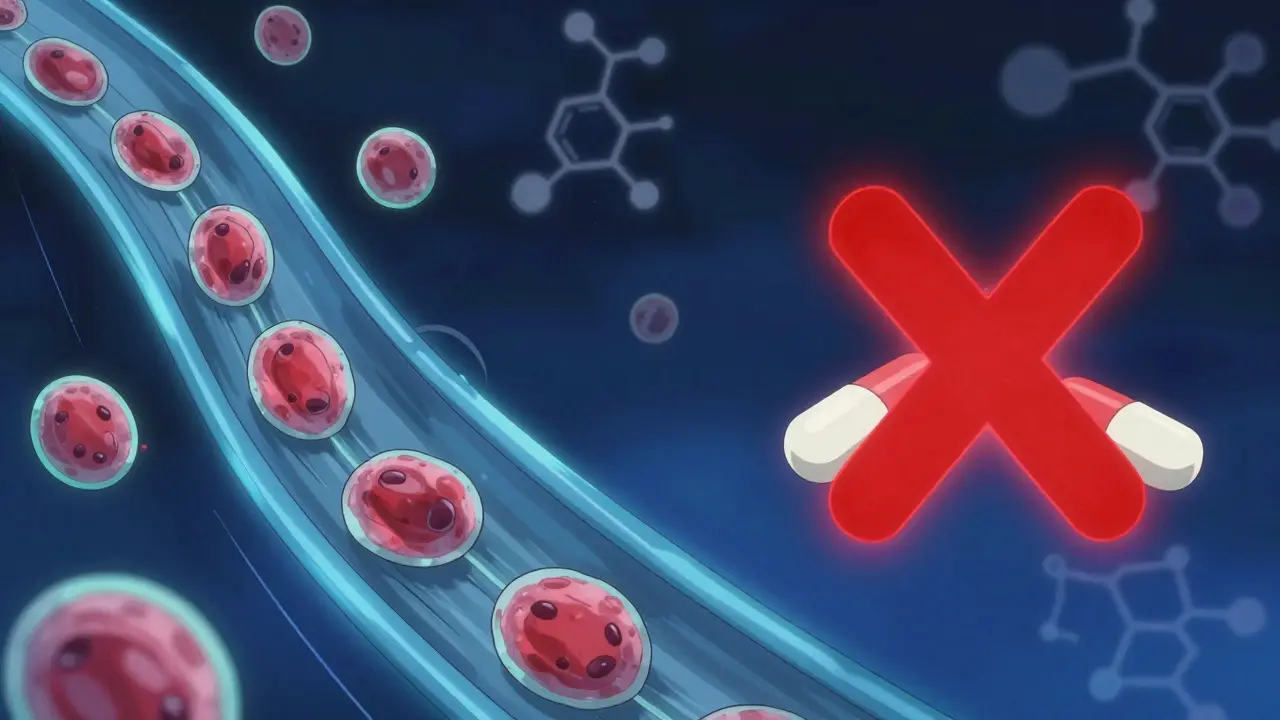
It is incredibly tempting to take two pills at once to "catch up" after a missed dose. Do not do this. Doubling your dose doesn't just restore the level of medicine in your blood; it can spike the concentration to dangerous levels. This significantly increases the risk of a major bleeding event, such as a gastrointestinal bleed or a hemorrhagic stroke (bleeding in the brain). The risk of hospitalization for major bleeding affects about 1-3% of patients annually, and taking a double dose can push you into that high-risk category.
When to Seek Emergency Help
Sometimes a missed dose is a minor slip, but other times it's a sign that something is wrong. You need to call your doctor or go to the emergency room immediately if you notice these specific warning signs:
- Internal Bleeding Signs: Red or brown discoloration in your urine, or stools that look black and tarry.
- Neurological Shifts: A sudden, severe headache or dizziness, which can signal bleeding in the brain.
- Respiratory Distress: Sudden shortness of breath or chest pain, which could indicate a Pulmonary Embolism (a blood clot in the lung).
- Physical Trauma: If you are on a blood thinner and you hit your head or have a hard fall, seek help even if you don't see a cut. Internal bleeding can happen without an obvious external wound.
- Excessive Bruising: While small bruises are common, large, unexplained purple patches should be reported.
How to Prevent Future Missed Doses
If you find yourself forgetting doses frequently, you aren't alone. Research shows that between 12% and 15% of patients miss at least one dose a month. Because adherence below 80% for DOACs can increase stroke risk by over 50%, setting up a fail-safe system is vital.
Try these practical strategies:
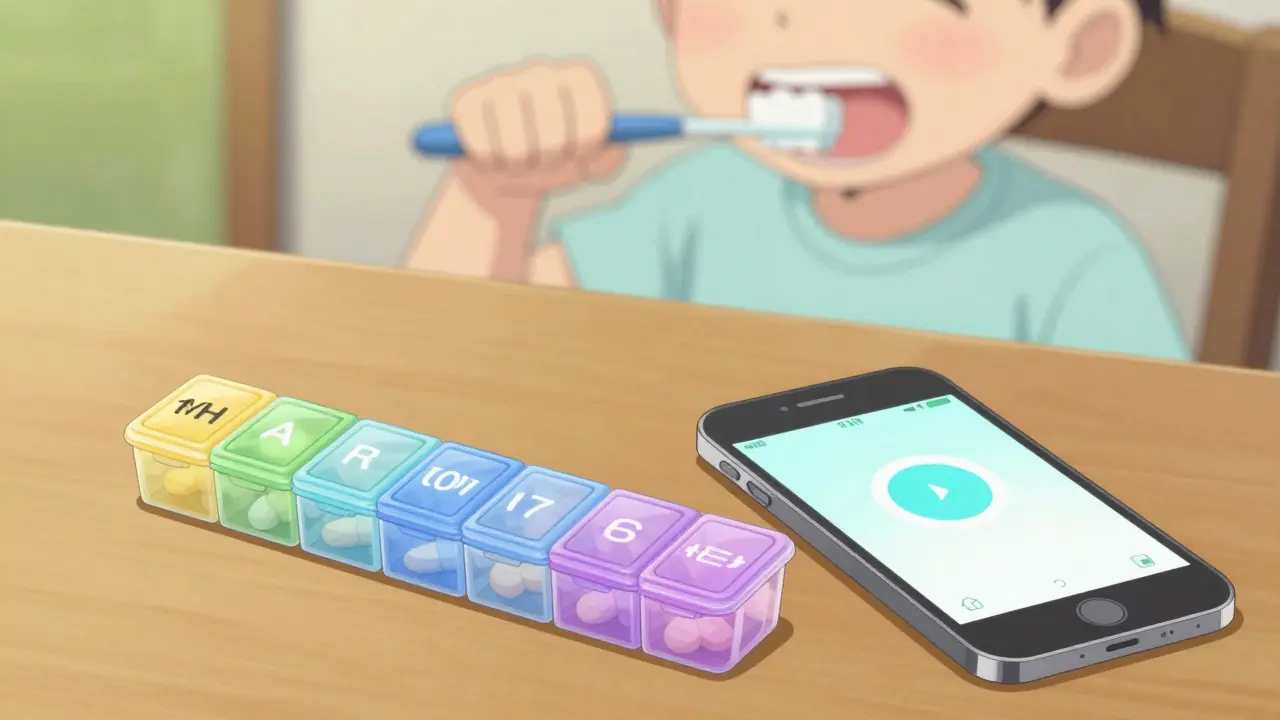
- Pill Organizers: Use a weekly pill box. If it's Tuesday and the Monday slot is still full, you know exactly what happened.
- Digital Reminders: Set an alarm on your phone for the exact time you need to take your medication.
- Anchor Habits: Pair your pill-taking with an activity you never miss, like brushing your teeth or feeding a pet.
- Prescription Management: Refill your medication at least a week before you run out. Running out of pills is a common cause of "accidental" missed doses.
What happens if I miss just one dose of my blood thinner?
Missing one dose can lead to an increase in blood clot formation. For people with atrial fibrillation, this increases the risk of stroke. While it may not cause a problem every time, the risk is cumulative, and missing multiple doses significantly raises the chance of a Deep Vein Thrombosis (DVT) or pulmonary embolism.
Can I take a double dose to make up for a missed one?
No. You should never double your dose. Taking too much anticoagulant can cause spontaneous internal bleeding, which can be life-threatening. Always follow the specific timing rules for your medication or call your doctor.
Who should I notify if I miss a dose?
You should notify your healthcare provider, your anticoagulation clinic, or your warfarin manager. If you use a yellow record book for warfarin, make sure to note the missed dose there so your clinician can adjust your future doses or INR testing if necessary.
Why does warfarin need blood tests but Eliquis doesn't?
Warfarin has a long half-life and its effects vary greatly based on diet (like Vitamin K intake) and other medications, requiring INR tests to ensure the dose is safe. DOACs like Eliquis have a more predictable effect on the body and a shorter half-life, so they don't require routine monitoring.
Is it dangerous to stop taking blood thinners on my own?
Yes, it is extremely dangerous. Stopping these medications without medical supervision drastically increases your risk of having a stroke or developing a major blood clot. Always consult your doctor before making any changes to your dose.
Next Steps and Troubleshooting
If you are currently unsure whether to take a dose you missed several hours ago, the safest move is to call your pharmacist or doctor's office. Have your medication bottle in hand so you can tell them the exact dose (e.g., 5mg or 2.5mg) and the time of your last dose.
For those struggling with the complexity of warfarin, ask your doctor if a DOAC might be a better fit for your lifestyle, as they remove the need for frequent blood draws. Conversely, if you are on a DOAC and find the twice-daily dosing difficult, ask about once-daily alternatives like rivaroxaban.
Colleen Tankard
April 17, 2026 AT 20:38Setting a phone alarm is such a lifesaver ⏰✨
Agatha Deo
April 19, 2026 AT 08:37Oh sure because just setting an alarm solves everything and obviously the pharmaceutical companies aren't just designing these half-lives to keep us tethered to their monthly subscriptions for life it is just so quaint that people actually trust these guidelines without questioning who wrote them
Jon lee
April 19, 2026 AT 16:17It is completely normal to feel a bit anxious when you realize you missed a dose so please be kind to yourself while you get back on track
Maggie Graziano
April 20, 2026 AT 12:48big pharma just wants us addicted to the cycle dont trust the timers
Nikki Grote
April 22, 2026 AT 04:48The pharmacokinetic profiles of DOACs are significantly more predictable than the vitamin K antagonists which is why we see a reduction in the need for routine INR monitoring since the systemic clearance is more consistent across the patient population
Sophia Rice
April 24, 2026 AT 03:28I use a litle pill box and it helpz me so much not to forget my meds!
Nathan Berlin
April 24, 2026 AT 09:22Our medical systems in India are far more resilient and we handle these things with much more grace than the west 🇮🇳💪🔥
Rob Schlautman
April 25, 2026 AT 13:44honestly the sheer audacity of some people to forget a pill that literally keeps them from having a stroke is just wild to me because i personally have never missed a dose in my entire life and i find it completely baffling how anyone can be that disorganized with their own health especially when the stakes are this high and the instructions are written in plain english on the bottle
Theresa Griffin MEP
April 26, 2026 AT 11:51Adherence is mandatory.
Josephine Wyburn
April 27, 2026 AT 04:15I just can't even imagine the panic that sets in when you look at the calendar and realize you missed a day 😱 it's like my heart just stops and I start imagining the worst possible scenario where I wake up with a clot and nobody is there to help me and honestly it's just too much for one person to handle 😭😭😭
Anmol Garg
April 28, 2026 AT 03:42Life is a series of small mistakes and learning to forgive yourself for forgetting a pill is part of the journey toward true wellness and peace of mind