
How to Spot Fake Generic Drugs and Avoid Online Pharmacy Scams
 Jun, 12 2026
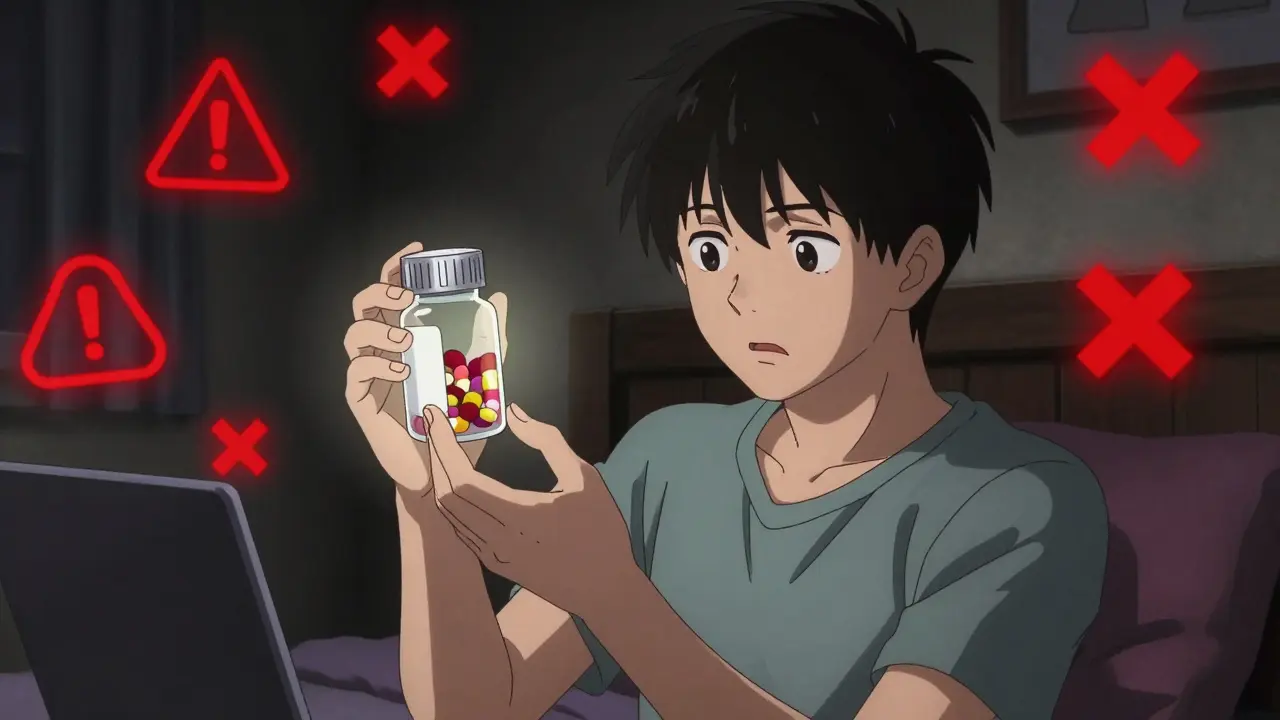
You buy a generic version of your daily medication online because it’s cheaper. It arrives in a box that looks almost right. You take the pill, but nothing happens-or worse, you feel sick. This isn’t just a bad day; it might be a counterfeit drug. The global market for fake pharmaceuticals is estimated at $200 billion annually, according to the World Health Organization (WHO). That means roughly one in ten medicines sold globally could be substandard or falsified. With online sales of these fakes growing by 22% every year since 2020, knowing how to protect yourself is no longer optional-it’s essential.
Identifying counterfeit generics isn’t always easy. Criminal networks are getting smarter, using professional pill presses and sophisticated packaging to mimic legitimate brands. But there are clear signs you can look for before you click "buy" and after the package arrives. Let’s break down exactly what to check so you don’t end up with crushed drywall instead of life-saving medicine.
The Red Flags: What Legitimate Online Pharmacies Look Like
The biggest risk factor in buying fake drugs is where you buy them. A 2022 survey by the National Association of Boards of Pharmacy (NABP) found that 96% of online pharmacy websites operate illegally. Most of these sites don’t require a valid prescription, which is an immediate warning sign. If a site lets you buy prescription medication without talking to a doctor or pharmacist, walk away.
Here is what a safe online pharmacy looks like:
- It uses the .pharmacy domain: This is the gold standard. The NABP’s Verified Websites Program assigns this specific domain only to pharmacies that comply with all licensing laws and regulations. Amy Callanan, Global Intelligence Lead at Pfizer Global Security, advises consumers to specifically look for this differentiating domain.
- It has a physical address and phone number: Legitimate businesses have a place to go. Check if the address exists on a map. Try calling the number. If it goes straight to voicemail or doesn’t connect, that’s a problem.
- It requires a valid prescription: Real pharmacies will ask for a prescription from a licensed healthcare provider. They won’t just accept a self-diagnosis form.
- It offers pharmacist consultation: You should be able to speak to a licensed pharmacist if you have questions about dosage or side effects.
If a site promises "no prescription needed," "free shipping worldwide," or prices that seem too good to be true, they probably are. Scammers use these hooks to lure people who want convenience over safety.
Visual Checks: Inspecting the Pill and Packaging
Sometimes, despite your best efforts, you might receive a suspicious package. Or maybe you’re comparing a new refill to an old one. While laboratory testing is the only way to be 100% sure, there are visual clues that can raise alarms.
Start with the packaging. Counterfeiters often miss small details. Compare the new box to your previous purchase side-by-side. Look closely at:
- Font style and spelling: Are the letters slightly blurry? Is there a typo in the manufacturer’s name? These are common mistakes in rushed counterfeiting operations.
- Color and texture: Does the box feel flimsy? Is the color off? Legitimate manufacturers use high-quality printing with consistent colors.
- Holograms and security features: Many major brands use overt technologies like holograms with micro-text or color-shift inks that change appearance when you tilt the box. If your medication usually has these and yours doesn’t, be wary.
Next, look at the pill itself. Victoria Masterson, a scientist with Pfizer Global Supply, notes that handheld Raman spectrometers can detect mismatches instantly, but you don’t have one of those at home. Instead, look for:
- Imprints: Legitimate pills have precise, clean imprints. Counterfeit pills made with amateur presses might have fuzzy edges or missing letters.
- Dissolution test: Some users on Reddit reported that counterfeit erectile dysfunction pills dissolved instantly in water, while real ones took 20+ minutes. While not a universal test for all drugs, unusual behavior in water can be a clue.
- Consistency: Do all the pills in the bottle look identical? Variations in size, shape, or color within the same batch are red flags.
Remember, as Amy Callanan warns, the absence of these signs doesn’t guarantee authenticity. But their presence is a strong indicator of fraud.
Why Generics Are Targeted and How Technology Helps
You might wonder why scammers target generic drugs. The answer is simple: volume and profit. Generics are widely used, meaning more people buy them. Also, because they lack the heavy brand marketing budget, some consumers assume they are lower quality anyway, making it easier to sell a fake version without immediate suspicion.
In Asia, for example, more than 50% of counterfeit malaria medicines contain no active ingredient at all. In North America, the DEA seized over 134 million counterfeit pills between January 2023 and October 2024, many containing lethal doses of fentanyl. These aren’t just ineffective; they are deadly.
To fight back, the industry is turning to technology. The WHO launched the Global Surveillance and Monitoring System (GSMS) in 2013 to track these threats across borders. Today, companies like Pfizer and GlaxoSmithKline use layered security:
- Overt technologies: Visible elements like holograms and color-shift inks.
- Covert technologies: Invisible markers like UV-sensitive inks or RFID labels.
- Track-and-trace systems: Unique identification numbers assigned to each stock unit, allowing verification throughout the supply chain.
As a consumer, you can sometimes access these systems. Some packaging now includes QR codes linked to AI verification apps like MediGuard, which scanned 1.2 million products in 2023 with 92.4% accuracy. If your medication has a QR code, scan it. If it leads to a broken link or a suspicious website, do not take the drug.
| Feature | Legitimate Pharmacy | Counterfeit/Risky Site |
|---|---|---|
| Domain Name | .pharmacy, .com (verified) | .net, .org, .info, or misspelled domains |
| Prescription Requirement | Always required | Often not required or easily bypassed |
| Pricing | Competitive but realistic | Drastically low (e.g., 80-90% off) |
| Contact Info | Physical address, working phone, licensed pharmacist | No address, fake phone numbers, no staff contact |
| Reviews | Verified reviews on Trustpilot/BBB | Fake reviews, no external verification |
What to Do If You Suspect a Counterfeit Drug
If you’ve already taken a pill and feel unwell, or if you suspect the medication is fake, act quickly. Don’t wait for the next dose.
- Stop taking the medication immediately.
- Save the evidence. Keep the pill, the blister pack, and the box. Take photos of the imprints, the packaging, and any unique identifiers.
- Contact the manufacturer. As Callanan suggests, call the pharmaceutical company directly. They keep track of lot numbers and complaints. They can often tell you if your specific batch was flagged as counterfeit.
- Report it. In the US, report to the FDA MedWatch program. In other countries, contact your national health authority (like the TGA in Australia or the MHRA in the UK). Reporting helps authorities shut down these operations.
- See a doctor. If you’ve experienced side effects, seek medical attention. Bring the suspected counterfeit drug with you if possible.
Dr. Mariângela Simão, WHO Assistant Director-General, emphasizes that these products undermine confidence in health systems and cause serious harm. Your vigilance protects not just you, but others who might fall victim to the same scam.
Building a Habit of Verification
Avoiding online scams isn’t about paranoia; it’s about routine. Make verification part of your healthcare habit. Before ordering any medication online, spend two minutes checking the site’s credentials. Use the .pharmacy directory to find verified providers. When your order arrives, inspect it before throwing away the packaging. Compare it to what you know is real.
The sophistication of criminal networks continues to evolve faster than regulatory responses, according to experts. But by staying informed and using the tools available-like verified domains, QR code scanners, and direct manufacturer contacts-you can significantly reduce your risk. Don’t let cost-cutting become a health hazard. Your safety is worth the extra minute of checking.
Is it safe to buy generic drugs online?
Yes, but only from verified sources. Buying from sites with the .pharmacy domain or those recommended by your local pharmacist is generally safe. Avoid sites that do not require a prescription or offer prices that seem unrealistically low.
How can I tell if my pill is counterfeit without a lab?
You can look for visual cues such as poor print quality on the packaging, typos, inconsistent pill colors or sizes, and fuzzy imprints. However, these are not definitive. If you suspect a counterfeit, contact the manufacturer with the lot number for confirmation.
What is the .pharmacy domain?
The .pharmacy domain is a specialized internet domain managed by the National Association of Boards of Pharmacy (NABP). It is only assigned to online pharmacies that meet strict legal and regulatory standards, ensuring they are legitimate and safe to use.
Are all generic drugs less effective than brand names?
No. Legitimate generic drugs must contain the same active ingredients, strength, and dosage form as their brand-name counterparts. They are regulated by health authorities to ensure they work the same way. The issue arises only with counterfeit versions, not genuine generics.
What should I do if I experience unexpected side effects?
Stop taking the medication immediately and consult a healthcare professional. Unexpected side effects can be a sign of a counterfeit drug containing wrong or dangerous ingredients. Report the incident to your national health authority and the manufacturer.